
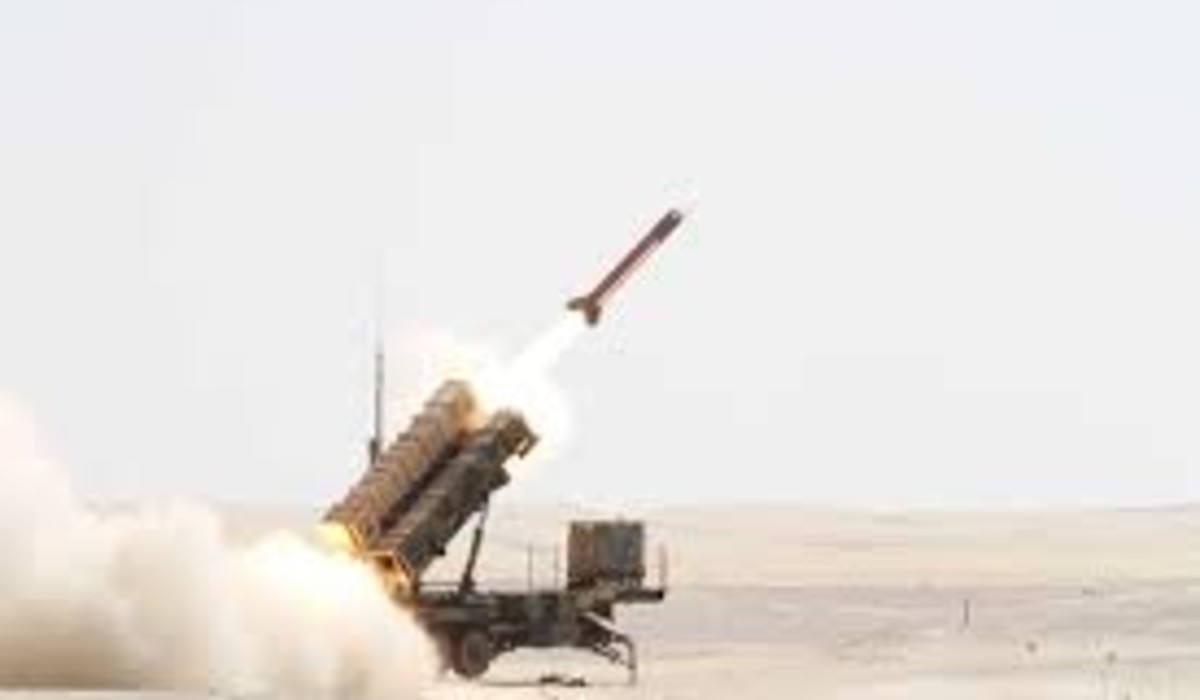
 Patriot missile launch. Photo: Sgt. Kyle Fisch PDM 1.0
Chris Bambery considers the positions of Ukraine and Russia now that the US wreaks war on Iran
Ukrainian President Volodymyr Zelensky says more US-made Patriot defence systems were used in three days of the Iran war than in Ukraine since 2022. His statement on Thursday came amid growing reports of shortages of Patriots and other air defence weapons because of the intensity of their use in the war with Iran.
Some 800 guided missiles were used to repel Iranian aerial attacks within just the first three days of the Iran war. Zelensky complained that “Ukraine has never had this many missiles to repel attacks.” Each Patriot guided missile costs several million dollars, and their manufacturing has never exceeded more than 900 missiles a year.
Kyiv already faces a shortage of missiles for Western-supplied F-16 fighter jets for use in downing Russian missiles. A senior European government official warned of the impact of the Iran war:
“A lot of firepower including interceptor and other missiles have been expended. The U.S. needs to restock, meaning there is less for Europe or Ukraine to buy.”
How serious is all this for Ukraine?
Robert Person is a Non-Resident Senior Fellow in the Foreign Policy Research Institute’s Eurasia Program. He writes:
“The Patriot system forms Ukraine’s backbone defense against Russian ballistic missiles such as Iskander and Kinzhal—no other Western system widely deployed in Ukraine provides a comparable anti‑ballistic capability. Over the last several months, Russia has significantly increased its use of ballistic missiles and large combined salvos of drones and cruise missiles against Ukrainian cities and infrastructure. According to one recent analysis, Russian overnight missile strikes in February 2026 reached their highest intensity in four years of war, with some salvoes including up to 30 ballistic missiles in a single wave. Even before the Iran crisis, Washington was already reluctant to part with additional Patriot launchers and interceptor stocks for Ukraine, given global commitments and finite inventories. European allies similarly possessed only a limited number of batteries and missiles they could realistically transfer. Now, with Iranian missile and drone attacks targeting Israel and US-aligned Gulf states, the competition for Patriots has intensified.”
In other words, Ukraine is in a queue with Israel, Saudi Arabia, Jordan and the Gulf States, and it’s not at the front. Trump will dole out the Patriots in order of importance for American imperialism.
Person’s conclusion is:
“…. every interceptor missile used over Riyadh or Abu Dhabi is one fewer available to intercept the next Russian ballistic barrage against Ukraine’s power grid. If the war in Iran drags on, it will almost certainly worsen Ukraine’s already precarious air-defense problem, especially if Russia continues to lean more heavily on ballistic missiles, forcing Ukraine to use up its vanishing supply of Patriot interceptors.”
In the early days of the war, Iran supplied Russia with its Shahed-131/136 “kamikaze” drones. These are now made within Russia, which no longer relies on Iran for their supply. Zelensky has proposed that Gulf states could “swap” some of their Patriot interceptors to Ukraine in return for Ukrainian drones, technology, and training to strengthen their own counter‑drone defenses. This is unlikely to be taken up because the Gulf States rely on US weaponry and Ukrainian weapons would need time to be bedded in. It would also need Washington’s agreement.
But, Zelensky is manoeuvring to portray Ukraine as not just a victim of Russian aggression but as a key component of the West’s defences against Russia and its Iranian ally. However, in the short term the Iran war has benefitted Moscow, Russia will cash in on any increase in oil and gas prices resulting from the Iran war.
Since 2022, the US and Western sanctions regime sanctions have meant Moscow has pivoted eastwards. In January 2026, India purchased 38 percent of Russian crude exports, while China’s share was 48 percent. Those oil and gas exports do not go through the Straits of Hormuz but from its Pacific, Baltic and Black Sea ports.
Because Russia provides a secure supply line for its energy needs, this will become of even greater strategic importance for Beijing, concerned as it is with US threats to choke off maritime supply routes in any future confrontation with Washington. For Moscow, the strengthening of its ties to China would offset the damage of an Iranian defeat or a degradation of the regime in Tehran. Of course, this won’t stop the neo-cons salivating over regime change in Russia. On Saturday morning The Telegraph’s headline was “Putin helps Iran attack the US.” It had picked up on a Washington Post report on Friday that Russia has been assisting Iran in its war with the US and Israel by providing intelligence on the locations of American military assets in the Middle East.
The Washington Post report noted that the extent to which Russia is able to provide accurate information to Iran is unclear, although one of the sources said it appeared to be “a pretty comprehensive effort” on Moscow’s part. The White House downplayed the report. “It clearly is not making a difference with respect to the military operations in Iran because we are completely decimating them,” House Press Secretary Karoline Leavitt told reporters.
Russia is a treaty bound ally of Iran. A quick look at the map shows why Iran is of great strategic importance to Moscow, particularly in the Caucuses. But, Russia is consumed by the Ukraine war and cannot possibly enter a military contest with Washington in the Gulf. Neither does have it have the economic ability to sustain Iran. Moscow has labelled the strikes “unprovoked acts of armed aggression” and warned of regional and global instability unless there is a diplomatic solution.
Grégoire Roos, Director, Europe and Russia and Eurasia Programmes, at Chatham House, correctly describes Russia’s position:
“Russia will obviously not enter into any kind of military confrontation with the US and Israel. Nor has it sent Tehran the least sign that it may provide any form of support. The Kremlin’s next steps will likely be calibrated to uphold its credibility as a counter-Western partner but avoid being drawn into a second high-intensity conflict. It will also seek to preserve bargaining space with Washington on other issues – not least the negotiations to end the war in Ukraine. Until the situation in Iran is clarified, the keywords for Moscow will be ‘strategic hedging.”
In plain speak, Russia is a sub-imperialist, regional power. It cannot challenge the US in the Middle East. Its priority is controlling its own backyard. Putin will criticise US actions in Iran from the sidelines, while reaping the economic benefits of an energy shock, and letting Iran absorb the military costs of confrontation.
Before this war, some looked to the emergence of a new axis of resistance to the USA. But things are very different:
“This reality undermines the notion of a coherent “axis” of Russia, China, Iran, North Korea, and other anti‑Western regimes acting in concert to upend the US-led global order. While these states share certain interests and cooperate tactically—on arms transfers, sanctions evasion, and diplomatic cover—the Iran war illustrates that their priorities and constraints diverge sharply. In practice, Russia is less a co‑equal architect of a new multipolar order than a heavily sanctioned petro‑state trying to leverage crises elsewhere to sustain its own regional war.”
With the US-brokered talks between Russia and Ukraine breaking down, Putin calculates on the basis of incremental battlefield gains and faltering US support for Ukraine that time suits Russia in this war of attrition.
Time is not on Ukraine’s side. With Trump focused on Iran, Europe struggling to make up for the loss of US support and shortages of troop, missile defences, weaponry and finance, at some point the war of attrition can tip over into a war of offence, by Moscow not Kyiv.
The war was already shifting Russia’s way, but now US and Western attention on ran means it can take the initiative.
Before you go
The ongoing genocide in Gaza, Starmer’s austerity and the danger of a resurgent far right demonstrate the urgent need for socialist organisation and ideas. Counterfire has been central to the Palestine revolt and we are committed to building mass, united movements of resistance. Become a member today and join the fightback.

Chris Bambery
Chris Bambery is an author, political activist and commentator, and a supporter of Rise, the radical left wing coalition in Scotland. His books include A People's History of Scotland and The Second World War: A Marxist Analysis.