
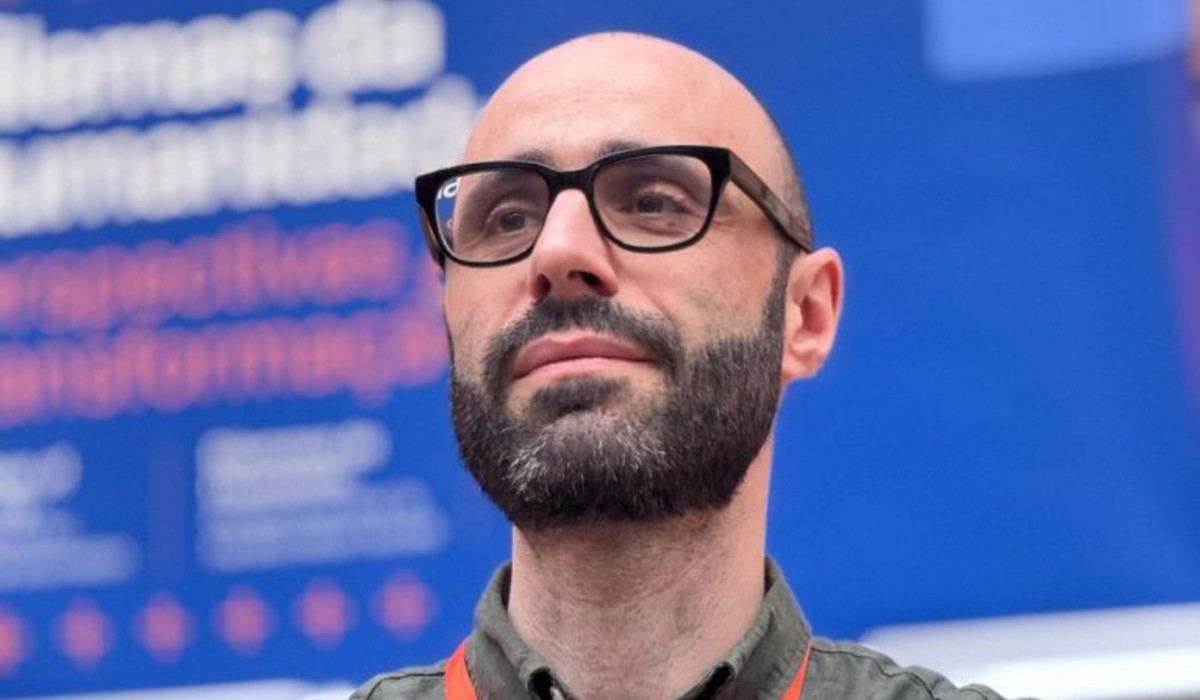
In the run up to the International Anti-War Conference in London, Michael Lavalette spoke to Maurizio Coppola from the Italian organisation Potere al Popolo (Power to the People)
Can you start off by telling us a little about yourself, your organisation and the movements you are involved with?
I am a long-term activist in the Italian organisation ‘Potere al Popolo’. We are involved in a range of social movements, (against war, against austerity, for Palestinian rights, for example) as well as within the trade-union movement, the student movement and in working-class communities, via our ‘Casa del Popolo’ – we have about forty ‘people’s houses’ across Italy which are involved in various forms of community organising.
I’m also involved in working with networks overseas: amongst Italian migrants and their descendants and trying to build our relationships with like-minded organisations and movements across the globe.
We believe we need to be involved in social movements, student campaigns and trade unions developing and deepening our struggles, but we also believe we, as a left, need to come together to provide an electoral challenge to the mainstream parties as well.
We fight on all fronts!
Can you tell us a little about the anti-war and Palestine solidarity movements in Italy?
There is a long-term connection with the Palestinian liberation struggle in Italy. Because of our location on the Mediterranean, many Palestinian exiles and political activists used to travel and come to Italy in the 1960s and 1970s. As a result, the Palestine Liberation Movement was well-known and respected in political circles.
When I first came to political activity, Palestine was an issue that we on the left knew about and were drawn to. With the rise of the anti-globalisation movements of the twenty-first century, the question of Palestine was, perhaps, relegated slightly, but when the genocide started in 2023, the Palestine movement grew quickly.
There have been hundreds of demonstrations, students have occupied universities and there have been a number of strikes against sending arms shipments to Israel.
Italy is Israel’s third-largest weapons supplier, but dockworkers have shown their willingness to strike against the shipping of military goods.
The first significant action took place in June 2025. French dockworkers at the port of Marseille-Fos refused to load the Israeli ship ZIM Contship Era. The ship was being loaded with fourteen tonnes of military components destined for the Israeli Occupation Forces.
The Genoa Port Workers Collective (CALP), then announced it would mobilise to block the ZIM Contship Era from docking in Genoa. This campaign grew into a mass strike on 20 June under the slogan Disarmiamoli (‘Disarm them’). This was a strike against the broader militarisation of European ports and complicity in arms transfers. As part of the strike, there were demonstrations against rising military spending and the social costs of rearmament.
In September, the Genoa port came out again. This time the issue was support for the Global Sumud Flotilla. The radical union CALP (Collettivo Autonomo Lavoratori Portuali) had helped the Global Sumud Flotilla with docking and logistics. They announced that if Israel attempted to obstruct the flotilla, Italian workers were prepared to escalate and block Israeli cargo at Italy’s major ports.
When the Flotilla was attacked, the workers blocked the ports of Genoa and Livorno and unions staged a nationwide general strike, shutting down schools and transportation.
So the Palestine movement has been at a high level in Italy and has been led by the organised working-class movement.
Italy’s far-right Prime Minister Giorgia Meloni has unusually spoken out against Israel’s atrocities, why is that?
All the main political parties are pro-Israel, and Meloni and the far right are no different. But, at various points, she has spoken out about Israeli atrocities. To explain this, we have to look at how deep the Palestine solidarity movement is in Italy, the impact of the social movements and the union actions in support of Palestine liberation. In other words, the strength of our movement has shaped political consciousness in Italy in important ways and this has even forced Meloni to acknowledge the genocide and its consequences, though, in terms of concrete action, she has done nothing significant.
Why are we seeing a drive to war in Europe?
We see a world in crisis. Capitalism is facing intractable problems. In this context, capitalist firms and states try to protect their zones of influence. The drive towards war, the huge growth in war-related spending, is a result of inter-state competition and it makes our world very unsafe.
In Europe, there are two sides to this drive towards a war economy. On the one hand, there are those who are looking through the prism of nations and nationalism and are arguing for the rearmament of individual states. But, on the other, there are those, primarily from the ‘extreme centre’ who are arguing for European-wide rearmament and the integration of Europe’s armies.
We need to oppose both. And we need to continue to oppose Nato. A common slogan for us is: Europe/Italy out of Nato, Nato out of Europe/Italy.
We need to also make it clear that spending on war means diverting resources from the social and welfare needs of working-class communities, so the slogan ‘welfare not warfare’ is central. We need to make clear, against those who talk of ‘military Keynesianism’, that spending on arms and munitions does not create lots of jobs, or improve living standards. In fact we know that the ‘return’ from munitions, arms and military spending, in terms of jobs and improved working conditions, is less than you would get from investments in non-military areas of the economy.
Finally, why do you think the anti-war conference in London is important?
We are working very hard to make the London conference a success, as we did the Paris conference last year. These conferences give us a chance to meet, to think and to plan actions across Europe. The working-class movement has always been internationalist movement and we need to do everything we can to re-establish the traditions of active, working-class internationalism.
But part of that internationalism is to build our own networks and organisations in each of our countries. To give an example, if our comrades in France are successful and we have a government led by Jean-Luc Mélenchon, its success will depend on what it does in France, but also by how successful we are, in Italy, Britain, Germany and Spain, for example, in building a socialist, solidarity movement that challenges our own rulers and their relentless drive for profit at all cost!
The conference is part of the movement to re-establish internationalism and solidarity across our movements in Europe and beyond. It’s very exciting!
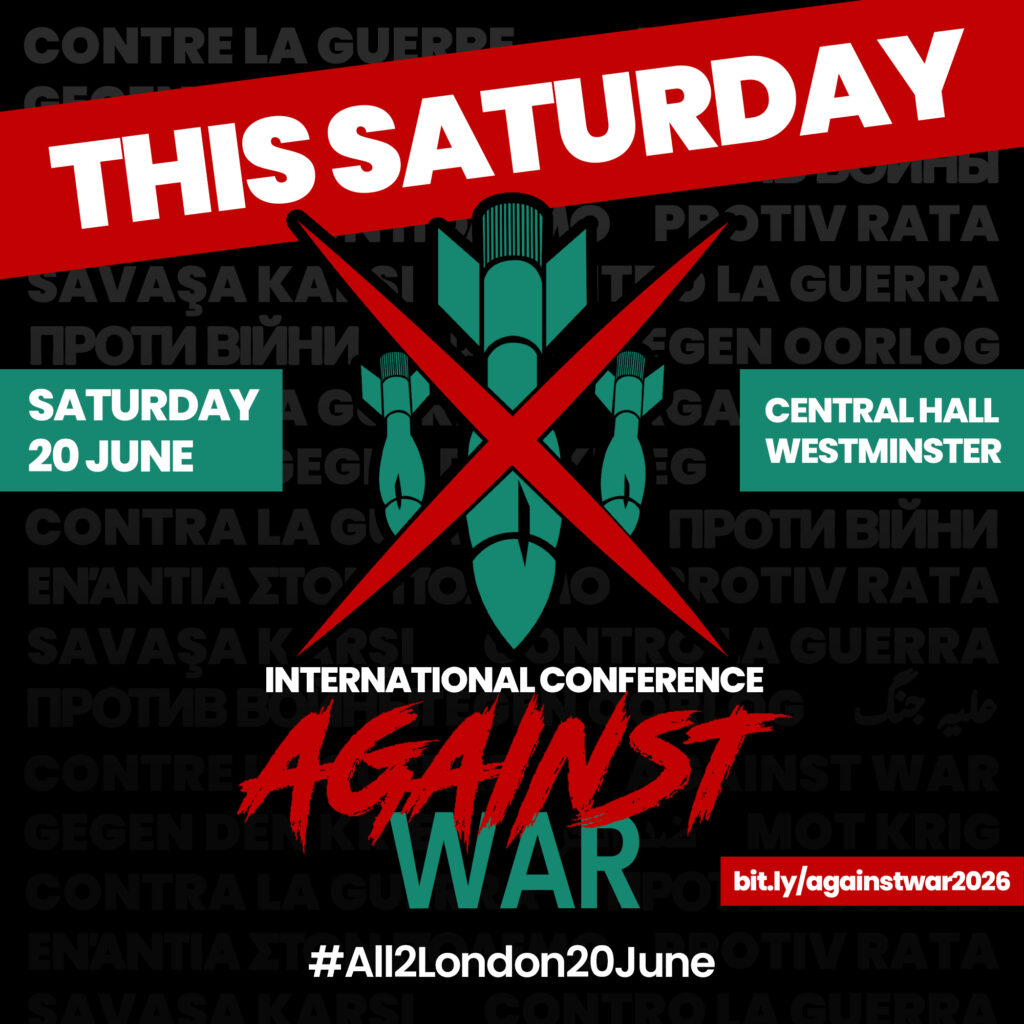
Book your ticket now for the International Conference Against War this Saturday 20 June in London
From this month’s Counterfire freesheet
Before you go
The ongoing genocide in Gaza, Starmer’s austerity and the danger of a resurgent far right demonstrate the urgent need for socialist organisation and ideas. Counterfire has been central to the Palestine revolt and we are committed to building mass, united movements of resistance. Become a member today and join the fightback.
