
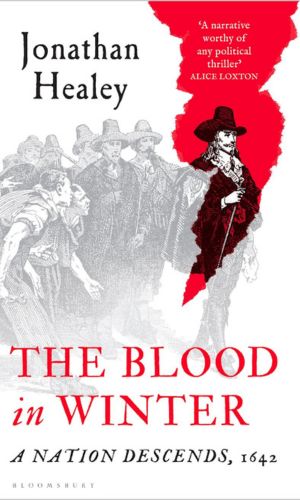
 Jonathan Healey, The Blood in Winter: A Nation Descends, 1642 (Bloomsbury 2025), 432pp.
Jonathan Healey’s The Blood in Winter: A Nation Descends knits a rich tapestry of people, locations and events to bring the English Revolution to life, says Zahid Rahman
The English Revolution was a watershed in British political history. Unlike earlier civil wars in the British Isles, it was the first in which a largely non-aristocratic movement decisively defeated a sitting monarch and then put that monarch, Charles I, on trial and to death.
Despite its significance, this era is often underrepresented or downplayed in Britain’s ‘island story’. The English Civil Wars receive little coverage in most schools’ curricula. Major battlefields are frequently built over or neglected, in sharp contrast to the careful preservation of sites such as World War I battlefields in Belgium or Gettysburg in the United States.
Even the memorialisation of central figures remains controversial. Oliver Cromwell, for example, was twice vetoed by the royal family as a proposed name for a Royal Navy warship. His statue outside Parliament, unveiled in 1899, was funded not by the government but by public subscription, further evidence of establishment discomfort with his legacy.
Jonathan Healey’s The Blood in Winter chronicles the developments in London during 1641-2, the city where events drove the country to civil war. Few expected the outbreak of conflict in the months leading up to winter, and even fewer could have imagined a war that would claim up to 5% of England’s population, proportionally more than the entirety of the First World War. This disbelief was rooted in a deep reluctance to engage in more violent upheaval, after the relatively recent Wars of the Roses and the brutally suppressed local revolts of the Tudor era.
Yet England, and London in particular, was changing rapidly. The city had doubled in population since 1600, and a new ‘middling sort’ was emerging, pressing for political rights as more men reached the £2 income threshold required to vote for MPs. London was also becoming a major global trading hub. At the same time, the city’s literary culture was expanding, with hundreds of books, pamphlets, and other texts being printed month after month; as Healey notes, the ‘authors … suddenly seemed to be swarms’ (p.68). London’s proximity to parliament and Whitehall meant that events in the city could directly influence the institutions of power, which is why Healey describes The Blood in Winter as a ‘London book’.
Lesser-known figures such as Lord Chief Justice John Bankes, Secretary of State Edward Nicholas, and the diarist and MP Simonds D’Ewes appear both as actors navigating the complexities of their time and as observers whose diaries, notes, and documents Healey uses carefully. At times, he even narrates events from their perspectives, further immersing the reader in the lives of individuals within the tumultuous city.
Healey also gives due attention to the persistent protests in London, highlighting their central role in shaping events. Mobilisations by ordinary citizens constrained Charles in moments such as the Army Plot in spring 1641, in challenges against bishops in the House of Lords, and on 5 January, when popular pressure prevented the arrest of the Five Members. In His Majesties Declaration to All His Loving Subjects (12 August 1642), Charles himself framed these demonstrations as dangerous, accusing Parliament of ‘training down to Westminster in great multitudes with swords and clubs’ (p.332). Healey carefully contextualises such royalist exaggerations: claims of armed mobs were an attempt to delegitimise these demonstrations, while in reality, the first acts that included the shedding of blood came from royalist forces. The book rightly credits these citizen actions as a driving force of the English Revolution, recognising them as the ‘decisive backdrop’ to the actions of the political classes.
Healey’s The Blood in Winter reminds us that the English Revolution was not just a series of battles or a power struggle among elites, it was a city and a people in motion. London’s streets, pamphlets, and ordinary citizens played as crucial, if not more decisive, a role as the king or parliament. By bringing these lesser-known figures and ordinary Londoners into the spotlight, Healey makes history feel immediate, chaotic, and human. For readers today, the book is a striking reminder that political change is often messy, unpredictable, and often shaped from the bottom up.
Before you go
The ongoing genocide in Gaza, Starmer’s austerity and the danger of a resurgent far right demonstrate the urgent need for socialist organisation and ideas. Counterfire has been central to the Palestine revolt and we are committed to building mass, united movements of resistance. Become a member today and join the fightback.
