
Lucy Nichols looks at the political ideas in Hollywood’s latest blockbuster
The state scapegoats a minority for the problems that it is responsible for, and the majority believes it. A dictator, propped up by lies, leads a witch-hunt (pun intended) against the resistance. Here is a powerful meditation on state propaganda, resistance, xenophobia, and the nature of good vs evil. It is a musical with an abundance of sparkle and a fantastically catchy soundtrack.
Here is Wicked: For Good, starring Cynthia Erivo (Elphaba), Ariana Grande (Glinda), Jeff Goldblum (The Wizard), Michelle Yeoh and Jonathon Bailey.
There are many ways to interpret Wicked: For Good. For some, it will be about the power of female friendship. For others, it will be about romantic love. For yet others, it will be a good example of how to turn a stage musical into a film. For some, it may even reflect Marx’s famous assertion that ‘being determines consciousness,’ or John Locke’s idea that ‘absolute power corrupts absolutely’.
It is certainly being marketed as a frilly children’s film with little substance other than ridiculous pink dresses and magic wands. This is a little disappointing: it is rather political, and this is presented in very interesting ways. Themes such as racism, fascism, power, and terror are explored using anthropomorphism, magic, physical transformations, and music.
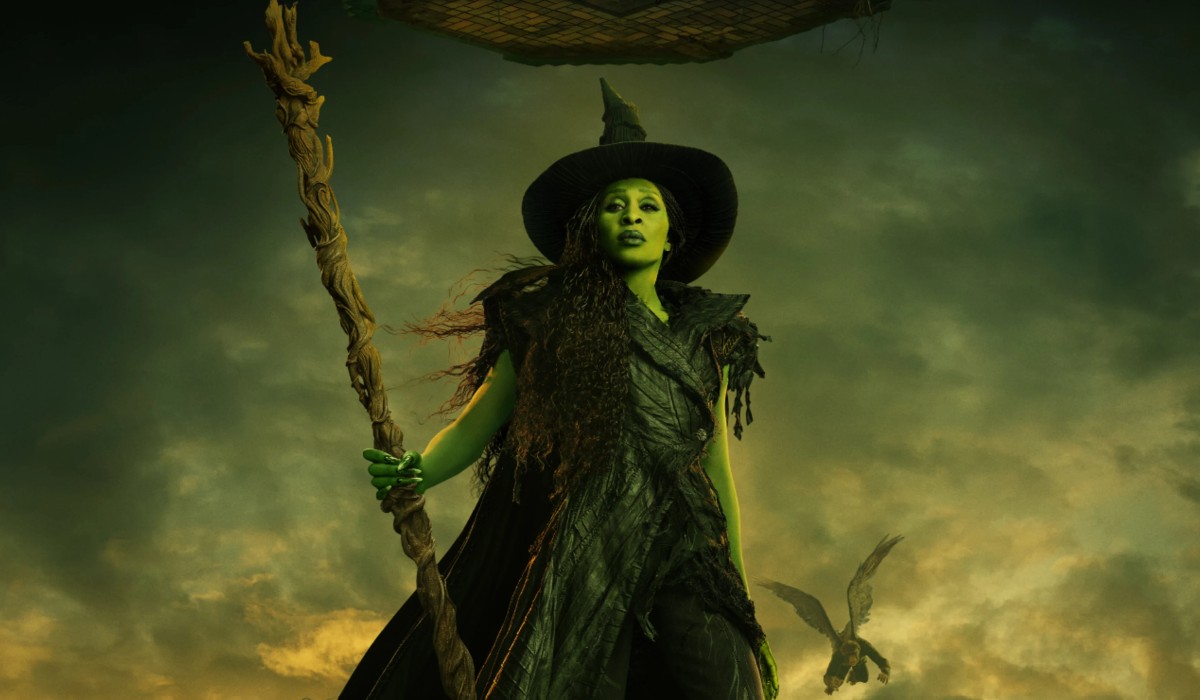
The main character, Elphaba (the so-called ‘Wicked Witch’) has green-coloured skin, and for this is an outcast from society. This is a major theme in the first film, and the decision to cast a Black woman as Elphaba cannot be an accident. This is less important in the second film, Elphaba having already come to terms with looking different to everyone else.
The Wonderful Wizard of Oz has already been exposed as a fraud. This ostensibly all-powerful wizard is not as benevolent as he appears. He scapegoats a minority in the magical land of Oz to consolidate his own power, with the talking-animal residents of Oz forced out of their jobs and homes and either taken away to ‘Oz knows where’ or driven into exile. The first film ends with Elphaba refusing to help the wizard in his xenophobic goals and setting off on a journey to topple him and his supporters from power.
In the sequel, we follow Elphaba as she attempts to take down this semi-fascist dictatorship, fighting against a powerful propaganda machine. There is obvious aesthetic inspiration from McCarthyite propaganda posters present in the film, where citizens are reminded to ‘beware the Green menace’.
Any attempts to humanise Elphaba are blocked by the powerful of Oz, who insist on labelling her ‘the Wicked Witch’ rather than by her name. Meanwhile, Glinda (Ariana Grande) is the ‘Good’ witch. These two words; ‘wicked’ and ‘good’ are used to encourage the citizens of Oz into a binary mode of thinking, where you are either for goodness or wickedness. This works to undermine Elphaba in her attempts to liberate the oppressed animal minority, as the ordinary citizens are simply too afraid of her to listen to what she is saying, and do not want to be seen as siding against the goodness of Oz.
Propaganda appears in other ways, too. In one musical number, distantly reminiscent of Walter Benjamin’s Theses on the Philosophy of History, the Wizard sings,
‘Where I’m from, we believe all sorts of things that aren’t true / We call it history / A man’s called a traitor / Or liberator /… / Is one an invader / or noble crusader / It’s all in which label is able to persist.’
The theme of terrorism is also touched on, with the state manipulating events to paint Elphaba as a terrorist and thus sow even more fear. This fear is riled into frenzy and the closing act of the film displays how this can play out.
After watching this film, I had to do some research. There is no way that these ideas can appear in one of Hollywood’s biggest films of 2025 by accident. It turns out, Gregory Maguire wrote the novel Wicked which the stage musical and now films are based on in the early 1990s as a response to US propaganda about Saddam Hussain in the lead-up to the First Gulf War. Though some of this is lost in the adaptations, the subversive undercurrent remains in the film.
If you have an evening off this Christmas or want to take children to see a film that you will also enjoy, Wicked: For Good is well worth a watch. Given the rampant Islamophobia, crackdown on resistance, the misuse of terrorism law and rising fascism in Britain, it is possible it might feel a bit on the nose. The only other risk is that you will walk out of the cinema with the lovely harmonies of Ariana Grande and Cynthia Erivo stuck in your head.
From this month’s Counterfire freesheet
Before you go
The ongoing genocide in Gaza, Starmer’s austerity and the danger of a resurgent far right demonstrate the urgent need for socialist organisation and ideas. Counterfire has been central to the Palestine revolt and we are committed to building mass, united movements of resistance. Become a member today and join the fightback.
