
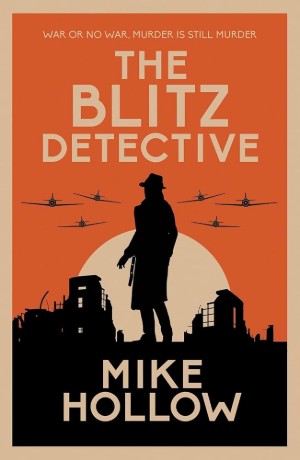
 Mike Hollow, The Blitz Detective (London: Allison and Busby 2020-25)
Sybil Cock is enjoying Mike Hollow’s detective novels set during the Blitz
These books (ten in total) paint a clear picture of class, history, privilege and wartime devastation in the London of 1940. The first five are set in West Ham, now the western half of Newham, the rest in other parts of London.
Detective Inspector Jago investigates a series of murders in these exceptionally well-researched books. He is accompanied by his detective constable, young Cradock, who is loyal, helpful, and has insights not available to his superior by reason of his class.
Jago fought in France in the First World War, as did many of the older characters, and the horror of the trenches constantly illuminates the stories. Jago’s education and profession allow him to interact with both local working-class people and with the assorted toffs and bureaucrats who control the police and various local and national authorities.
The stories are enriched by the American female journalist Dorothy, who writes (heavily censored) copy about the Blitz for a US audience in Boston. She was previously a war correspondent with the Republican side in Spain and is stationed at the Savoy, giving us yet more class and international political insights.
There are many ongoing themes, a small sample is below:
Rationing is never far away. Tea, meat, and butter are rationed but not bread, cheese or fish, yet. There is under-the-counter, off-ration profiteering. The docks are nearby and an intended target for the German (and Italian) bombers, but they also provide a context for chancers who ‘pilfer’ and resell from the wharves. Jam roly-poly and pie and mash are contrasted with the food at the Savoy and down west. The journalist is introduced to fish and chips wrapped in yesterday’s news. London’s landmarks and, more interestingly, trams and buses, are described in what can only be called loving detail.
The destruction and everyday tragedies of the Blitz are on every page. Air raids are nightly, and we learn much about Anderson shelters and public shelters; their discomforts and the corruption surrounding access to them and their construction. Reference to Britain’s bombing of Germany is frequent with ensuing discussion.
Many characters are ARP volunteers, with a day job too. One victim is strangled with what appears to be a ‘nylon stocking’: something which Jago must ask Dorothy to identify as they are unknown in 1940s London, even on the black market.
One book is themed around the ‘Fifth Column’, the east Londoners who sympathised with Hitler. These contradictions are also explored in substantial detail in another book which has several pacifist characters, members of the Peace Pledge Union. Following the fall of France in summer 1940, this movement split and many became non-combatant volunteers.
The extreme sexism of the times is never far from the stories. The ’marriage bar’ for teachers and others is explored in detail, including the teacher unions who initially supported it. The ban on married women teaching was not abolished until 1944. Women are shown as strong individuals with responsible jobs and not as wives, widows, mothers and girlfriends. One woman is a skilled ‘comptometer operator’ at the HQ of the London Coop in Maryland, Stratford.
The plotting is immaculate and the research extensive and detailed. Every road, municipal building, cinema, school and church mentioned exists, or did until it was flattened. The atmosphere of darkness, rain, dust, rubble and smoke from bombing raids illuminates every page along with the abject poverty and daily survival struggles.
This is a series of novels crafted in traditional detective fiction style with a broad range of characters and many false leads, culminating in an answer to ‘whodunnit?’ Each book starts with a murder and often the body is discovered by a warden after an air raid.
The detective and the journalist can cross class lines with ease and provide us with a fascinating political portrait of London in 1940. The main characters and their relationships develop over the months.
Because I live in east London, much of the terrain is familiar to me, and I grew up with wartime memories passed on to me by my dad. I found the books at my public library, and I suggest you do the same!
Before you go
The ongoing genocide in Gaza, Starmer’s austerity and the danger of a resurgent far right demonstrate the urgent need for socialist organisation and ideas. Counterfire has been central to the Palestine revolt and we are committed to building mass, united movements of resistance. Become a member today and join the fightback.
