
 Stack of books. Photo: Heffloaf / Wikimedia Commons / CC BY-SA 4.0
Counterfire writers recommend their favourites from this year with a mixture of the new, the classic, fiction and analysis
Michael Lavalette
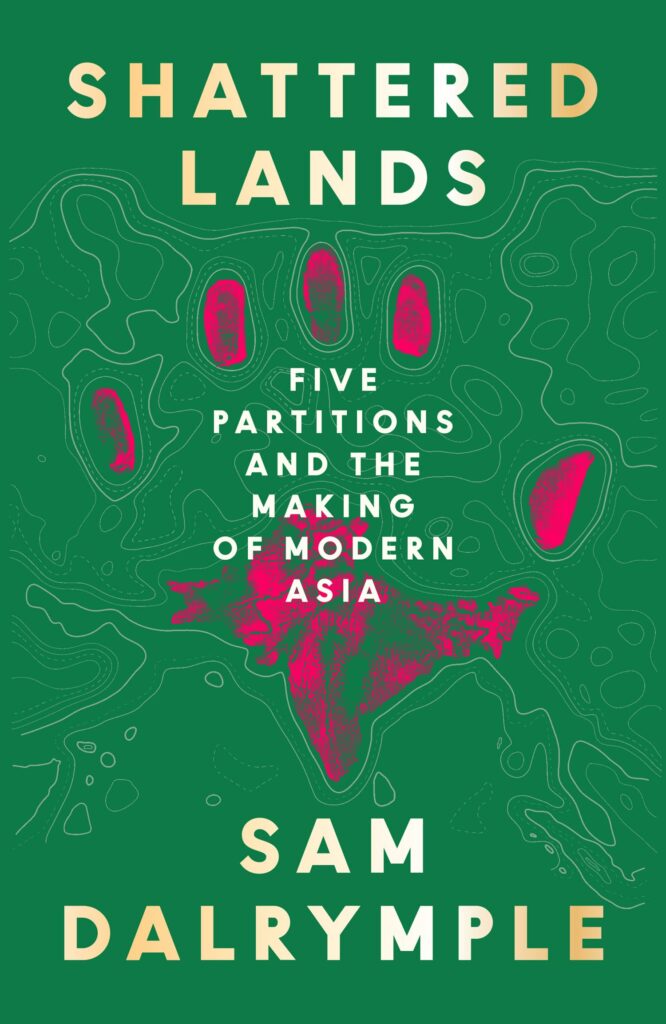
I’ve just finished reading Dalrymple’s lengthy history of the breakup of the ‘Raj’, Shattered Lands: Five Partitions and the Making of Modern Asia (London, William Collins 2025). He traces this story via what he calls the ‘five partitions’ that gradually split the area formally known as the ‘Indian Empire’.
What I hadn’t fully realised before reading the book was the extent of the Raj. Up until 1928, it covered the area that includes the present day states of India, Bangladesh, Pakistan, Burma/Myanmar and Nepal (this much I knew) but also Bhutan, Yemen, Oman, the UAE, Qatar, Bahrain and Kuwait (which I did not!).
Ironically, British maps did not always indicate these nations were included in the British Empire; the British were wary of riling the Ottomans or other imperial states. However, the Interpretation Act of 1889 made it clear that the British considered Nepal, Oman and the Emirates part of ‘India’ with the result that the ‘Indian Empire’ was almost twice as large as present-day India.
The end of the World War I extended the British Empire, yet the war itself sowed the seeds of its own downfall. The Indian Empire had contributed over £14 billion (in today’s money) to the war effort, and over a million Indian soldiers had fought overseas, yet those soldiers returned home to find that nothing had changed and their rights were denied. In this context, anti-colonialism took hold and over the next thirty years, the majority of the Indian Empire had gained its freedom from Britain (though it would be a further twenty years before Bangladesh gained independence from Pakistan).
Dalrymple covers the anti-colonial struggles, the political machinations of the various elites and the horrors inflicted by British rule and the partition process. He is less good at looking at the structural shifts in the imperial system that lay behind the breakup of the British empire.
Nevertheless a good, informative read.
Najari Sidqi (1905-1979) was known as a journalist and writer, an outspoken critic of Nazism and a Russian/Arabic translator. But less well known is the fact that for fifteen years he was one of a small number of Arab communists recruited to the Communist movement and was an activist in the underground leadership of the Palestine Communist Party (PCP).
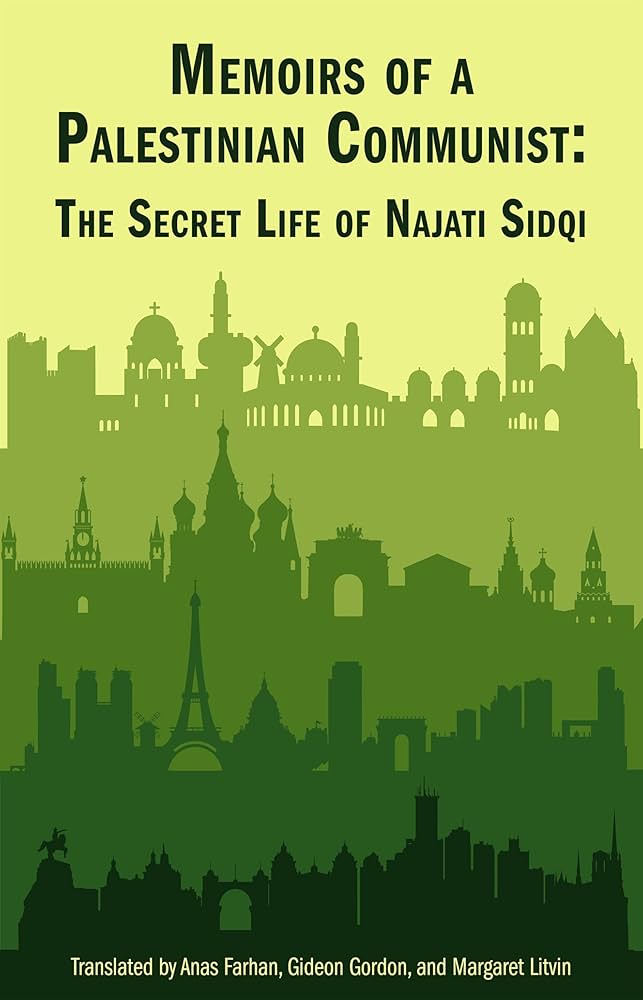
Sidqi’s Memoirs of a Palestinian Communist (Austin: University of Texas Press 2025) offer a fascinating insight to his early political life. These years are important because they show him, and his comrades, grappling with the twin evils of Zionist settlement and colonisation and British imperial rule in inter-war British Mandate Palestine.
The PCP took hold in Palestine in 1919 amongst radicalised Jewish settlers from Eastern Europe. The party was formally recognised by the Communist International in 1924 and instructed to ‘Arabize’, in other words to recruit actively amongst the Palestinian masses. Sadiq was one of their first Arab recruits joining in 1924.
Between 1925 and 1928, he was sent to university in Moscow. He returned to Palestine in 1928 and joined the PCP Central Committee, just after the Al Buraq Uprising of 1928.
Bizarrely, during the Palestinian rebellion of 1936-9 (which barely gets a mention) he was sent to represent the Communist Party in Spain (and sent to Algeria and Morocco).
By 1939, he had become disillusioned by Stalinism and the final straw was the Hitler-Stalin pact which marked the end of his affiliation to the CP.
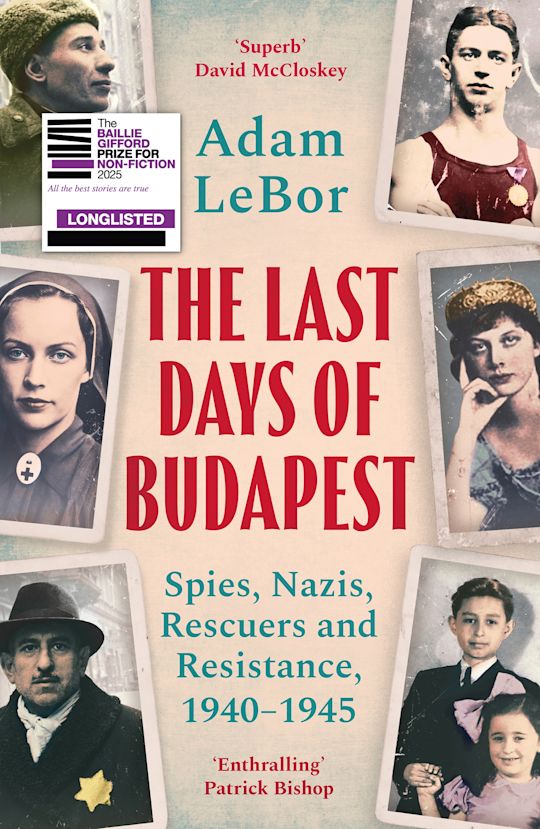
LeBor’s history of Budapest in the twentieth century, The Last Days of Budapest: Spies, Nazis, Rescuers and Resistance, 1940–1945 (London: Apollo 2025), covers a lot of fascinating detail about Budapest’s development as a cultural centre, centre of European Jewish life, and heart of the uprisings of both 1919 and 1956.
It’s entertaining and well written. There are some great nuggets of information. But whilst it’s rich on detail, this is often at the expense of a broader engagement with the structural shifts impacting on Hungary in the twentieth century. Too often the history is told through the story of notable individuals, the rich and powerful, the artists and various spies and war heroes – but overall this produces a fragmented, piecemeal history of the city and the period covered. A book of fascinating vignettes and entertaining stories, but one which fails to offer any rounded understanding of the place of Budapest in the interwar history of Europe.
Lindsey German
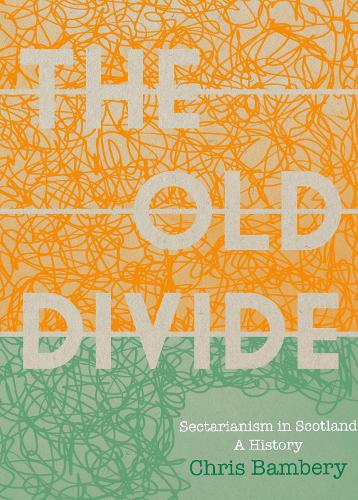
A Glasgow friend of mine told me many years ago that his father was the first Catholic to be employed in the shipyards, and this wasn’t until the World War II. Chris Bambery’s history of religious sectarianism in Scotland, The Old Divide: A History of Sectarianism in Scotland (Perth: Tippermuir Press: 2025) shows how religious divisions between Protestant and Catholic fuelled major schisms at work and discriminated against large sections of the working class. These were similar to those in the Orange state of the north of Ireland, and meant that skilled work in both Belfast and Glasgow was the domain of Protestant workers. Bambery tells the story of how employers and church dignitaries encouraged sometimes vicious religious sectarianism. One fascinating aspect is the racist arguments used against Irish Catholics in the 1920s and 30s. They were accused of being in thrall to a foreign religion, their presence described as an ‘invasion’, and accused of destroying Scottish culture. The parallels with racism against Muslims today are uncanny.

Gaza is always on our minds and a lovely short read is One Day, Everyone Will Have Always Been Against This (Edinburgh: Canongate: 2025) by Omar El Akkad. It tells the story from the perspective of an Arab living in North America and having to deal with racism, colonialism and bigotry about Palestine. The solidarity with the people of Palestine and resistance to the harms of the legacy of empire shine through.

Not a recent book, but essential reading for us all is Trotsky’s writing on the united front and how to defeat fascism. He writes with an increasing urgency as Hitler gets closer to power in 1930-2. By then, Trotsky was in exile having been banished by Stalin. He was very isolated politically and under constant attack from the Communist Parties who themselves followed a series of disastrous policies, particularly the tendency to equate the social democrats with the fascists and refuse to unite with them against the greater threat. His writing is some of the clearest and most relevant, and it is one of the great tragedies of history that his voice went unheard. You can find some of these writings in The Struggle Against Fascism in Germany (London: Penguin 1975) or buy them second-hand from left bookshops, or read some of them for free on marxists.org.
Chris Bambery
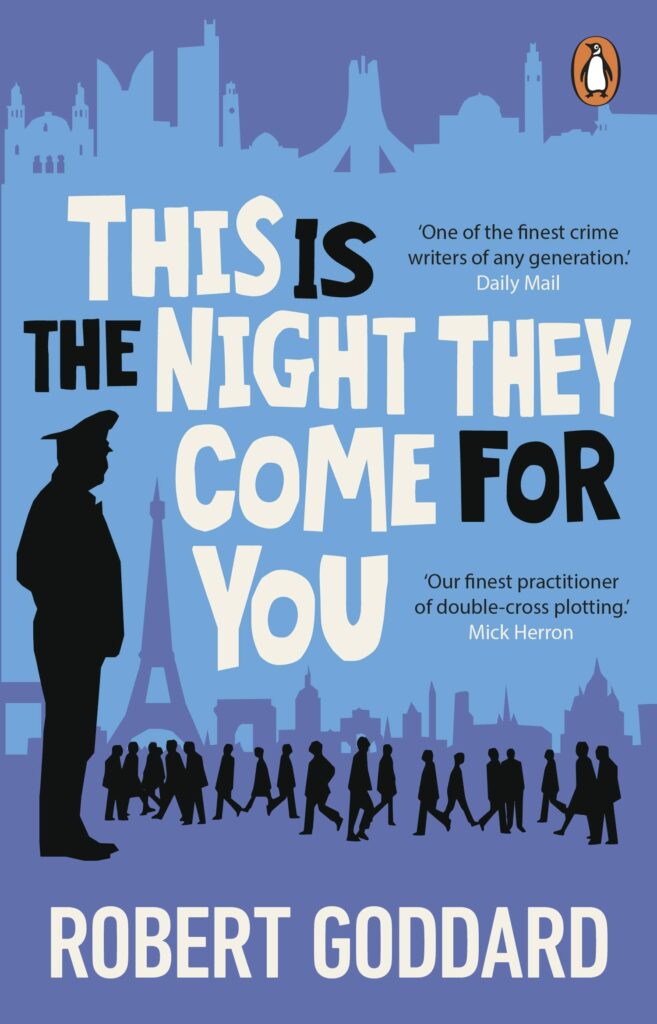
This is the Night They Come for You (London: Penguin 2022) is a gripping thriller with the twists in the plot guaranteed to hold your attention. The novel centres on one dreadful political event in modern French history: the massacre of hundreds of pro-independence Algerian protesters in Paris on the night of 17 October 1961. They were beaten to death and the living and the dead were thrown into the Seine.
Thousands were sent on public buses to the Parc des Expositions, the Vélodrome d’Hiver and other such centres that had been used under the collaborationist Vichy regime during World War II as internment centres for Jews before being handed over to the SS to be sent to the death camps. The head of the police in charge of the operation was Maurice Papon, later jailed for crimes against humanity committed while serving Vichy.
The book begins in Algiers where we meet police superintendent, Mouloud Taleb, nearing retirement, but whose life has been scarred by the awful events of the 1990s when the ruling dictatorship fought a dirty war with Islamists, cheered on by the West and by France in particular.
If you know little of the struggle for Algerian independence, don’t worry, the book will take you through it patiently, in ways always appropriate to the plot. Taleb is asked to work on a highly political case with Agent Hidouchi, a female member of the country’s feared secret police.
Tighten your seat belt and read on.
Stealing Horses to Great Applause: The Origins of the First World War Reconsidered (London: Verso 2025) was my favourite book of 2025; history at its best. Paul Schroeder came from a conservative Republican Party tradition in the mid-west but was deeply alienated by George W. Bush and the neo-cons over the 2003 invasion of Iraq. Stealing Horses offers an interpretation of the causes of World War I which focuses on the breakdown of a fragile imperial order at the end of the nineteenth century. I defy you to read it and not find many parallels to today.
It also centres on the region of Europe, the Balkans, where three empires, the Austro-Hungarian, Tsarist Russia and the Ottoman Empire, faced off. The last was in its death throes but the other two would not survive the coming war.
This was where the spark which ‘began’ the war took place: the assassination in Sarajevo of the heir to the Austro-Hungarian throne and his wife. Schroeder carefully explains that the creation of military alliances in Europe in the decades before created a situation where every European power, including Germany, Britain and France, felt they had to stand by their allies, whatever the cost.
I cannot do justice to this book: read it!
Shortly after Xmas, I am going on holiday for a week in Alicant. Where’s that you might ask? You’ll know it as Alicante, its name in Spanish but it’s Alicant in Catalan/Valencian, for the city lies in the region of Valencia which is historically Catalan speaking.
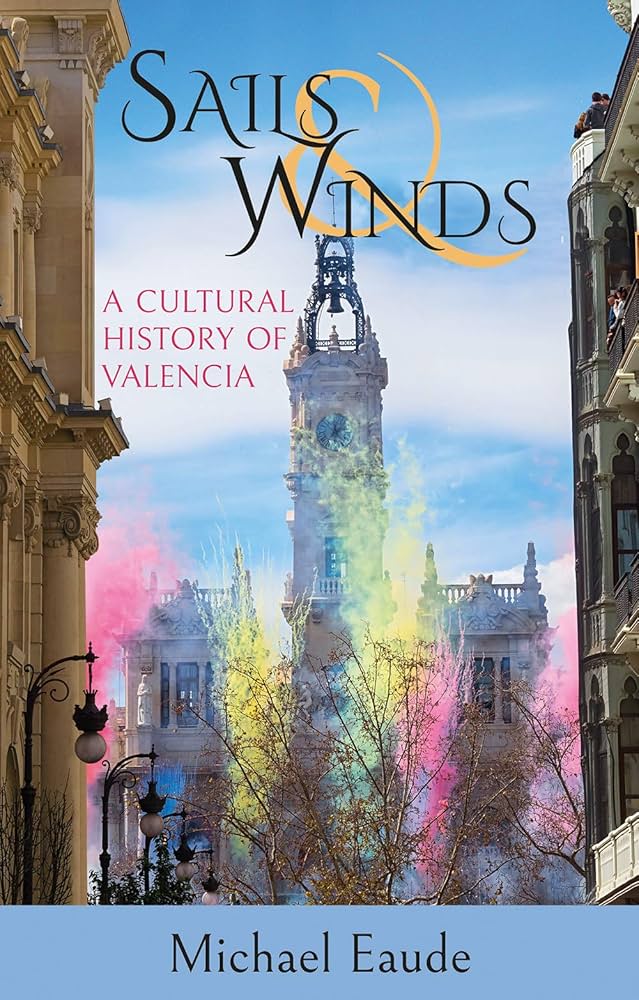
Valencia, the region, is a tangled web and Michael Eude’s Sails and Winds: A Cultural History of Valencia (Oxford: Signal Books 2019) unties the knots. The book is history, cultural tour and travelog rolled into one. The region’s classic dish is paella, and that is a bequest of centuries of Muslim rule. They created the horta, the irrigated market gardens surrounding Valencia city and much of the coast. The cathedral in is a converted mosque.
Eaude takes to centres of anarcho-syndicalism and deals with the unresolved legacy of the dictatorship of General Francisco Franco, victor of the 1936-9 Spanish Civil War. Alicant was where the remnants of the beaten Republican army had to surrender to fascism when the ships promised to evacuate them did not appear.
This is a wonderful book taking us through a wonderful region to places off the familiar tourist tracks.
Elaine Graham-Leigh
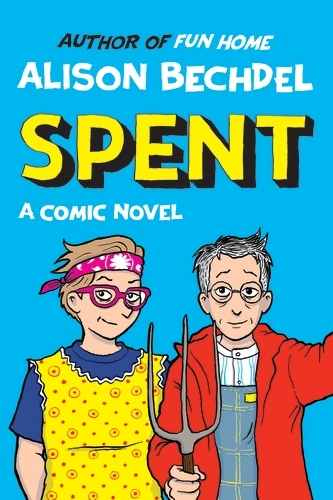
There can be few graphic novels other than Spent: A Comic Novel (London: Penguin Random House, 2025) where all the chapter titles are taken from chapter titles in Marx’s Capital, and still fewer where these are illustrated with carefully observed cats and goats. As the story opens, book-Alison (who is not quite the same as the real-life Alison Bechdel) is living with her partner Holly in a pygmy-goat sanctuary in rural Vermont. With characters from Bechdel’s comic strip, ‘Dykes to watch out for’ living nearby, they form a community of people trying to live radically and ethically in Trump’s America.
Book-Alison spends much of the novel trying to reconcile her politics with the fact that she lives on the earnings from her hit memoir, Death and Taxidermy (in real life, Fun Home), which has been made into a hit magical-realist ‘Schamazon’ series with added cannibalism and dragons. She also has to face the implications of pitching her next book, about living an anti-capitalist life, to the publishers Megalopub, owned by ‘that conservative media mogul who’s destroyed American democracy’ (p.11).
Spent doesn’t offer any easy answers to the questions book-Alison faces, of ‘where had her youthful idealism gone? Precisely when had her moral erosion begun?’ (p.38). This particular question was sparked by ordering household supplies online, an anti-consumerism tirade undercut, with sharp humour, by the admission that ‘actually, they do need a toilet brush’.
The book’s conclusion is a celebration of friendship and mutual aid, which doesn’t feel entirely sufficient to resolve the contradictions of trying to defeat capitalism one lifestyle change at a time. A little socialist organising with those ‘annoying, tenderhearted, and utterly luminous friends’ (p.256) might help book-Alison overcome her feelings of political exhaustion (and who knows? perhaps real-Alison as well). Even without it though, this is an engaging and funny look at how to live in the permacrisis of capitalism, with, importantly, bonus cats.
The commonsense argument about the housing crisis is that it is a result of a shortage of housing. This is good capitalist logic: if the demand for any commodity exceeds supply, then the vendors can raise their prices, secure in the knowledge that desperate would-be consumers will pay it anyway. In housing, it justifies planning deregulation, concessions to developers and building on previously protected land, on the basis that the housing crisis shows that the need for homes must override any other considerations.
In Against Landlords: How to Solve the Housing Crisis (London: Verso, 2024), Bano explains how the problem of housing is not that we aren’t building enough homes. In London, for example, the population is about the same as it was seventy years ago, while vast numbers of houses and flats have been built. In Cornwall, a blackspot for housing affordability, in 2021, there were 12,000 people on the council-housing waiting list, but over 10,000 properties rented on Airbnb, enough to house almost the entire list at a stroke. Nor is this an issue of smaller households needing more properties: the ratio of homes to households has grown over the period of the housing crisis.
The way in which the massive growth in the cost of housing has coincided with an increased supply of housing points to a different cause of the crisis. It is ‘a consequence of a deliberate government policy of state-backed rent-raising’ (p.26), going back to Thatcherite moves to create a profitable housing market. This was the origin of a system in which house-price growth, based on rental values, stands in for actual economic growth and so has to be encouraged at all costs, even though it means spiralling costs for buyers and renters alike.
This situation is not an inevitability even within capitalism. As Bano points out, private landlordism nearly died out in Britain in the last century, with around 60% of homes being privately rented in 1945 but only 6% by 1979, before it was revived under Thatcher. Labour’s Renters’ Rights Act, which among other things abolishes no-fault evictions, may be more limited than we would like, and may not be fully understood even by those who created it. Bano remembers how in 2019, he pointed out to the then-Shadow Housing Minister, John Healey, that he was reintroducing a form of rent regulation, and ‘he looked at me as if I had grown an extra head’ (p.30). It is however a measure of the success of housing campaigns in getting renters’ rights on the agenda. With continued pressure and clarity on the cause of the housing crisis, it may also be a step in the right direction of a better housing system for all of us.
Chris Nineham
Discussion of the British Empire is gathering pace. Steve Cushion’s Slavery in the British Empire and its Legacy in the Modern World (Monthly Review Press 2025) is a very important addition to the debate. It is a powerful indictment of the historical conduct of the British ruling class but its special power comes from seeing slavery not as a singular scandal but as part and parcel of the development of British capitalism.
As well as showing how profits from slavery drove industrialisation, Cushion explains how modern banking systems, labour management science, racism, the South Sea Bubble and the police force all had their origins in the slave trade.
He also draws out the parallels between colonial land grabs and the violent enclosures of common lands at home, and he keeps coming back to the fact that working people in Britain opposed slavery with mass rallies and demonstrations.
It was good to see an updated new edition of Dave Randall’s excellent Sound System: The Political Power of Music (London: Pluto 2025) this year. Originally published in 2017, the book has taken on a new relevance as musicians are back centre stage in radical politics. An accessible Marxist take on music down the ages is a rarity to put it mildly. Randall doesn’t just demolish the myth that music is somehow above and beyond politics, he shows how it is always shaped by its social and economic context and discusses the circumstances in which it can impact back on the world.
As a musician involved in several struggles himself, he gives us all sorts of fascinating examples of how this plays out in practice including an extended account of the role that musicians have played supporting Palestine.
Characteristically, his story sheds light on the history of the Palestinians’ struggle itself as well as pointing to the difference that music can make. The new edition also contains a fascinating discussion of the impact of AI on musical production.
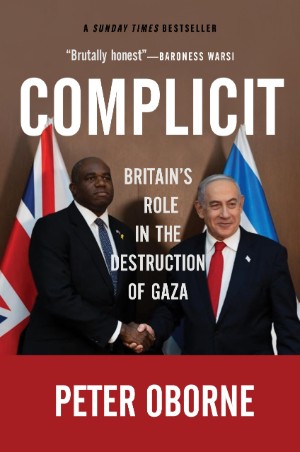
Peter Oborne’s Complicit: Britain’s Role in the Destruction of Gaza (O/R Books 2025) is a detailed and angry expose of the way that Starmer and the wider British establishment have backed Israel to the hilt during its genocide. This is a service in itself, but Oborne delivers much more than well-researched reporting.
One of the many useful things about this book is Oborne’s analysis of what drives the British establishment’s support for genocide. He documents in detail the intimidation and bribery carried out by the Israel lobby. But he also also makes the vital point that the British establishment is so susceptible to pressure because it supports Israel anyway as part of its commitment to the ‘special relationship’ with the US. Required reading for anyone interested in the dire state of British politics in the last few years.

John Rees’s Fiery Spirits: Popular Protest, Parliament and the English Revolution (Verso 2025) has been well reviewed here and elsewhere, but it was one of the highlights of left publishing of 2025. It is a great introduction to the history of the English Revolution of the 1640s but also brings new perspectives. Rees provides original insight into the issues and social forces that led to the revolution, and a fascinating account of the role of political leadership in a revolutionary movement with much to reflect on for our times.
Finally, I can’t help recommending a tremendous selection of essays from the 1980s by the Marxist philosopher Norman Geras that I came across this year in a second-hand shop. Literature of Revolution: Essays on Marxism (London: Verso 2017) is actually a product of the 1970s revival of Marxist thought. Amongst much else, it contains a fantastic exposition of the democratic nature of Trotsky’s political theory and practice, a celebration of the revolutionary spirit of Rosa Luxemburg’s work, one of the most incisive accounts I have read of Marx’s theory of commodity fetishism and a very useful take down of the ‘Marxism’ of Louis Althusser. What is not to like?
Steven McWilliam
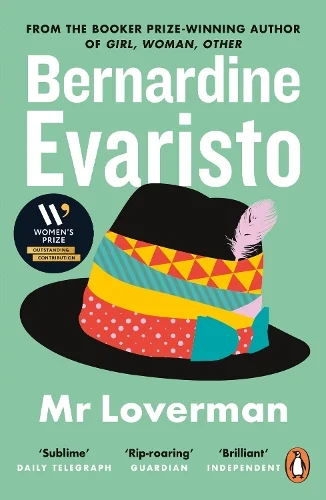
Mr Loverman (London: Penguin 2013) is a novel by the wonderful Bernardine Evaristo about a gay, Caribbean man called Barrington, or Barry to his friends, from Antigua who has hidden a lifelong affair with his best friend and fellow islander Morris. The story covers the tense ground of family dynamics with the difficulties faced by immigrants over generations in Britain.
Evaristo’s best quality is the unusual style of prose she employs where the text will also be written in the manner of whoever we are following. In most chapters of the book, Barry is the central focus and it feels like he is narrating the story which is being written down as he says it rather than being written about him. In the chapters that follow Carmel, his wife of many years, the style is flowing without punctuation. New thoughts are on new lines and the energy of the moments flow out of the pages. This is very reminiscent of her most famous book Girl, Woman, Other which also has a singular prose style.
The chapters following Carmel were historical moments that give shape to her character as we see things play out from Barry’s point of view leading to the end of the book feeling satisfying. The portrayal of a family’s struggles is handled delicately and shows how those dynamics develop over years.
It is an incredibly charming book; I challenge anyone to read it while not falling in love with Morris’ character. All the characters have such vibrance to them from Barry’s daughters and grandson to the women of the Ladies Society of Antigua. It is clearly written with a lot of love for the island of Antigua and the people that came to rebuild Britain. If you are looking for an easy read that has deep moments and a wonderfully engaging style, I can recommend none better than Evaristo and Mr Loverman.
Before you go
The ongoing genocide in Gaza, Starmer’s austerity and the danger of a resurgent far right demonstrate the urgent need for socialist organisation and ideas. Counterfire has been central to the Palestine revolt and we are committed to building mass, united movements of resistance. Become a member today and join the fightback.
