
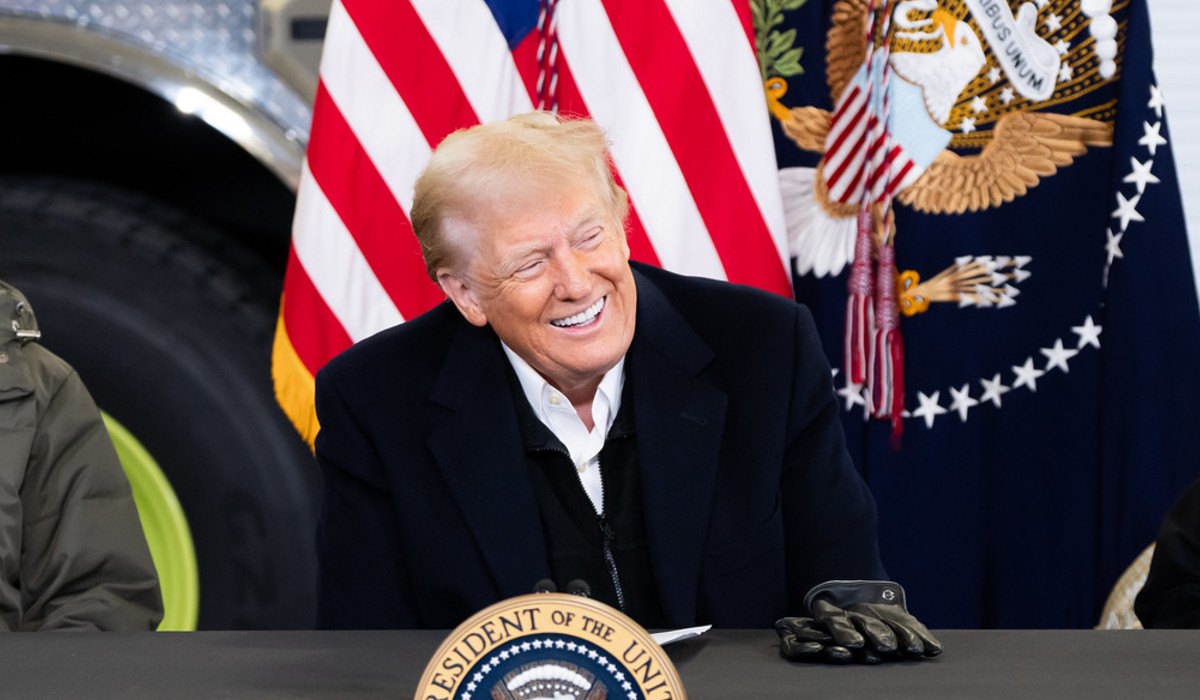
 President Donald J. Trump / Flickr / Public Domain
The conflicts in the country are very real, but their answer lies in a government that prioritises social welfare and community mediation, not US intervention, explains a Nigerian socialist
Based on my personal experiences growing up in Kaduna, I believe Nigeria’s insecurity is far more complex than a single narrative can capture. There are multiple groups with different motivations, some ideological, some opportunistic, and others simply criminal.
As a child in Kaduna, I witnessed frequent clashes between Muslim factions, especially after Friday prayers. The mosques were close to the market where my mother had a shop, and whenever violence erupted, everyone fled in panic. Though I didn’t understand the reasons at the time, it was clear these were intra-religious conflicts.
However, the Sharia crisis of 2000 was different: more brutal, more targeted, and deeply traumatic. I vividly remember peering through a window and seeing people being stoned and beheaded. I was staying at my uncle’s house, where the landlord was Muslim. That compound was spared, likely because of its religious composition. But my family home, just a short walk away, was under siege. Christians were forced to flee by jumping over fences while Muslims remained unharmed. Some Christians who couldn’t escape were killed. I personally knew victims, friends and neighbours who were murdered simply for their faith. One woman was killed for renouncing Islam, while her husband was spared after converting on the spot.
There was also a group that reacted violently during lunar eclipses, interpreting them as signs of divine anger. They would burn down hotels and attack everyone inside, regardless of religion. These incidents show that violence in Nigeria has long been driven by a mix of religious extremism, superstition, and lawlessness.
So, is killing happening in Nigeria? Absolutely.
Is it still focused on Christians? Possibly, but not exclusively.
Can the government do something about it? Yes, if it chooses to.
What has changed since 2000 is the scale and sophistication of violence. Today, Nigeria faces more dangerous and organised groups with varied agendas: ideological dominance and economic control. The situation has worsened because some individuals and networks benefit from the chaos. These benefactors fund and protect violent actors, making resolution difficult.
Even the Nigerian Air Force has mistakenly bombed innocent civilians in counterterror operations. Meanwhile, economic hardship and hunger continue to deepen, fuelling desperation and unrest.
As for President Trump’s designation of Nigeria as a Country of Particular Concern, I believe it’s more symbolic than actionable. Nigeria’s salvation will not come from external threats or interventions. It must come from within, through leadership that is empathetic, courageous, and committed to justice.
Until we have leaders who genuinely care about the people, prioritise security, and dismantle the networks that profit from violence, peace will remain elusive.
Nigeria’s insecurity is deeply rooted and multifaceted. I agree that simplistic calls for ‘more action’ from the government often lead to more violence, not less.
A socialist-oriented government would likely prioritise people-centred policies over elite-driven security responses. This would involve addressing root causes such as:
– Universal access to free healthcare, education, and food security
– A living minimum wage and a job-creation programs
– Land reform and equitable resource distribution
Community Peace Settlements
– Establishing local peace councils to mediate conflicts based on specific contexts (eg, herder-farmer, ethnic, religious)
– Engaging traditional and faith-based leaders to build trust and reconciliation
Peter Obi, while not a socialist, has positioned himself as less corrupt and more reform-minded. He may not be a messiah, but his emphasis on efficiency, transparency, and human capital development could lay the groundwork for a more people-focused security strategy.
Several actors profit from Nigeria’s insecurity:
– Political elites who use chaos to distract from governance failures
– Military contractors and arms dealers who thrive on prolonged conflict
– Corrupt officials who divert security funds
– Extremist groups who gain power and legitimacy through fear
Until these networks are dismantled, insecurity will persist.
Yes, poverty and inequality are the underlying causes, but the manifestations differ, from ideological extremism to economic opportunism to ethnic cleansing.
Calling for more military action instead of reform is dangerous. It leads to:
– Collateral damage: innocent civilians killed in airstrikes or raids
– Impunity: soldiers acting without accountability
The United States also struggles with religious extremism, superstition, conspiracy theories, and lawlessness (eg, mass shootings and police brutality). Figures like Trump often blame foreigners to deflect from internal failures. Nigeria must be careful not to mirror this rhetoric. Our problems are real, but our solutions must be homegrown, inclusive, and just.
Nigeria’s salvation lies not in foreign threats or military escalation, but in empathetic leadership, grassroots empowerment, and systemic reform. Until we prioritise people over power, peace will remain out of reach.
Before you go
The ongoing genocide in Gaza, Starmer’s austerity and the danger of a resurgent far right demonstrate the urgent need for socialist organisation and ideas. Counterfire has been central to the Palestine revolt and we are committed to building mass, united movements of resistance. Become a member today and join the fightback.
