
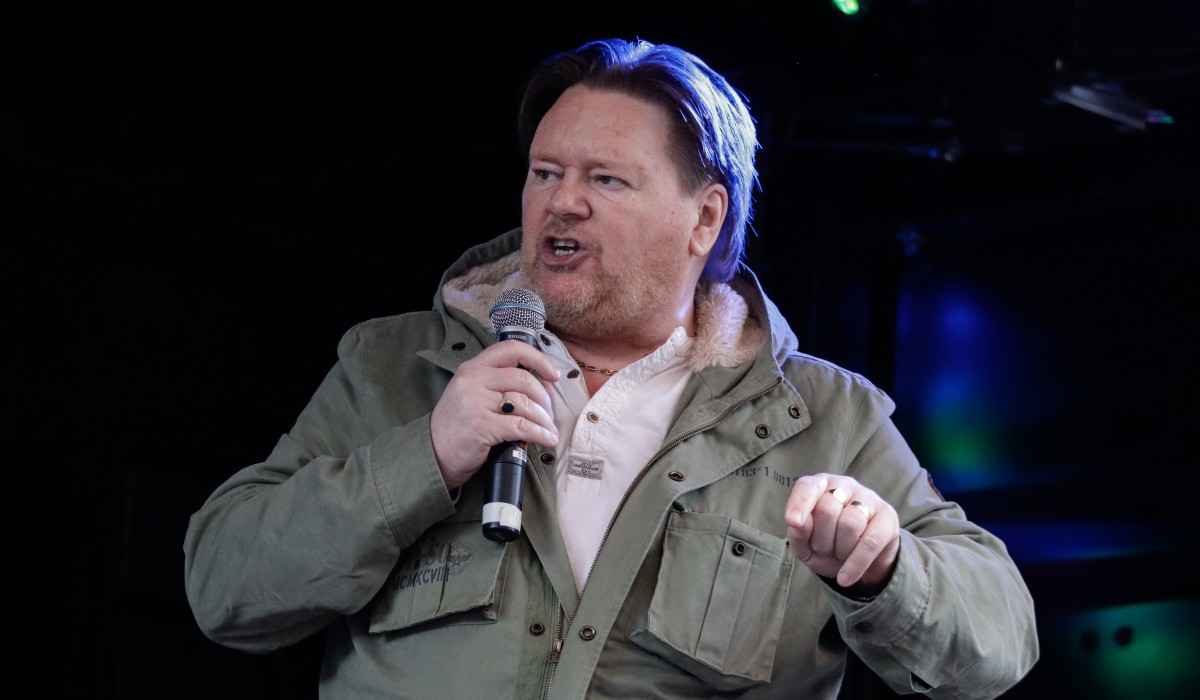
 Ian Hodson. Photo: Steve Eason / CC BY-NC 2.0
Michael Lavalette spoke to Ian Hodson, President of the Bakers, Food and Allied Workers Union about political trade unionism, countering the far right and the potential for Your Party
Can you tell us a little about your background?
I started off working in a food factory in Blackpool. I joined The Bakers, Food and Allied Workers Union (BFAWU) and soon became a shop steward. I gradually became an elected branch officer and then moved to work full-time for the union. In 2012, I stood to be President of the union and won. It’s a five-year term and I’ve stood four times.
Trades Unions are facing a decline in members and an aging membership. How do you think we can grow the union movement?
Workers have to see, in practice, that unions can improve their working conditions and wages. That’s primarily what unions are for. In BFAWU, we have taken a very proactive attitude to recruitment: we believe that we have to (and can) go out and recruit workers, even in the most difficult circumstances.
We have been centrally involved in working with workers at McDonalds and at Hovis, campaigning with them, supporting their strike actions and organising against zero-hour contracts and for better pay rates.
At McDonalds, for example, a lot of people, a lot of good union people, thought it would be impossible to organise in the fast-food sector. But we put organisers in, built a relationship with the workforce and then supported the workers during the ‘McStrikes’. Because of the work we had put in, we had a 100% vote for strike action amongst our members at McDonalds! We then moved to our ‘McBurn’ campaign where we built up a campaign for legal intervention against the regular burns our members suffer from in the fast-food industry.
This is how, in my opinion, we win people to the union: being active and visible over the struggle for improvements in health and safety, clear and guaranteed working hours and better pay.
But your union doesn’t just take up ‘bread and butter’ issues (as important as these are), you are also vocal over a range of political and social issues.
Of course! Look, I heard a Reform politician saying that London is full of people who don’t speak English. And I thought ‘of course there are lots of people speaking other languages in central London … it’s one of the most popular tourist spots in the world!’
But of course, they were trying to insinuate something else, but we have to be clear. Our class, the working class, is made up of old and young, men and women, gay and straight, black and white, people of various faiths and none. The bosses try to divide us.
They tell us that migrants are here to take jobs or force down wages, but that’s simply not true. The reason we have poor pay is because of the bosses and their wish to keep more of their vast profits for themselves. The reason for unemployment, poor housing, poor services is not because of refugees, it’s the political choices of the establishment.
And, of course, as a union, we need to campaign against division, decline of services, and lack of housing, because these are things that directly affect our members.
The Employment Rights Bill is going through parliament, are you confident Labour will implement it in full, as promised before their election?
Labour made all kinds of promises whilst in opposition. The Employment Rights Bill was going to stop zero-hours contracts, would improve pay and conditions and represent, they claimed, a fundamental improvement in worker rights. But it’s taking too long to implement, and we can see, in the small print, they are suggesting all manner of delays.
Well, workers can’t wait! We need better pay and conditions now, not in two or three years’ time.
You are heavily involved in the discussions and debates around ‘Your Party’. What are your hopes for the new party and its relationship with the union movement?
My union was heavily involved in the formation of the Labour Party at the start of the last century. We were affiliated to Labour for over 100 years. But in 2021, we took the decision to disaffiliate from Labour, frankly because we were so dissatisfied with Starmer.
But we do believe that workers and trade unions need political representation. So we have encouraged all our branches to engage with the debates around political representation.
For me, the potential for Your Party – with close to 800,000 sign-ups – is huge, though some of the machinations at the top really need to stop. Your Party needs to be a party of the grassroots, an insurgent party of ordinary people sick of the political establishment and the appeasement of the bosses.
We need to have a party that will fight for redistribution, greater equality, better services and a pay rise for all of us.
Before you go
The ongoing genocide in Gaza, Starmer’s austerity and the danger of a resurgent far right demonstrate the urgent need for socialist organisation and ideas. Counterfire has been central to the Palestine revolt and we are committed to building mass, united movements of resistance. Become a member today and join the fightback.
