
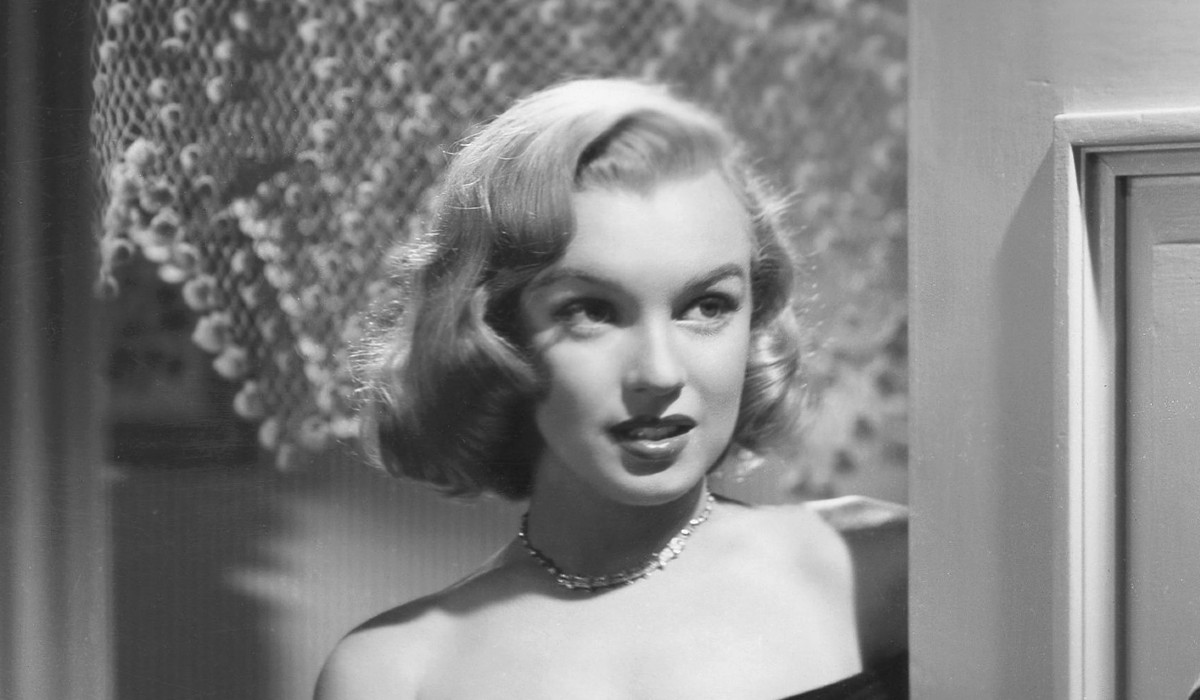
 Marilyn Monroe in Asphalt Jungle (1950). Photo: Public Domain
Monroe was more than the sex symbol Hollywood wants us to remember her as, she was politically conscious and vocal working-class woman, explains Lucy Nichols
Born 100 years ago this month, Marilyn Monroe is the most famous face that Hollywood has ever produced. Monroe was arguably Hollywood’s first modern sex symbol, but represents much more than just the sexualised feminine object she is most often remembered as.
Monroe was born during the Great Depression and grew up in various foster homes and orphanages in multicultural, working-class parts of California. It was later, during the Second World War, that Monroe was ‘discovered’ while working in a factory. From here, she began modelling and her career took off: she starred in films, adverts, magazines and more, her face instantly recognisable even decades after her death.
Less is known about Monroe as a politically active woman, one who pushed back against homophobia, anti-Communism and racism, who advocated for free love, herself rumoured to have had many affairs, most famously with the Kennedy brothers but also with a number of women. It is well known that Monroe married left-wing playwright Arthur Miller, perhaps less well known that she founded the Hollywood branch of the ‘Committee for a Sane Nuclear Policy’ and was even elected as an alternate delegate to the California state Democratic caucus. The FBI opened an investigation into Monroe in 1955 after she applied for a visa to visit the USSR, as well as due to her support for her then-husband.
Monroe maintained a friendship with New York Times editor Lester Markel, the pair writing back and forth about US and international politics: ‘I was brought up to believe in democracy, and when the Cubans finally threw out Battista [sic] with so much bloodshed, the United States doesn’t stand behind them and give them help or support even to develop democracy.’ She is, according to her FBI file, also believed to have visited radical left-wing American Frederick Vanderbilt Field in Mexico. Field wrote in his memoir that Monroe spoke of ‘her strong feelings for civil rights, for black equality, as well as her admiration for what was being done in China, her anger at red-baiting and McCarthyism and her hatred of [FBI director] J. Edgar Hoover.’
Despite her fame, Monroe avoided the consumerism of Hollywood and remained reasonably humble when it came to her home and clothing. Gloria Steinem wrote that Monroe ‘didn’t want to become one of the rich’ and was disgusted by those flaunting their wealth, quoting Marilyn’s own writing: ‘I remembered all the sounds and smells of poverty, the fright in people’s eyes when they lost jobs.’
With all of this in mind, it is difficult to imagine Marilyn Monroe as anything other than a tragic figure, especially considering her premature death, in murky circumstances, at the age of just 36. For Hollywood, then and now, Monroe was a ‘dumb blonde’ or a ‘bimbo’, playing the object to be laughed at, the prize to be won by male characters, or the uncultured, working-class caricature.
One might think that by 2026, the actor’s legacy would have progressed slightly beyond this, but sex still sells, and a sex object is far more attractive to Hollywood than a politically conscious working-class heroine.
Before you go
The ongoing genocide in Gaza, Starmer’s austerity and the danger of a resurgent far right demonstrate the urgent need for socialist organisation and ideas. Counterfire has been central to the Palestine revolt and we are committed to building mass, united movements of resistance. Become a member today and join the fightback.
