
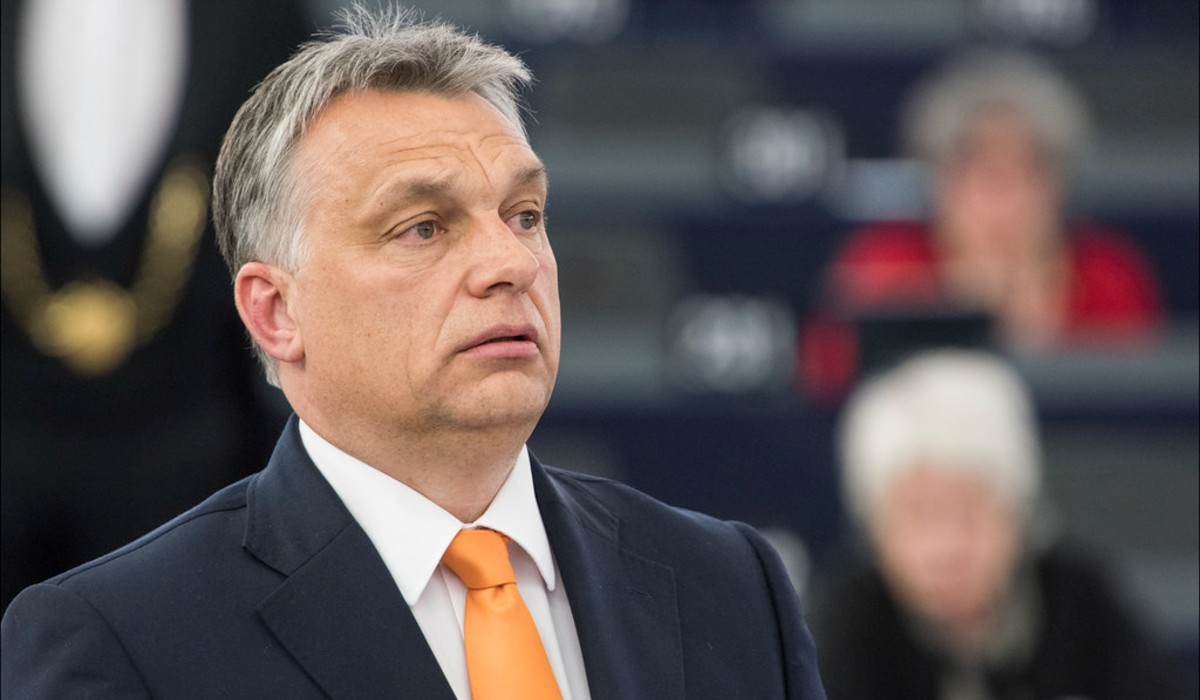
 Viktor Orban. Photo: European Parliament / Flickr / CC BY-NC-ND 2.0
As Viktor Orbán loses power in Hungary, Michael Roberts looks at the country’s economy and assesses how far the opposition is likely to improve its situation.
Hungary has a general election tomorrow. Hungary is a relatively small country with less than 10m in population and with a GDP of just $220bn and with just 8.2m registered to vote. This election is pivotal, not just for Hungarians, but also for the EU Commission and the core European governments. The incumbent Fidesz government led by PM Victor Orban has been a thorn in the side of the EU for years. Orban has opposed EU sanctions on Russia and recently blocked the implementation of the latest round of agreed E96bn EU funding for Ukraine on the grounds that Ukraine has been stopping imports of Russian gas. The EU has responded by holding back Hungary’s share of structural and support funds.
Domestically, Orban’s party has been in power for 16 years, including a landslide victory in the 2022 election. It is claimed that over its period of rule, the government has gradually reduced democratic institutions like an independent media and courts; and adopted cronyist procurement policies for government spending and for foreign investors, with a high level of corruption. According to the EU, Hungary is an autocracy, not a democracy.
Not surprisingly,, Orban’s policies have attracted strong support from US President Trump and the MAGA movement. In the election campaign, US Vice-President Vance visited Hungary to give Orban the full backing. President Trump posted in his usual style: “GET OUT AND VOTE FOR VIKTOR ORBÁN. He is a true friend, fighter, and WINNER, and has my Complete and Total Endorsement. I AM WITH HIM ALL THE WAY!”
The EU leaders are desperate to defeat Orban and break the logjam that he is causing over the funding of the Ukraine war and on EU policies in general. They are backing to the hilt the main opposition party Tisza, led by Peter Magyar. Magyar was a former Fidesz loyalist with family and friends still in the government. He broke from Orban two years ago, accusing it of corruption and cronyism. Magyar recently added in a social media post: “The ongoing election fraud carried out for months by Fidesz, along with criminal acts, intelligence operations, disinformation and fake news cannot change the fact that Tisza is going to win this election.”
Magyar’s message on corruption resonated with people. After an estimated 35,000 people turned up to a protest organised by Magyar in March 2024, he launched his movement. Currently, independent polls suggest that Tisza is leading in the vote. In 2025, Hungary was again ranked at the bottom of the European Union, according to the annual Corruption Perceptions Index (CPI) compiled by the Secretariat of Transparency International in Berlin. The poor result reflects “the continued failure to remedy rule of law deficiencies and to curb systemic corruption, manifested in the organized theft of public funds”
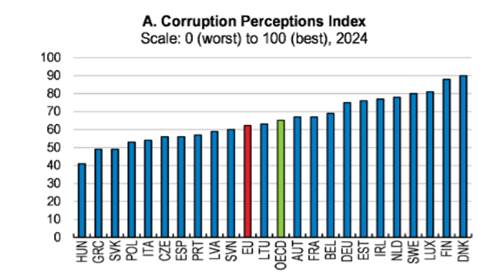
EU economists and Magyar claim that corruption is the main reason behind the country’s now persistent economic decline. But is it? As always, it is the structural economic issues that are more important. Since 2019, Hungary‘s real GDP growth has been highly volatile, marked by a sharp pandemic-induced contraction followed by strong but short-lived rebounds. Since mid-2022, the economy has largely fluctuated in a “no-growth zone,” characterized by stagnation or very limited expansion.
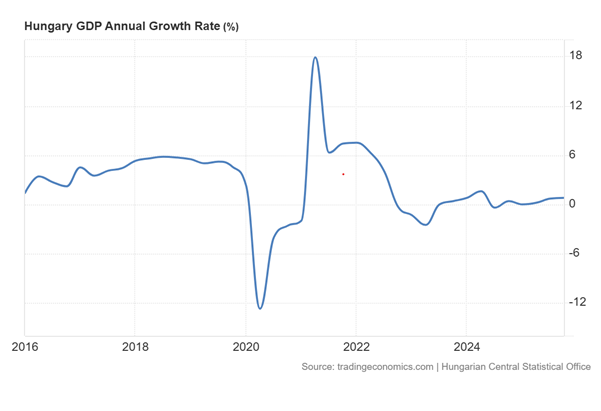
Capital investment and productivity has stagnated and unemployment has reached its highest level since 2016.
After the end of Soviet control in the early 1990s, foreign investment into Hungary by European and US multi-nationals flooded in to use cheap Hungarian labour in new factories (autos and electronics). This led to a sharp rise in the profitability of capital. But that investment petered off by the beginning of the 21st century as ‘globalisation’ slowed. Profitability fell back, particularly after the Great Recession of the 2008-9 and in the Long Depression of the 2010s.
The Hungarian economy remains very reliant on foreign investment and so is vulnerable to international crises, like the Global Financial Crash of 2008 or the COVID pandemic slump of 2020. And any global inflationary spike affects the Hungarian economy more than most, as it did in the post-pandemic inflation spike – and will also from the Iran conflict.
Before you go
The ongoing genocide in Gaza, Starmer’s austerity and the danger of a resurgent far right demonstrate the urgent need for socialist organisation and ideas. Counterfire has been central to the Palestine revolt and we are committed to building mass, united movements of resistance. Become a member today and join the fightback.


