
 Books. Photo: Martin Vorel / Wikimedia Commons / CC BY-SA 4.0
Counterfire writers recommend their favourites from this year with a mixture of the new, the classic, fiction and analysis
John Rees
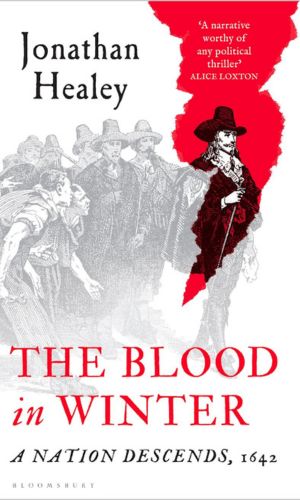
Jonathan Healey’s Blood in Winter: A Nation Descends, 1642 (Bloomsbury 2025) deals with the moment in the English Revolution when Charles I lost a revolution in London and was forced to flee his capital and start a civil war to try to regain his throne.
Like his previous, equally impressive, work, Blazing World, this book shows Healey’s mastership of popular history. In some quarters of academia, this skill is undervalued compared with archival research. Healey has that capacity as well, but his ability to integrate it with a convincing over-arching narrative is what makes his work stand out. Without this dimension, specific research cannot be contextualised and therefore its meaning properly assessed.
Healey has chosen this subject well. There has been no history of Charles I’s attempt in 1642 to arrest the five men who were the leaders of parliament since John Foster’s book in 1860. Yet it is a decisive moment. If Charles had succeeded in arresting John Pym, John Hampden, Arthur Haselrig, Denzil Hollis, and William Strode, he would have decapitated the parliamentary leadership at a crucial moment.
His failure to do so had multiple causes, which Healey illuminates really well. One of the most important was the actions of the London crowd, which Healey gives its full weight. This is a very valuable addition to the literature on the English Revolution and readers new to the period as well as those who already study the period will profit from it.
Lucy Nichols
The third edition of Hamas: A Beginner’s Guide (London: Pluto 2025) was released this year as a response to 7 October 2023 and the genocide that has happened since. Hroub gives a balanced explanation of the origins, and political and religious frameworks of Hamas, allowing the reader to better understand both the political situation in Palestine (in Gaza and the West Bank) and the Palestinian struggle more broadly.
This is a useful book, and neither lauds nor demonises Hamas. Hroub does not excuse, but explains Hamas as a broad organisation, which is proscribed as terrorist in the UK. The book carefully sets out why the group remains popular in Palestine, why they resort to the tactics they do, and, perhaps most usefully, how they got to 7 October. He provides an analysis of Hamas’s relationships with the West, with Israel, with other political groups in Palestine, and the rest of the Arab world. This book does not excuse but explains Hamas and is certainly worth reading for anyone who wants to cut through the lazy, offensive stereotype that Palestinian resistance is limited only to terrorism.
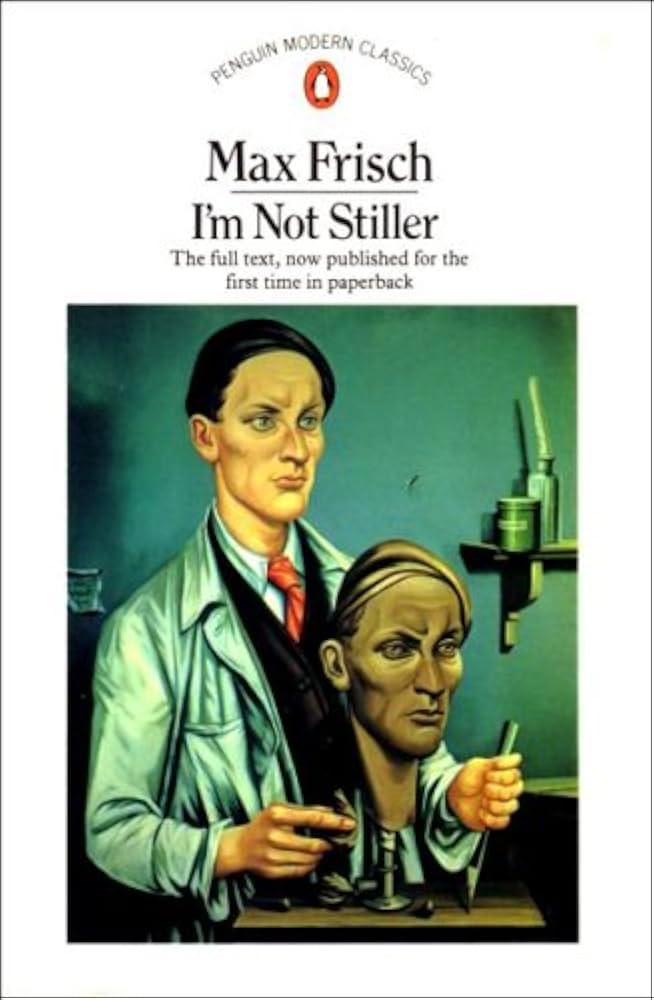
Though not released this year, Max Frisch’s novel, I’m Not Stiller (London: Penguin Classics 1983) is my favourite novel of those I’ve read this year. Max Frisch was a Swiss author and playwright, a contemporary of Bertolt Brecht and former lover of Austrian poet Ingeborg Bachmann. Despite his criticism of his native Switzerland, he is the arguably the most important author in the Swiss canon and a prominent German-language writer.
We start I’m Not Stiller with the narrator as he finds himself imprisoned in a Swiss jail. He is believed to be the missing sculptor Anatol Stiller, who left Switzerland six years prior and is accused of a mysterious crime. He insists, however, that he is actually an American, Jim White. The novel unfolds with the narrator seeking desperately to prove a negative: that he is not Stiller. We meet a number of characters from Stiller’s past as the narrator jumps from one obscure story to the next. The reader is never quite sure who the narrator is, or if the story he tells happened to him, if it happened at all. That is, until all is revealed at the end (or is it?).
The past casts a dark cloud over 1950s Zurich, where the novel is set. Frisch provides an exploration of the nature of the self, while also digging into themes of love, hate and jealousy. Politics, gender, race, and war are offered by the novel as starting points for debate. The Spanish Civil War looms large, while the World War II remains in the shadowy corners. Frisch, who trained as an architect, constructs a genius novel of mystery and intrigue that I could not put down and already want to re-read.
Darkness Spoken: The Collected Poems of Ingeborg Bachmann, trans. and ed. Peter Filkins, 2nd edition (Saint Paul Minnesota Zephyr Press 2024), 688pp.
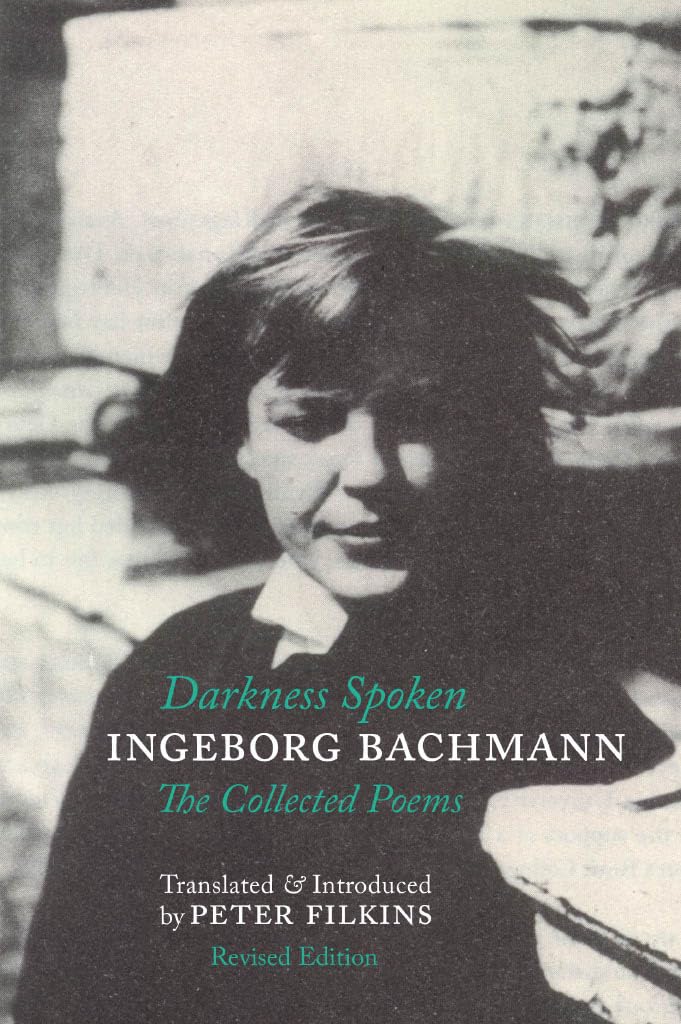
Theodor Adorno wrote that ‘to write poetry after Auschwitz is barbaric’. Austrian poet Ingeborg Bachmann spent her career grappling with this question, eventually agreeing with Adorno and adopting Wittgenstein’s view that ‘what we cannot speak about we must pass over in silence.’
Ingeborg Bachmann is a fascinating subject, and such a talented poet that one can almost forgive her affair with Henry Kissenger. I recommend reading Darkness Spoken: The Collected Poems of Ingeborg Bachmann (Saint Paul Minnesota Zephyr Press 2024).
Bachmann was not Jewish, though the Holocaust and Nazi regime is one of the major themes of her poetry. She writes extensively on Germany’s national shame from the 1940s onwards: a time where Germany would much rather forget its recent history.
In Bachmann’s early work, hope is still to be found out of this shameful past. But by 1953, she does not see that the world has learnt from World War II, writing that, ‘War is no longer declared / only continued. The monstrous / has become every day.’ (‘Every Day’, from her collection entitled Borrowed Time).
By the end of her career, after years of illness, alcoholism and a traumatic end to her relationship with Swiss writer Max Frisch, Bachmann had lost this hope and her belief that language can be used subversively. One of the last poems she writes, ‘No Delicacies’, abandons conventional form, and as if she cannot bear to write any longer, finally asserts, ‘My part, it shall be lost.’ Six years later she died, having abandoned poetry for prose.
The 2024 edition of Bachmann’s collected works, appearing in English thanks to Peter Filkin’s excellent translation, groups her poems by era. This allows the reader to follow Bachmann from the bright beginning of her career in the 1940s to the tragic end.
This collection of work that attempts to face up to the evils of the past, namely a genocide, is incredibly pertinent today. At times it is impossible to read Bachmann’s words without images of Gaza coming up. I was left wondering what poetry, or indeed literature more broadly, can look like in the aftermath of Israel’s genocide in Gaza.
John Westmoreland
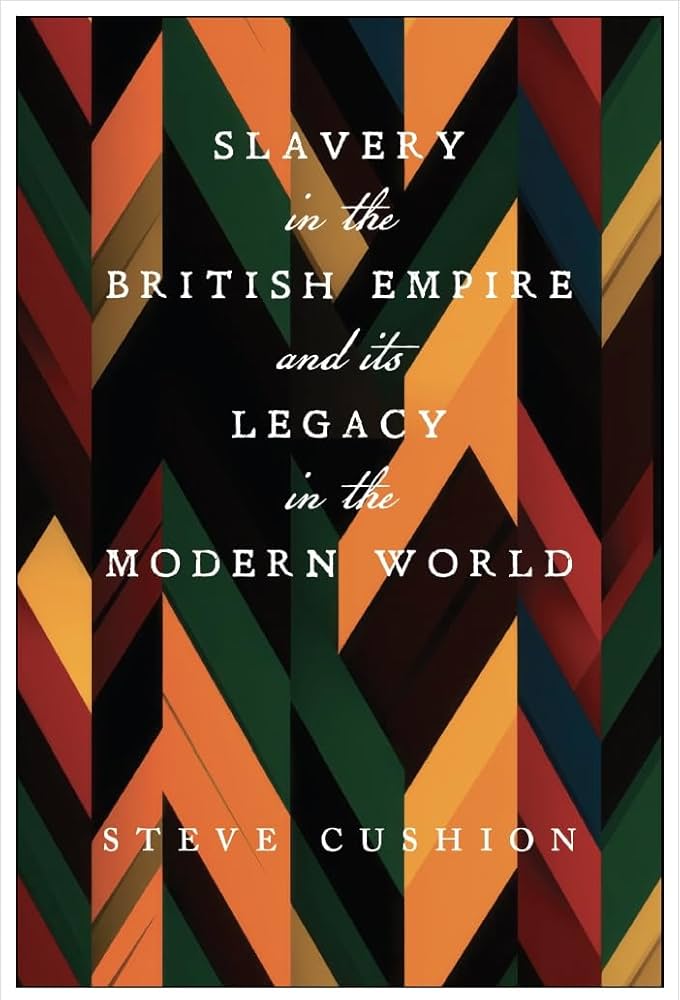
Slavery in the British Empire and its Legacy in the Modern World (Monthly Review Press 2025) is an outstanding Marxist history of the British Empire, the trade in enslaved people and plantation agriculture. Sugar, tobacco and cotton conjured vast wealth from the labour of enslaved people, that in turn helped to build capitalism and the wider British Empire. The book has many strengths, one of which is that it breaks down the barriers that exist in the minds of liberal historians between mercantilism and free-market capitalism.
Cushion demolishes the bizarre and often-cited assumption that the free market ‘liberated’ enslaved Africans. We are treated to a history that explains the dynamics of capitalism, at the centre of which is the exploitation of labour, in whatever form, that meets the demands of capitalists at every stage.
Steve Cushion explains the direct connections between the control of enslaved labour in the Caribbean and the working class in Britain. Technology, finance, the law, religion and state-led violence all came to bear on free and unfree labour, to prevent collective action against exploitation and oppression.
Even for those readers already familiar with this topic, the book provides a new framing that brings together the best, and the most radical, historiography to produce a powerful analysis and a riveting read. Strongly recommended.
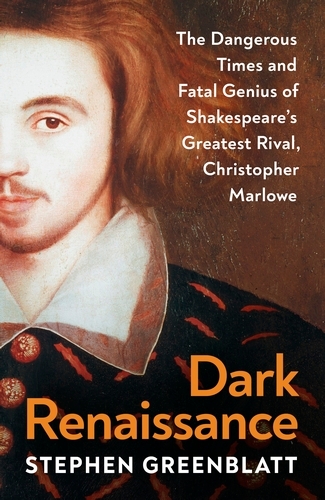
Dark Renaissance: The Dangerous Times and Fatal Genius of Shakespeare’s Greatest Rival, Christopher Marlowe (London: Penguin 2025) is a must read for anyone interested in English literature. The book offers a tentative biography of Christopher Marlowe. I say tentative because there are gaps in the sources that require careful consideration before strong conclusions can be drawn, and Stephen Greenblatt does an excellent job in this regard.
The Renaissance came late to England, which was considered to be a cultural backwater by Europe’s noteworthy intellectuals, but Marlowe helped to change that. Greenblatt looks at the unusual circumstances of Marlowe’s life that led him to absorb radical ideas and give expression to them.
Marlowe’s father was a Canterbury artisan, a poor man, but somehow his son found a place at the King’s School, and from there became an undergraduate at Cambridge University. The scholarship was intended to make him a clergyman, but that was never to be.
Marlowe’s friends at Cambridge dabbled in the modern scientific and philosophical ideas coming from the continent. He had intellectual gifts that were noticed by powerful men and gave events a twist. Marlowe was almost certainly involved in the Tudor spy service that tracked the activities of Catholic fanatics who wanted to overthrow the Protestant realm. This put him in contact with powerful men who would protect him from prosecution later on; first as a coin forger, and secondly as an atheist. Both would normally lead to the torture chamber and an early death. For Marlowe it was just the early death.
The book brings out the remarkable gifts that Marlowe bequeathed to literature, and in particular blank verse, that transformed popular writing by bringing a fluid and majestic quality to poetry. Shakespeare learnt much of his craft from working with Marlowe.
Marlowe’s writing was a product of deep learning of classical (and heretical) texts on the one hand, and his ability to popularise classical works for the theatre on the other. The London theatres offered a safe space for Marlowe’s radical ideas. Tudor England was rife with plots and rebellions, and the author takes us into the seamy, uproarious street life of Elizabethan London that brings to life the power of Marlowe’s brilliant exposition.
The chapter on Marlowe’s Doctor Faustus is superb. It illustrates how Marlowe saw something about early capitalism that was exciting, dangerous and deadly. Early capitalism was harnessing science to go out into the world and all seemed possible. The Devil’s agent, Mephistopheles, could be a caricature of capitalism. He promises Faustus endless knowledge in return for his soul. While Faustus knows he is doomed, he is addicted to Mephistopheles’ charms.
Dark Renaissance will make a great present for any Marxist culture vulture. Strongly recommended.
Eilidh Stewart
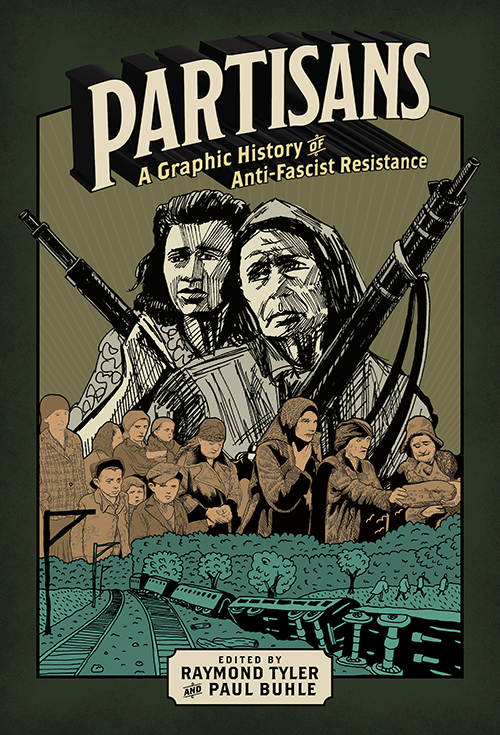
Partisans: A Graphic History of Anti-Fascist Resistance (Toronto: Between the Lines 2025) is a visually stunning compilation of comics, chronicling eleven stories of anti-fascist resistance in Europe, each in a different artistic style. It takes you on a journey from Yugoslavia to Greece to Italy with each story being told from a different perspective. It is a great introduction to partisan history and packs a lot of information into a short space to make for an enjoyable, digestible and accessible read.
It was captivating from the beginning due to both the intricate drawings and how relevant the stories are today. The book focuses on the stories that are often missed from the World War II narrative of allied forces’ victory over the Nazis. It tells the stories of the bravery, sacrifice and significance of partisan resistance and organisation in fighting fascists whether German Nazis, Italians or the Hungarian fascists under Admiral Horthy. It particularly emphasises the central role of women in the underground resistance movement such as Truus and Freddie Oversteegen, two young socialists who risked their lives gathering intelligence on the Nazis.
It paints a picture of ordinary people going to extraordinary lengths to protect their friends, neighbours and strangers from repression, violence and destruction. For me, the key message was the necessity for the partisans to move past factionalism, divides and even racism and sexism in the case of Josephine Baker, in order to defeat the fascists. In the current political climate, it feels apt to draw attention to the history of radical resistance forces working together, despite differences, and this book, although harrowing at times, gave me a profound sense of hope!
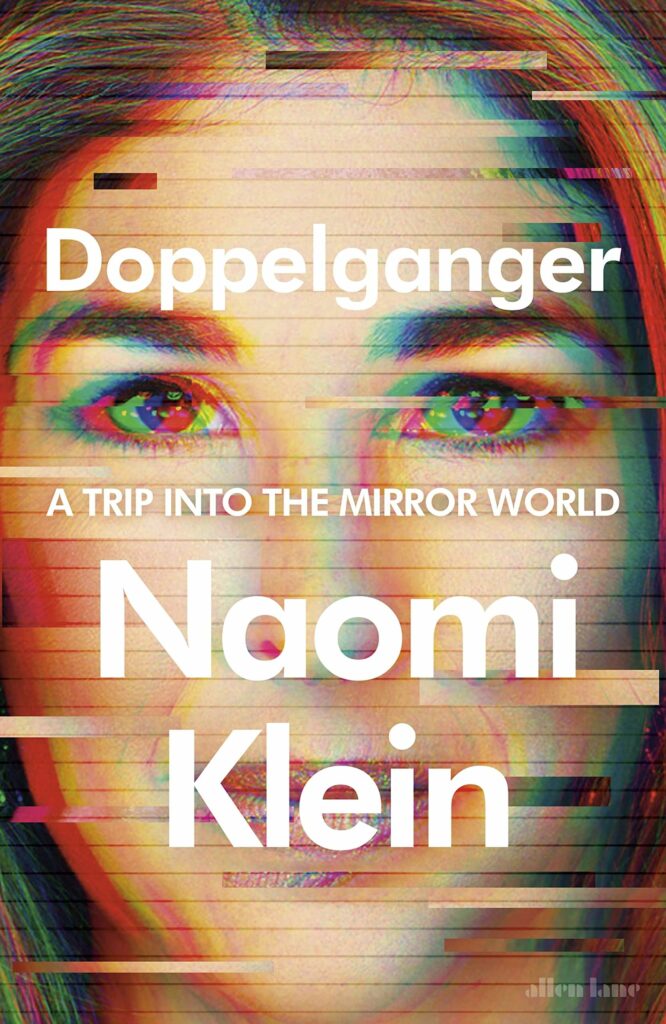
In Doppelganger: A Trip Into the Mirror World (London: Allen Lane 2024), Klein delves into the fascinating world of conspiracy theories, fake news and misinformation which she terms the ‘shadowland’. The basis of the book is Naomi Klein’s ‘doppelganger’, feminist, author turned anti-vax conspiracy theorist Naomi Wolf, for whom she is often mistaken. Although it contains some amusing anecdotes of the two being morphed together and an insight into the weird world of Bannon’s War Room, it provides a useful commentary around the rise of the online world and how this fuels right-wing conspiratorial rhetoric. It poses some thought-provoking questions for the left around inaction and lack of analysis around Covid-19 at the time. For example, many people are suspicious of Big Tech and Big Pharma, yet rather than providing an analysis of the situation, many on the left were quick to judge people who distrusted their role in public policy.
The mask became a symbol of a culture war. She lays out a strong and clear argument for how mistrust in the system lays the foundations for people to believe in some grand conspiracy causing the rich to get richer and everyone else to be left behind. Of course, she is arguing that there is a big conspiracy doing exactly that; it is capitalism. This book takes you to so many places: Occupy Wall Street, Covid-19 restrictions, the unmarked graves of indigenous children in Canada, the politics of Asperger’s, wellness culture, Palestinian oppression, tech surveillance, climate change, health inequality, Maga and of course, online conspiracy theories. She does all this whilst consistently linking the argument to doppelgangers and ‘Other Naomi’, it is impressive and leaves a lot of food for thought.
Dominic Alexander
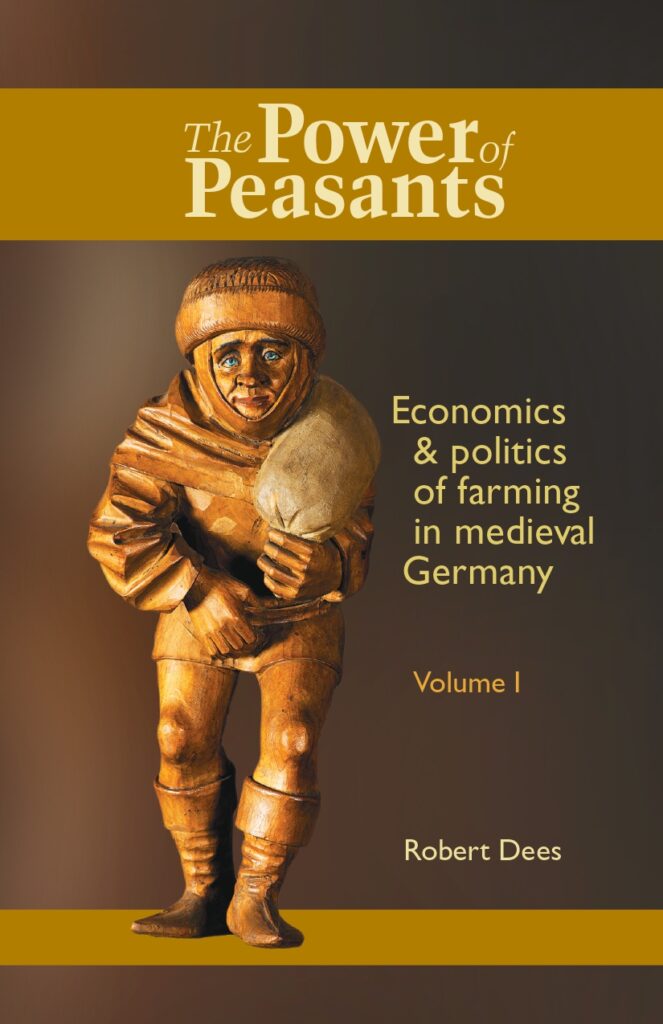
The Power of Peasants: Economics & Politics of Farming in Medieval Germany, 2 vols (Commons Press 2024) may not be anyone’s notion of a stocking filler, but it is a magnificent work of Marxist history of ancient and feudal society, and deserves wide recognition. Its title appears to limit it to German history, but in fact it has a much broader lens, covering the causes of the collapse of the Roman Empire, and the gradual formation of feudal society in western Europe in general, before focusing in on Germany in the later middle ages and the Reformation period. The essential case is that the rhythms of the rise and fall of political regimes, the Roman imperial, the Carolingian attempt to re-found the Empire, and the medieval monarchies, relate directly to the degree to which peasants were able to free themselves from exploitation, or not.
Political collapse followed the intensification of exploitation, to the point where agricultural production declines, and with that the aristocratic superstructures. It was not the ruling class that made history, but the peasantry’s ability to fight back against exploitation that ultimately determined the character of an era. Along the way, Dees demolishes many a smug academic consensus. He shows how antisemitism was deliberately fostered by the ruling class, but was pushed into the background whenever class solidarity became effective. Similarly, the witch persecutions are shown to be driven by the ruling class.
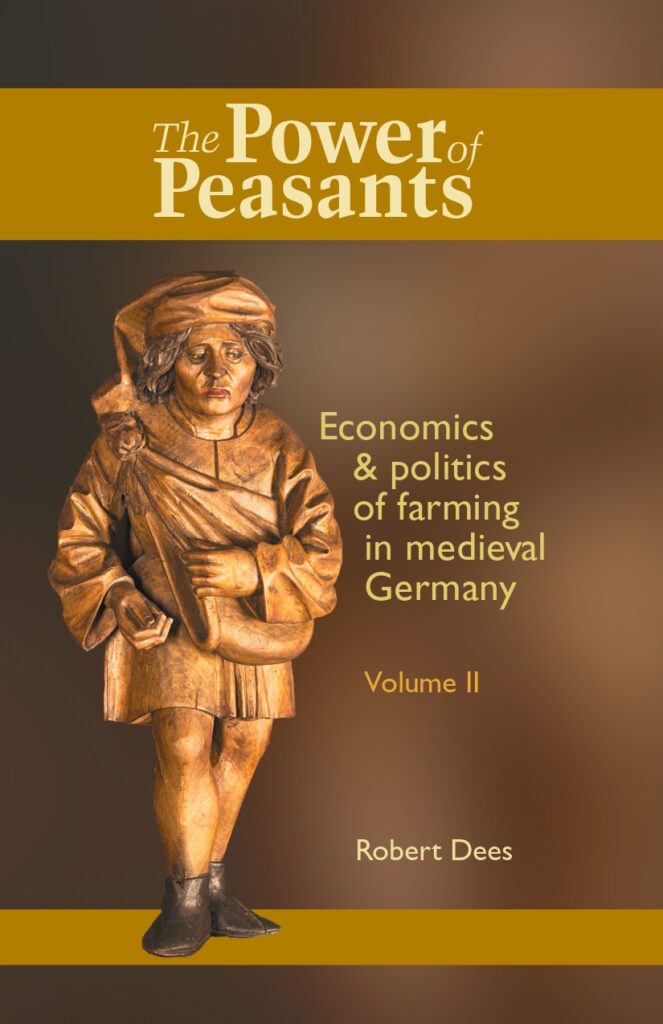
The second volume’s empirical focus on one German region brilliantly succeeds in demolishing Malthusian explanations for the miseries of the sixteenth and seventeenth centuries in Germany. Stark contrasts are drawn with the economies of England and the Netherlands, where free peasants were able to increase agricultural productivity, in contrast to Germany’s increasingly immiserated serfs. The consequence was Germany’s descent into the horrors of the seventeenth-century Thirty Years War. These volumes may be long, but they are well written and robust demonstrations that the history of all hitherto existing society is the history of class struggle.
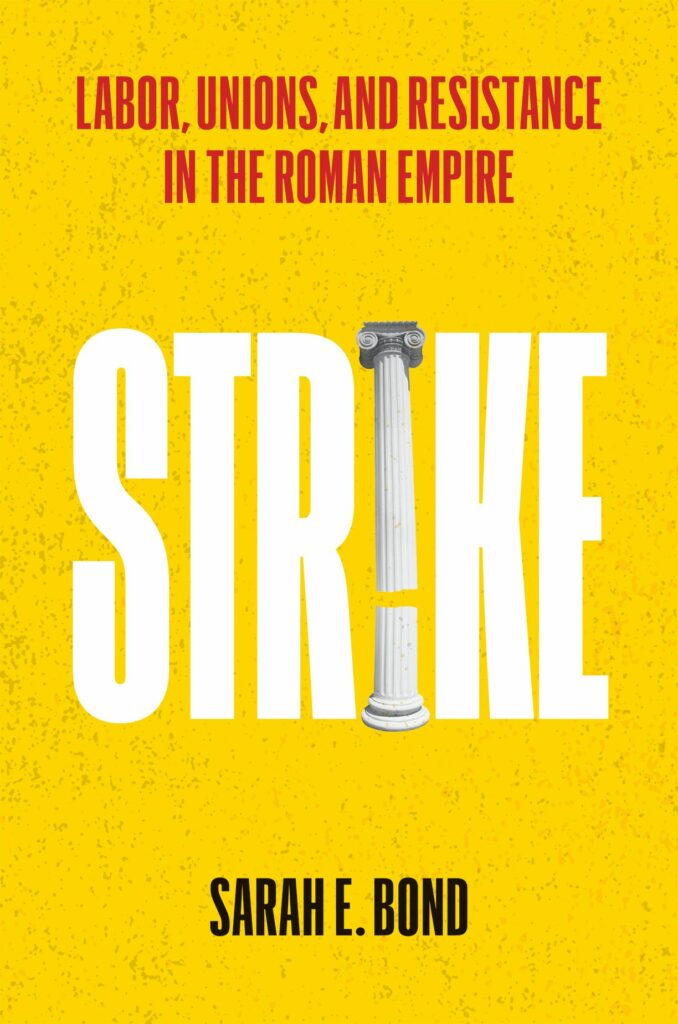
Of a much easier length, Strike: Labor, Unions, and Resistance in the Roman Empire (Yale: Yale University Press 2025) is a splendid book on collective organisations and resistance in the ancient world begins with late Republican-period stories of Roman plebians withdrawing from the city, and therefore from military service, in protest against debt burdens consequent on the city’s wars in its early period. Organisations, often called familiae (normally meaning households) were imposed upon slaves and other key labour groups, but these could be turned into weapons against the ruling class. Most famously, Spartacus’ revolt began in a gladiators’ school, which became the organisational core of the Third Servile War of the Roman Republic.
Apart from the major slave revolts, there were many other instances all the way until the end of the Empire of slaves and wage workers forming their own associations which could press for higher wages, even by going on strike, as did female slaves from wool workshops in second-century Egypt (p.110). Mint workers struck against Emperor Aurelian in 270CE, as did bakers in Ephesus in the second century. Bond describes the economically strategic port city of Ephesus, today in Turkey, as amounting to a ‘union town’ (p.117). Despite slavery and highly repressive authorities, the Empire’s need to secure supply lines across the Mediterranean, and sometimes shortages of labour, meant that workers could often gain some leverage, so collective organisation was attractive.
The organisations we know most about tended to be those from the entertainment complex – gladiators, actors, musicians, and charioteers – and these could harness their public popularity to demand better wages and treatment, while also acting as conduits of public opinion, and popular pressure on the authorities. This is a fascinating book, which retells the story of Rome through social struggles, shedding considerable light on how Roman rulers’ actions had to take account of popular resistance throughout the Empire’s history. Even at the end, when Alaric’s Goths sacked Rome in 410, his army had been swelled by, in some accounts, almost all the slaves of the city.
Terina Hine
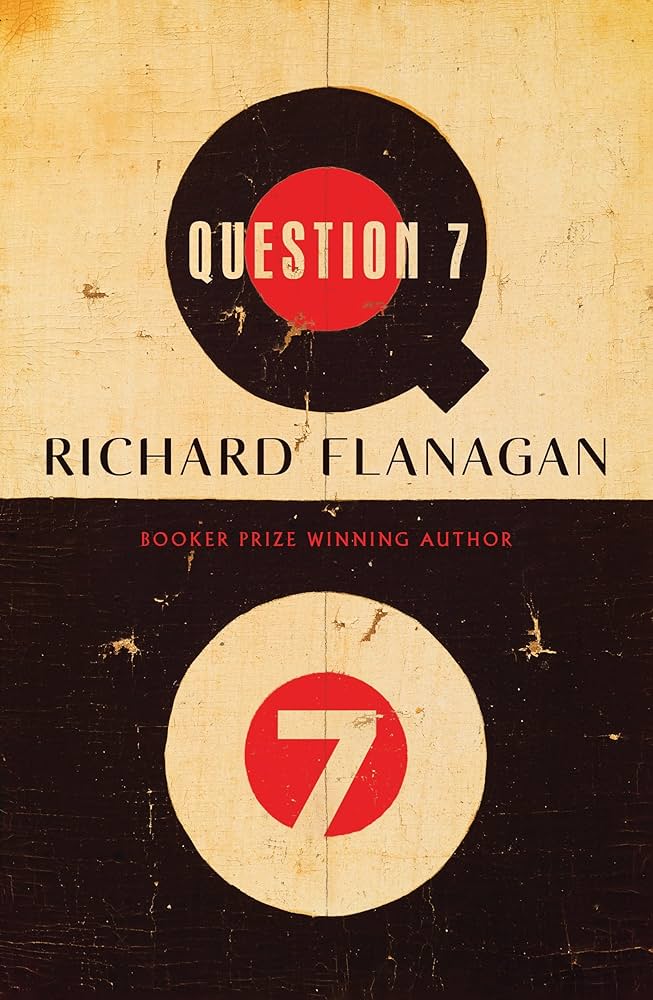
Richard Flanagan’s Question 7 (London: Penguin Random House, 2024 Paperback 2025) is a truly original book which defies simple classification. It’s part history, part memoir and part a philosophical rumination on the human condition. It’s a book in which war, colonialism, literature and personal memory entwine.
Flanagan is a gifted writer. Here he deals with complex themes and ideas but his simple style makes the book an easy read.
The book’s title comes from Chekhov’s ‘Questions Posed by a Mad Mathematician’: ‘a train had to leave station A at 3am in order to reach station B at 11pm; just as the train was about to depart, however, an order came that the train had to reach station B by 7pm. Who loves longer, a man or a woman?’ Question 7 ponders the imponderable, and provides a study of the relationship between cause, effect and responsibility.
The book circles around three historical themes which will be familiar to those who have read any of Flanagan’s fiction: the Tasmanian genocide, Hiroshima and the Japanese railroad built by POWs in the Second World War. It explores the relationship with memory, past, present and future, considers life and love and the mess we humans have made of the world. From the love affair between HG Wells and Rebecca West, to the nuclear scientist Leo Szilard and the British genocide in Tasmania, a complex pattern is woven that incorporates the accident, indeed luck, of Flanagan’s very existence.
This extraordinary book, published in paperback at the beginning of this year, deservedly won the Baillie Gifford prize for non-fiction in 2024. Full of ideas and anecdotes, it’s perfectly crafted memoir and history. Question 7, as Peter Carey said ‘may just be the most significant work of Australian art in the last 100 years.’ Such a unique book is difficult to describe and impossible to do justice. You must read it for yourself.
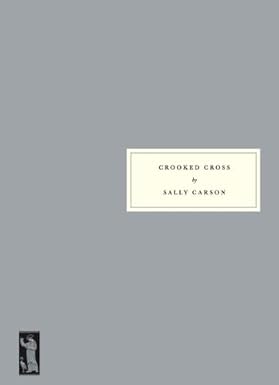
Originally published in 1934, the reprinting of Sally Carson’s Crooked Cross (Bath: Persephone Books 2025) is timely. The novel opens with the Kluger family celebrating Christmas Eve in a small town in Bavaria. Everything is set for the perfect Christmas: family gathered, snow falling, Christmas tree twinkling and a photo of Hitler on the piano.
Crooked Cross is the first in a trilogy Carson wrote following repeated visits to Germany in the 1930s. It tells the story of a family who at the beginning of the novel live harmoniously with Jewish and left-wing neighbours, but by the end, their homely life is poisoned by violence and the family split by the rise of fascism and antisemitism. Hitler is not part of the story, but his ominous presence is felt throughout.
Sympathetic to the difficulties faced by young men in particular during the years following World War I, and the attraction of Nazi party propaganda, Carson provides insight into how seemingly good people can be drawn towards an abhorrent ideology. The Kluger family’s sons are entranced by the party and the escape it offers them, the family patriarch is uncomfortable with the Brownshirts and fears the Nazis are pushing Germany towards another war, but he too fails to resist the pull of the party. Ultimately the family becomes divided, with only the daughter Lexa, who voices Carson’s own views, retaining clarity of vision.
Carson was writing before she or the world knew of the horrors to come, yet she clearly had no illusions as to the dangers communists and Jews faced under the Third Reich. Both Carson and her characters knew of the camp at Dachau and the near starvation of those who disappeared behind its walls. It is remarkable how clearly she saw what was going on as a visitor and foreigner when so many others failed to see the dangers and warning signs. With hindsight, the novel has even greater prescience; its portrayal of how fascism can quietly creep upon a community is an important warning for today.
Before you go
The ongoing genocide in Gaza, Starmer’s austerity and the danger of a resurgent far right demonstrate the urgent need for socialist organisation and ideas. Counterfire has been central to the Palestine revolt and we are committed to building mass, united movements of resistance. Become a member today and join the fightback.
