
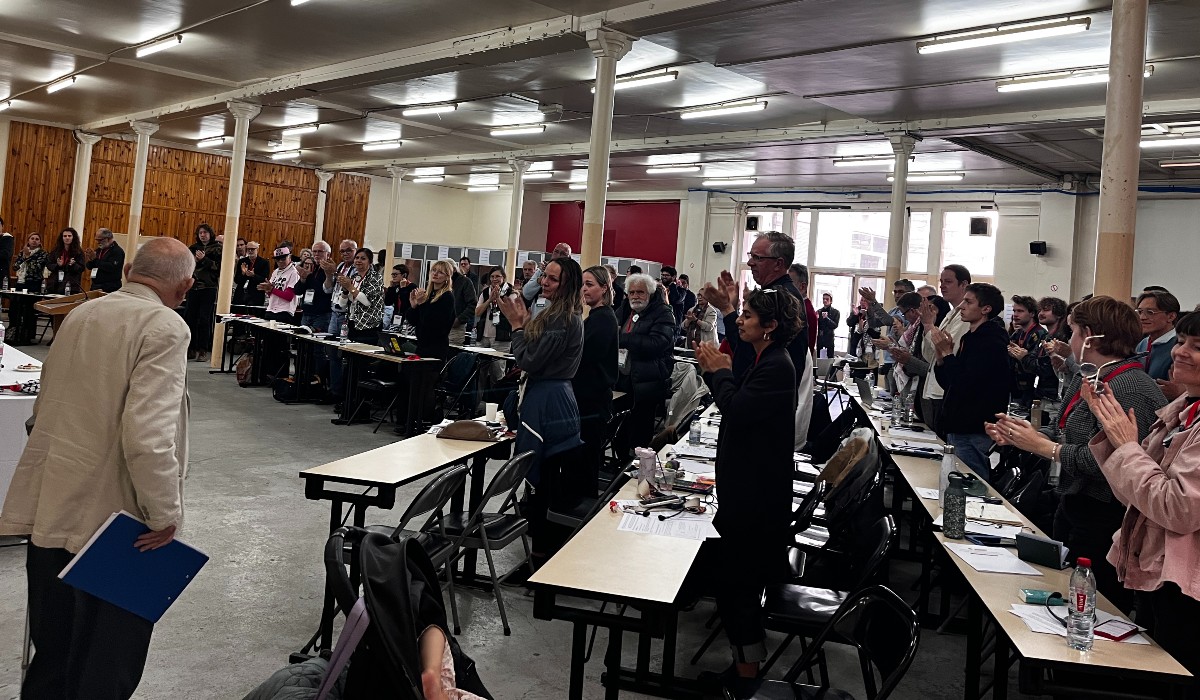
 Standing ovation for Stephen Kapos at the Paris Conference. Photo: Shabbir Lakha
Lucy Nichols reports on the International Meeting Against the War in Paris, which brought together the European anti-war movement in demanding an end to the genocide in Gaza
‘Peace is much more than the absence of war… there is no peace without liberation for all peoples’, argued a delegate from Spanish socialist party Podemos on the first day of the international conference against the war in Paris.
Jerome Legavre, an MP from La France Insoumise, opened by criticising the French establishment’s support of Israel, and calling for an end to the war in Ukraine. Legavre thanked US groups Codepink and the DSA for attending, and sent greetings to CND and Stop the War for helping to inspire the founding of this international stand against war. The conference saw delegations from 19 countries, largely from Europe but also including representatives from Palestine, the US, and a B’tselem speaker from Israel. Speakers from Russia and Ukraine each called for a ceasefire and criticised Western governments for allowing and encouraging the war to go on. Andrii, a peace activist from Ukraine spoke of the reality of war, saying that if he were to return to Ukraine he would be forced into being ‘canon-fodder’ for the army.
Stephen Kapos spoke early on, drawing parallels between the evils he and his family experienced in the Holocaust and what Palestinians in Gaza are subject to today. Both Stephen and a comrade from Palestine received long standing ovations.
The sheer strength of the international Palestine solidarity movement was made obvious. Delegates detailed the activities taking place across Europe and the US and even in Israel. In Belgium 110,000 marched for Palestine – a huge number for a relatively small country. Codepink detailed their weekly lobbies of Congress and the ongoing protests in universities. A speaker from Italy’s People Have the Power reported that 500,000 people were marching through Rome while he spoke, and on the two general strikes, where 2 million went on strike for Palestine. 100,000 marched in Berlin the week before the conference. Public opinion across Europe and even in the US lies with Palestine, as most want to see an end to the genocide.
The Flotilla to Gaza was celebrated, and the conference condemned Israel’s kidnapping and imprisonment of those attempting to bring aid to Gaza.
The strengths of the anti-war movement are many, and this was made clear. There was also, however, a frank discussion of the struggles we face. Jerome Legavre highlighted the gravity of our situation but also ‘the barbary that is coming’ as more countries experience rising levels of fascism in the streets and in government. A representative from Germany argued that if the choice is, as Rosa Luxembourg said, between socialism and barbarism, the genocide in Gaza proves that we are moving towards the path of barbarism. But the mass movements against it provide hope that we can fight for the alternative.
Chris Nineham from Stop the War called the conference a big step forward in the building of an internationally-coordinated Palestine and anti-war movement, the lack of coordination so far being a point of weakness. He joined the Italian comrade in pointing out the unwillingness of leaders of large trade unions to act against the genocide. He argued that we should use the example of Italian and Greek dockers and organise industrial action from below and pull the unions with us.
Another common theme emerged, one of state crackdown on the right to protest. Protest movements in Germany, Italy and the US and UK are subject to bans and state intimidation. What Medea Benjamin named ‘creeping fascism’ in the US threatens the right to demonstrate against Gaza. Lindsey German spoke about the arrests of people at the Defend Our Juries protest in Trafalgar Square, which were happening as she spoke.
Many speakers condemned their governments as complicit in Israel’s genocide of Gaza, and called for money to be spent on public services rather than the 5% of GDP Nato tells us we should we spending on defence. Many also called for a ceasefire in Ukraine. In addition to demanding an immediate end to the genocide, the conference called for an end to war and militarism more generally, which is a ‘a frontal attack on our class’, as a German delegate argued. Belgian MP, Julian Ribaudo, called for a Europe-wide ‘united front against militarism and imperialism’. This conference, which continues on Sunday, may be the beginning of this international united front.
Before you go
The ongoing genocide in Gaza, Starmer’s austerity and the danger of a resurgent far right demonstrate the urgent need for socialist organisation and ideas. Counterfire has been central to the Palestine revolt and we are committed to building mass, united movements of resistance. Become a member today and join the fightback.
