
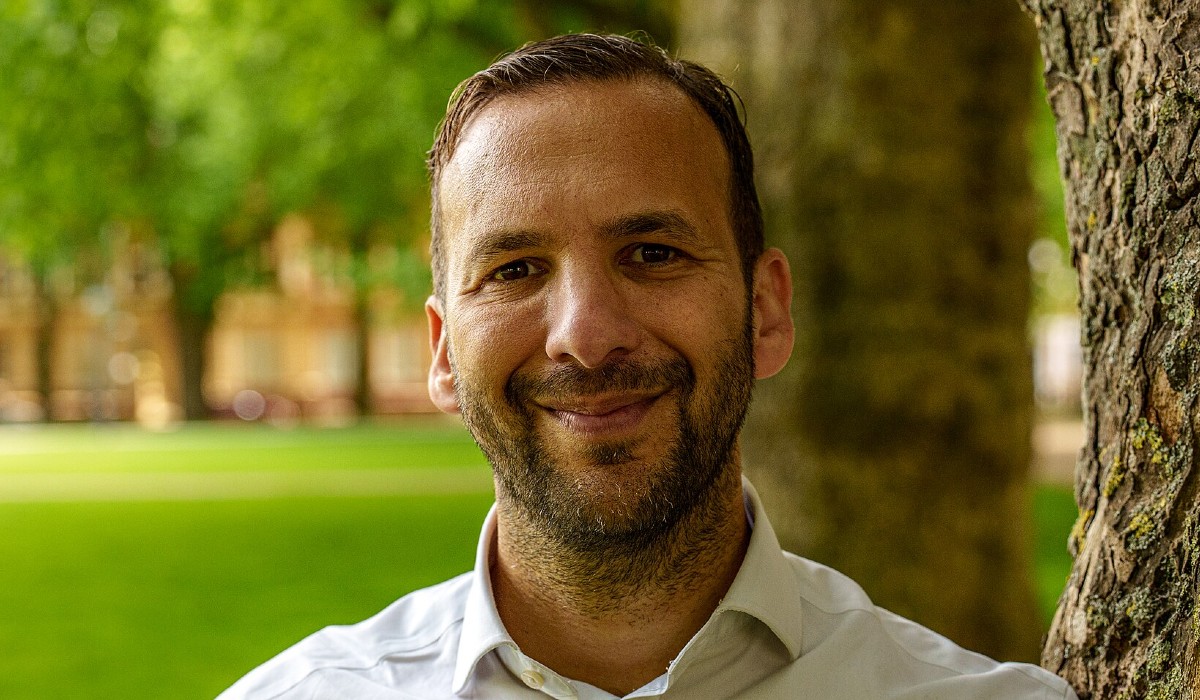
 Headshot photo of Zack Polanski
Zack Polanski’s victory in the leadership election is a welcome development for the left, but we mustn’t forget the very real limitations of Green Party politics, argues Kevin Crane
The individual leading the Green Party of England and Wales hasn’t, historically, been considered much of a news story, but the media has been unable to ignore Zack Polanski’s election this month. This is in part because the Greens have an actual parliamentary group for the first time in history, making it much harder to argue that they just aren’t important, but it’s also because the election was a genuine contest with a real sense of political debate and an extremely clear winning side.
Polanski was, in conventional terms, running as an outsider. He is not an MP; he is a member of the famously toothless London Assembly. British political tradition is that parties are led by their parliamentary figures, so it would be considered conventional for the two new MPs running against him, a joint-ticket of Ellie Chowns and previous co-leader Adrian Ramsay , to be shoe-ins for the role. The results are a heavy rejection of that thinking. Polanski won by 20,411 votes to 3,705 for the two MPs: a thumping victory that gives the new leader a strong internal mandate for his political arguments that the Greens, to put things in the fewest of words, need to more left wing.
Outsiders, me included, had thought it likely that Zack was going to win this for a while, even if the scale of the win is a surprise. Debates between himself and his opponents went overwhelming well for him: he came across as energetic and possessing a clear strategic vision, against candidates who seemed to lack very much to say for themselves. Ramsay, in particular, floundered in arguments with Polanski, doing little other than cautioning that that the assembly member’s ideas were too rooted in protest and activism and offered no positive vision of his own. The social-media game of the two camps was just as asymmetrical, with Polanski clearly enjoying the support of talented content creators, while Chowns and Ramsay had to make do with output that was about as exciting as a typical constituency newsletter.
The scale of the vote shows that we were not at odds in these assessments with the party’s members. Appeals by the MPs to reject Polanski’s radical rhetoric, a style he calls ‘eco-populism’, were not persuasive. This makes sense on multiple levels: arguing that ‘slow and steady wins the race’ was not in touch with a membership base that naturally feels that the race is one against time and the climate crisis, rather than the tedious procedures of the declining British parliamentary process. The claims that Polanski represents protest and not ‘serious’ politics – an attitude similar to that expressed by the Labour Party’s establishment toward the Labour left – were also jarring to both the tastes of the membership, and the period we are in, when millions of Britons have been marching for Palestinian rights on a regular basis for years now.
Internal logic
Even from a purely party-electoral perspective, however, Polanski’s strategic reorientation still makes some sense for the Greens. During her stint, the outgoing leader Carla Denyer did get herself and three others elected as MPs, however this was during a general election which was almost uniquely open to such a win, particularly with many Labour voters searching for an alternative because of Keir Starmer’s disgusting complicity in the Gaza genocide. Their accomplishment also looks a bit less impressive next to the unprecedented election of five independents. In the year since, the Greens’ progress has slowed down considerably. Despite an unprecedented drop in support for Labour in its catastrophic year in office so far, the Greens did not make major gains in 2025’s local elections and actually underperformed in polling in certain areas (notably in the region around Bristol, which is considered a heartland for them).
Significant numbers of Labour voters were breaking from the party to the left, but then just not voting. Polling for the Greens remains stubbornly stuck in the teens, despite Labour’s crashing downward to roughly the 20% mark and poised to sink lower. Astonishingly, the Liberal Democrats seem to be slightly more effective at capitalising on the loss of Labour support, despite having a right-wing leader who doesn’t oppose austerity.
All this provides evidence that the Green Party does need to take some sort of positive step in order to make breakthroughs. For the left, however, the question is not ‘can the Green Party get more MPs?’ It’s whether or not this new direction for the party actually has real radical potential, and that’s more complicated than just the personalities who happen to be leading it.
Behind the raw votes in the leadership election, there are some details that put a slightly different spin on the results. The Green Party recruited aggressively this summer, following the general election: a lot of this was a result of Zack Polanski’s leadership campaign, and there was a significant operation to recruit Jeremy Corbyn-supporting ex-Labour members into the party specifically to vote for him. This won’t have been an even process round Britain, it will have been very London-centric and have relied heavily on the networks around Corbynite institutions like Momentum and The World Transformed.
The membership of the party is currently around 65,000 people (a new high), so only about a third voted for any candidate at all. This is a lot healthier than their sister party: the Scottish Greens could only muster 950 of their 7,600 members to vote in their leadership election last week. However, it’s still only minority engagement. It is likely that away from London and the big cities, particularly in the party’s now significant areas of rural support such as those that Chowns and Ramsey represent in parliament, Green Party members are not hugely invested in who the national leader is. The very low vote they received might well mask a deeper conservatism in the party that has not spoken but will still exert a significant influence on how things progress.
The political trajectory of Green parties
Green Parties the world over were founded in a variety of different ways but are strikingly convergent in their political trajectory. They can sound radical, particularly when in opposition, but pretty much universally revert to liberal-establishment conformity when in, or close to, power. The case study most often referred to is the German Green Party, which has its roots in the radical left of the 1960s and 70s, but today is thoroughly centrist and a party of the establishment: shockingly complicit in Germany’s collaboration with the Gaza genocide, and ludicrously willing to see environmentalist principles be tossed aside in order to stoke militarism and rearmament against Russia.
We don’t need to look all the way over to the continent to see a Green Party fail to deliver on left policies though; you only need to look over Hadrian’s Wall. The embarrassingly low engagement in their leadership election is simply what the Scottish Greens get for a record in government of acting as the mostly uncritical junior partners of an exhausted Nationalist administration in Edinburgh. They have lent their support to the SNP as that party has presided over an ever-increasing austerity-driven mess in the country, with sharply declining living standards. Their only significant contribution seemed to be insisting on a series of confusing recycling initiatives that just got in the way of the public enjoying their cans of Irn Bru without having to worry about a load of tedious work being added to bin day.
It is not wise to assume that there aren’t similar limits to the English and Welsh party’s capacity to be a radical-left alternative as in any other country. The fact that the four MPs the party has all opposed Polanski’s candidacy is not an accident, nor is the fact that a majority of the Greens’ now-significant number of local government leaders didn’t back him. The party has a federal structure, so while the new leader does enjoy a strong mandate, his capacity to actually make things happen doesn’t necessarily match that, and local Green Party branches are likely to very much do their own thing.
That thing is seldom radical politics. It has to be said that the four MPs have made very little impact in the first year, indeed I suspect that part of the reason Polanski trounced Chowns and Ramsay so hard is that they don’t even have much profile amongst their own members! The wider public really have no idea who these people are. The argument they will make, as their predecessor Caroline Lucas did during her time as the sole Green MP, is that they are doing ‘good constituency work’. This is a bit of a naff argument at the best of times; it’s extremely easy for MPs to potter about answering constituent queries but not really doing much. During times of soaring poverty, climate emergency, violent racism, war and genocide, it really is not rising to the challenges before you to have failed to even have had much of an impact on public debate about these issues, let alone be seen as a leader on them.
Parochial concerns also have a distorting, even absurd, effect on what the MPs argue. Adrian Ramsey has, frankly, come across as utterly ridiculous by joining a campaign against new electricity pylons in East Anglia. The pylons are necessary for the East of England’s rapidly expanding wind-power infrastructure, so Ramsey is on the wrong side of a discussion about a crucial adaptation for the post-fossil-fuel future!
The limitations of Green politics
The experience of Greens in local government is also underwhelming. Green administrations have a pretty poor history in their original stronghold city of Brighton, and now their second city of Bristol sees them implementing cuts in much the same way as the previous Labour leadership also did. Amusingly, Bristol Labour produces leaflets denouncing the Greens for carrying out policies that do not differ from any they would implement. The justifications used by English Greens for the implementation of austerity is the one the Scottish Greens used: we don’t have a choice, this is just how serious governing is done. It certainly isn’t how confronting the British government from the left is done.
The biggest single political problem that a left leadership of the Greens is likely to face, however, is the question of war. Despite what could be described as a cultural, or aesthetic, relationship to pacifism, the British Greens have always had a bit of weak, at best, relationship to the anti-war movement. They did oppose the Iraq war in 2003, but so did the Liberal Democrats at that time. They were no friends to Jeremy Corbyn over the question of military action against Syria in 2015. Although Polanski has personally been quite involved in Gaza solidarity, the wider party hasn’t been anything like so engaged, and ex-leader Carla Denyer outrageously sent a goodwill message to Joe Biden while he was still enabling the genocide from within the White House.
The party’s positioning on the Ukraine war has been poor. The Greens voted to drop opposition to Britain’s membership of Nato in 2022: a move which is incompatible with continuing to oppose Britain’s nuclear arsenal and echoes the German Greens’ shift toward pro-military policies. Then-leader Denyer made numerous social-media posts endorsing British involvement in American-led military alliances, such as Nato and the ‘Five Eyes’. Meanwhile, former leader and now Green member of the non-elected House of Lords Natalie Bennet made a spectacle of herself posing in a silly military uniform for pro-Nato social-media posts.
For environmentalists, it is sheer madness to support the West’s war-drive over Ukraine. Quite aside from the direct environmental impact of the war itself, with the carbon footprint of the war being a catastrophe all of its own, the drive to rearm and militarise is being used by governments all across the Global North to divert resources away from decarbonisation and into weapons and ‘more secure’ access to fossil fuels. You can fight climate change, or you can fight wars: you have to pick. In Germany, the Greens have firmly picked war.
Polanski himself is not a Nato cheerleader, even if his arguments and framing do leave a lot to be desired. He tends to try to spin his scepticism along the lines of just not trusting Donald Trump’s America specifically and leaving open the possible interpretation that things were OK under Genocide’n Biden. He probably doesn’t actually think that, but this is not a basis from a which an argument about ‘Welfare Not Warfare’ can be won with a reluctant political machine that is absolutely not prepared to fight a hard argument against the military-industrial complex and American imperialism.
The Greens’ leadership result is definitely no bad thing: it piles even more pressure on Starmer’s government, it forces the media to admit that left-wing voters do actually exist, and it opens up some really useful discussions about how British political institutions are currently failing to represent the views of people who don’t support Reform UK and racist thugs. What it doesn’t do is solve the crisis of representation: you can tell that just by the fact that hundreds of thousands of people opted not to join the Greens, but instead to engage with the Your Party process. It also needs to be said that without the mass Gaza protests, this situation would never have occurred because Gaza is the key issue which has forced millions of Britons to break from Labour.
The left should be pleased with this outcome, but it would still be a real mistake to overstate its importance. There probably will need to be discussions between the Greens and whatever emerges from Your Party, but the sheer fact that so many people are actively choosing a potential organisation over the existing one is reason enough that any such relationship should not overshadow the development of a new party, particularly because there are plenty of rational reasons to have a healthy scepticism about the Greens as a party of the radical left.
More important, however, is the understanding that Polanski’s victory is an expression in electoral politics of radicalism from an extra-parliamentary movement and we should resist the temptation to view that relationship back to front.
Before you go
The ongoing genocide in Gaza, Starmer’s austerity and the danger of a resurgent far right demonstrate the urgent need for socialist organisation and ideas. Counterfire has been central to the Palestine revolt and we are committed to building mass, united movements of resistance. Become a member today and join the fightback.
