
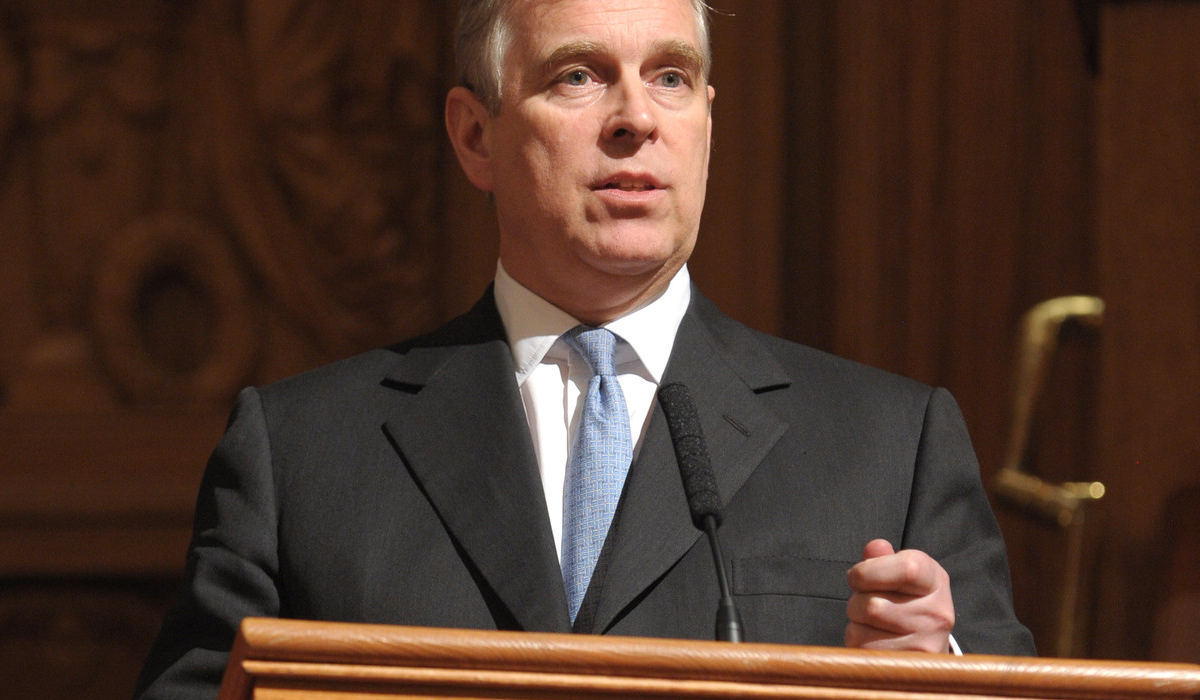
 Andrew Mountbatten Windsor at Belfast in 2013. Photo: Flickr/Titanic Belfast
Lindsey German on the monarchy, Starmer’s Labour and Prunella Scales
The repeated attempts to quash the royal scandal around the former Prince Andrew didn’t work. Even the latest and supposedly final one, where he has been stripped of his royal titles and forced to leave the Royal Lodge in Windsor where he has lived rent free for two decades – doesn’t look like it is drawing a line.
When you combine this with the collapse of the two-party system in British politics, it has all the makings of a constitutional crisis which can bring into focus the role of the monarchy and with it the whole panoply of privilege such as the House of Lords and the corrupt honours system. There has not been such a crisis since the abdication of Edward VIII in 1936, when the Nazi-sympathising new king was forced into exile after insisting on marrying a divorced American.
The Andrew Mountbatten Windsor (as we must now call him) story shines a spotlight on the royal family as a whole, its immense wealth and privilege and its desire to protect its own. Andrew is now disgraced – although for the royals this takes the form of moving to another free residence on one of the family’s vast estates and receiving an annual stipend from the King, and he remains eighth in line to the throne. While this is no doubt uncomfortable for the monarchy, it is clear that Charles acted to ensure damage limitation about the Virginia Giuffre affair and her accusations against the then prince.
The news about Andrew’s involvement with sex trafficker Jeffrey Epstein was known for years. Repeated attempts were made to brush it under the carpet. The late queen allegedly provided £12 million to pay off Giuffre rather than ruin her jubilee year. Andrew allegedly tried to get his protection officer to dig the dirt on Giuffre. The idea that the heads of the royal family, the security forces and sections of government were not briefed on the accusations and his behaviour is simply untenable. So for years we had evasion, cover up and hoping it would go away.
The royal family distanced itself from Andrew after the disastrous interview with Emily Maitlis back in 2019, effectively retiring him from public duties, then again, this October when it was announced he would not use his titles. This development was forced by the publication of the late Giuffre’s memoir, which was harrowing and authentic. But the move was too little too late. The press now turned against him, as demonstrated by its description of Royal Lodge as a 30-room mansion, something conveniently omitted from previous descriptions.
Questions were raised about whether he paid rent, what were his dodgy dealings with companies that had fuelled his lifestyle. Most damaging was the increased demand from campaigners and press in the US for full accountability and giving evidence about what Andrew knew. These issues are very dangerous for the royal family. The US demands open up the possibility of much more coming out to their detriment. It will be fuelled by the scepticism and lack of deference to the monarchy in the US, which did after all fight a ten-year revolutionary war to end British rule in the 18th century.
The scrutiny of Andrew raises questions here too about the whole idea of monarchy and of its immense wealth. The king is one of the richest people in the world. The cost of the royals is hidden in immense secrecy, which is colluded in by successive governments. According to the organisation Republic, the royal family costs the taxpayer at least £510 million a year. The income from the Duchies of Lancaster and Cornwall are claimed as private income for the royals but they are not the property of the Windsor family and are controlled by parliament.
There have been a series of royal crises – the abdication crisis was dealt with ruthlessly by the royal family and government of the day. There have been subsequent ones including the queen’s annus horribilis when her two elder children divorced and her castle burnt down, and the death of Diana in 1997 when the royal family were seen as hidebound in tradition and unfeeling towards her.
Queen Elizabeth was able to weather these storms partly because of her wealth and privilege, partly because support for the modern monarchy was cemented during the Second World War and she represented continuity with that, especially to the older generation. Royal family as soap opera with an increasingly discredited or irrelevant cast hardly cuts it in the same way. The queen is dead, Harry and Meghan have been recast as minor celebrities in California and now Andrew is exiled to bleakest Norfolk (although not till the new year for fear of ruining the royal Xmas).
This time, there is a deeply unpopular government and opposition, defending an institution which is the epitome of autocracy and privilege that is coming under growing criticism. The scrutiny extends not just to one dysfunctional family but to other undemocratic institutions such as the House of Lords or the honours system. Neither could exist without a monarchy and the converse is true. What better response to the Mountbatten Windsor scandal than to get rid of the institutions which protect the privilege of the rich and powerful and preside over the abuse of women like Virginia Giuffre?
Starmer and Reeves: how not to do it
Everywhere in the media, there’s talk of Rachel Reeves raising the basic rate of income tax by 2p in the budget later this month. This isn’t just a complete reversal of what they promised repeatedly before the election, it’s a major attack on working-class people who are already feeling the result of falling wages for 18 years and rampant food and energy inflation. If they wanted to do anything more calculated to push workers towards Farage’s Reform party, it’s hard to think what it could be.
There are so many ways they could raise money from taxing the rich, the corporations, landlords, building developers. They could also stop paying private companies like Serco to carry out functions of the state such as care homes or the prison or judicial system inefficiently and at great cost to us. They could cut spending on weapons and war. But no. Private profit and private wealth are sacrosanct and any attempt to challenge that view is dismissed as unrealistic or damaging ‘wealth creation’.
If the speculation is true it will further confirm that Reeves’s days are numbered and that she will go down in history as one of the most unpopular chancellors. And Labour’s death march under Starmer will pick up pace.
Prunella Scales
I was sorry to hear of the death of the actor Prunella Scales last week. She is being remembered rightly for her role as Sybil in Fawlty Towers and her programme on canal journeys with her husband Timothy West. What has been missing is her – and West’s – political commitment. She was at the launch of the Anti Nazi League in 1977 and campaigned on many issues. A good life.
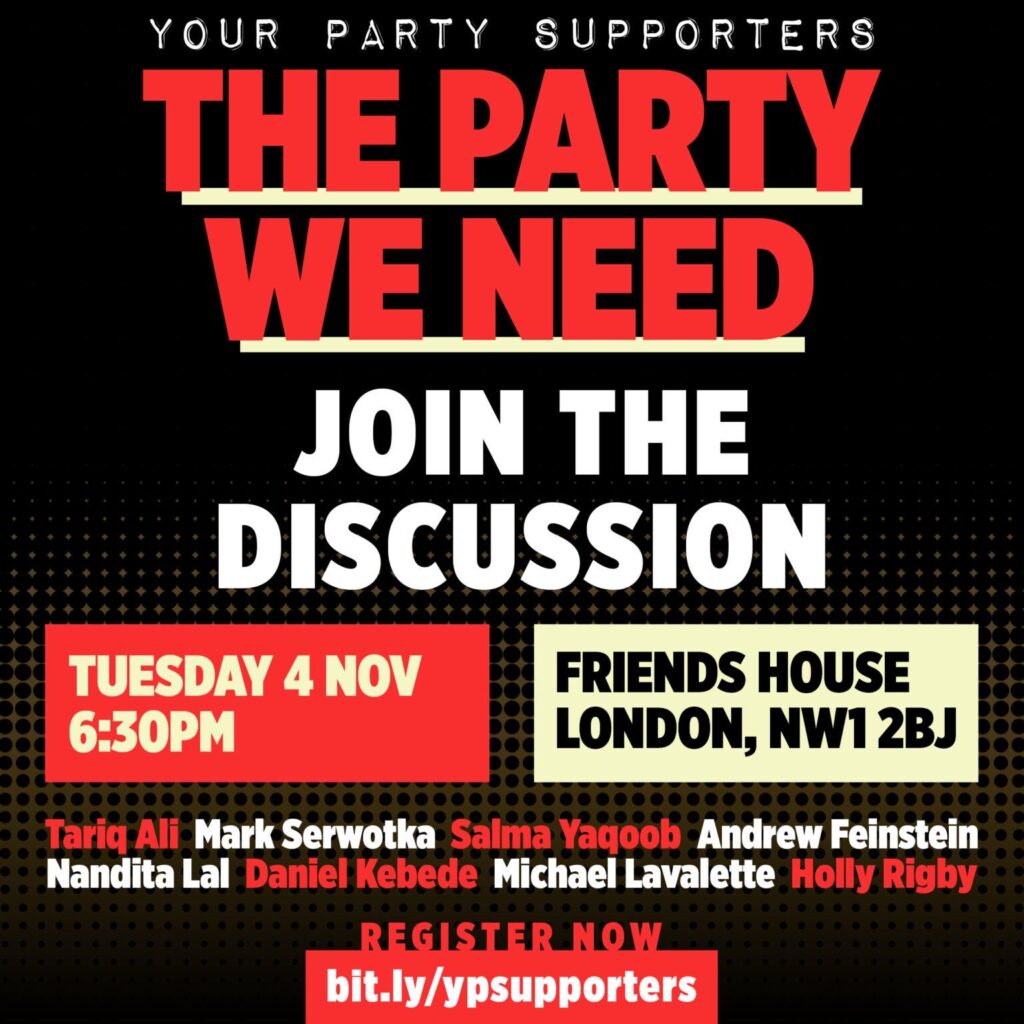
This week: I will be going to the meeting about Your Party in central London on Tuesday with a great line-up of speakers and discussion about what kind of left party we need. This is really urgent question as we face so many challenges but also so many opportunities for the left. I’m reading Paul Holden’s book The Fraud which delves into the murky world of Morgan McSweeney and Keir Starmer’s rise to power. Hoping also to catch the film Palestine 36 if it wasn’t for meetings most nights.
Before you go
The ongoing genocide in Gaza, Starmer’s austerity and the danger of a resurgent far right demonstrate the urgent need for socialist organisation and ideas. Counterfire has been central to the Palestine revolt and we are committed to building mass, united movements of resistance. Become a member today and join the fightback.

Lindsey German
As national convenor of the Stop the War Coalition, Lindsey was a key organiser of the largest demonstration, and one of the largest mass movements, in British history.
Her books include ‘Material Girls: Women, Men and Work’, ‘Sex, Class and Socialism’, ‘A People’s History of London’ (with John Rees) and ‘How a Century of War Changed the Lives of Women’.