
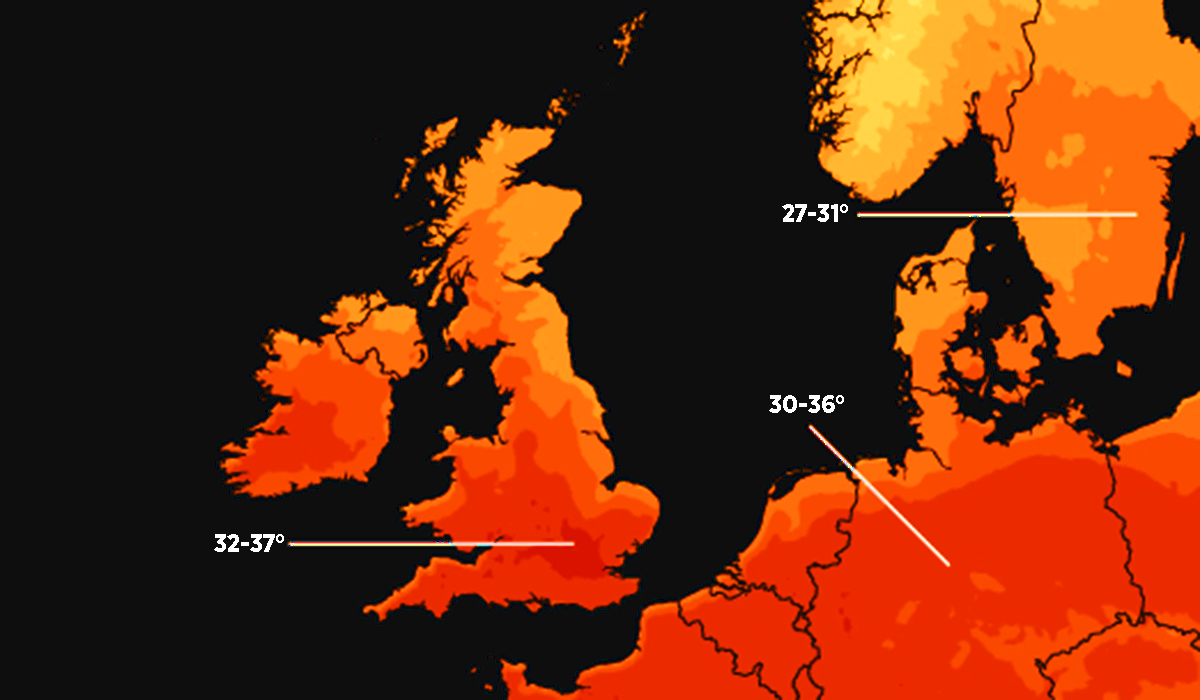
As Europe faces another record-breaking heatwave, Terina Hine looks at what’s at stake and what is to be done
Sizzling in spring, scorching in summer and flooding in fall. This is the future for the UK and it’s deadly. By 2050, it’s predicted there could be over 10,000 heat-related deaths per year.
The heatwave of 2022, when temperatures soared to over 40°C, saw over 3,000 excess deaths in England and Wales; 2025 was the hottest year on record; 2026 may prove even hotter. Destructive wildfires burned and people sweltered.
In May, we felt the temperature rise suddenly with the hottest May day on record. Temperatures in London reached 35°C (the average May temperature is 14° to 20°C).
These periods of hot weather are set to last longer and be more frequent. Heatwaves lasting longer than a week with temperatures rising as high as 45°C are possible.
The winter of 2023-4 was the wettest on record. Thousands were displaced by flash floods and the wet weather ruined crops; 2023-4 had the second-lowest harvest on record.
By 2050, according to the UK Climate Change Committee (CCC) report published in May, 92% of existing British homes will overheat and millions more homes will be at risk of flooding. High levels of rainfall in autumn and winter will lead to peak river flows increasing by up to 45% and lasting longer.
At least 60% of all UK food is grown here. Drought and flood will devastate production. High-quality farmland is predicted to drop from about 40% of land in England and Wales to just over 10%. At the same time, global supply chains will be affected by climate shocks. As countries around the world hold on to what they have for local consumption, or sell to the highest bidder, climate-related food shortages will become a global pattern.
Water is of grave concern. Kent residents saw how lack of investment and maintenance results in nothing coming out of taps during the recent spate of hot weather. Without action, this could become the new normal across the country, for weeks and not days. The CCC report forecast a daily shortfall of water supply of 5bn litres by the mid-century.
What is to be done?
The world is not on track to keep global warming below 2°C. Warming of up to 4°C by 2100 cannot be ruled out. The Institute for Government has endorsed the CCC report predictions, calling them ‘reasonable’ rather than ‘worst-case scenarios’.
Despite years of warnings, the UK is poorly prepared and our government continues to fail to take the climate threat as a serious security issue. It refuses to invest or take mitigating actions, let alone introduce legislation. The result of inaction will be deadly for the poorest and most vulnerable.
The CCC report proposes better cooling, increased flood protection and secure water supplies, suggesting these should be the highest priorities for government.
The report recommends that air conditioning be installed in all care homes and hospitals within the decade and all schools within 25 years. It says cooling for low-income households, which are at most risk of overheating, must also be addressed as a matter of urgency. But air conditioning is energy-intensive, and accounts for about 4% of global greenhouse-gas emissions, so is not the solution for millions of homes. Instead, the government must ensure subsidies cover heat pumps that are capable of cooling as well as heating, and should legislate on building homes fit for the climate of the future, not the present or the past.
It must also legislate on maximum working temperatures and for working outdoors where working hours need to be limited to the cooler parts of the day.
The CCC estimates we should be currently investing around £11bn per year in climate mitigations. This investment would generate tens of billions in returns. Unlike the ‘investment’ of billions in weapons and war. Doing nothing is expensive, and the cost of inaction is rising, to an estimated £260bn a year in twenty-years’ time.
The UK needs to prepare for 2°C of global warming, and do so now. As the report concludes, ‘the UK was built for a climate that no longer exists.’ The cost of inaction is too great to ignore. Surely even our government realises that.
From this month’s Counterfire freesheet
Before you go
The ongoing genocide in Gaza, Starmer’s austerity and the danger of a resurgent far right demonstrate the urgent need for socialist organisation and ideas. Counterfire has been central to the Palestine revolt and we are committed to building mass, united movements of resistance. Become a member today and join the fightback.
