
 Photo: Sam Greenhalgh / Flickr / CC BY 2.0
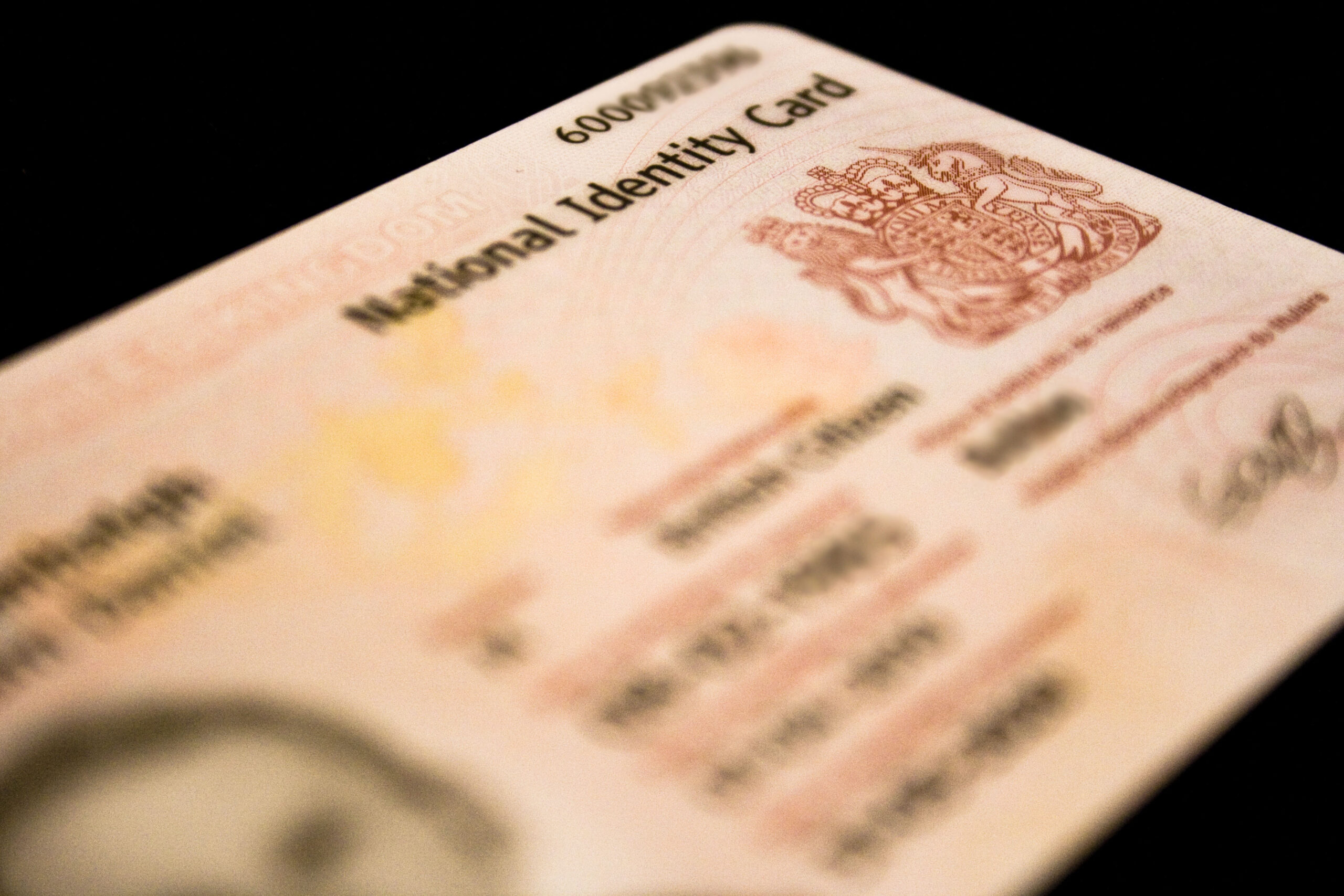
ID cards are a fantastically bad idea, and are fodder for Big Tech companies, but could and should mark the end of Starmer’s government, argues Kevin Crane
It’s no secret that Starmer’s Labour Party idolise Tony Blair and his era. This would be considered a bit perverse by most right-thinking people in any case, but the perversity is heightened by the fact that what Team Starmer like about Blairism is not the early, nuanced and popular first term government of 1997 to 2001; no, they have modelled themselves on the late period, from 2005 to Blair’s resignation on the cusp of the great economic crash two years later.
This was not the pragmatic Blair combining globalisation with expanded public services and presiding over a cabinet of mostly well-liked and respected politicians. Instead, it was the increasingly weird and reactionary Blair who had become a fanatical warmonger, bigot and authoritarian, leading a cabinet who were known for little other than corruption and stupidity. Truly, we can say that if the goal was to reproduce this, today’s lot are living up to it and then some.
Blair’s obviously delighted with the Starmer government and frequently shows up to give helpful advice on how to even more perfectly reflect his increasingly twisted ideals. One of the key projects from those dark days at the end of his premiership that he would really like to see implemented is ID cards: a wildly unpopular policy he was extremely keen to push through, but that did not survive Labour losing the 2010 general election.
The public had every reason to be suspicious of mandatory identity documents being foisted upon them at that time: the government was over a half-decade into a deep slide into increased surveillance and politicised policing as a result of British involvement in the ‘war on terror’, and Labour had already introduced shocking infringements of basic freedoms such 28-day detention. The economic case against ID cards was also colossal, with one set of LSE academics estimating the total cost as being somewhere between £10.6 and £19.2 billion (and that’s in twenty-years-ago money!). It’s no wonder that a Tory Party keen to project a moderate face and austere spending agenda killed the idea without a moment’s hesitation.
Britain’s most infamous war-criminal has never given up on the dream of increasing government control over the public, though, and he piped up to urge Starmer to resume introducing the cards within weeks of Labour taking office last year. To his disappointment, the answer was a no, and then-home sectary Yvette Cooper officially denied that they believed it was necessary and pointed out that they weren’t anywhere in the 2024 election manifesto. It must have been particularly bitter to Blair that even one of Labour’s hardest right-wing figures didn’t think they were a goer.
So, given that that’s what happened just last summer, it does feel a bit shocking that Starmer comes to the nation to announce that he will impose a mandatory ID card on every single resident of the UK, British or any other nationality. Just saying it’s all part of the New Labour third-term tribute act is not a sufficient explanation for such a dramatic U-turn on something so extraordinary and utterly unpopular. What’s changed between then and now? Well, it’s the specific genocidal maniac in the White House, mostly.
Let’s call it the Trump Card
Starmer cut a deeply pathetic and haunted-looking figure as he shuffled around before Donald Trump during last week’s official state visit. The timing could barely have been worse for the prime minister, still reeling as he was from having been forced to let go of another of his beloved Blair-era totems, Peter Mandleson, in a scandal that also involves the US president. We have yet to find out how everyone involved avoided talking about Jeffery Epstein for the entire visit, but it is amusing to try to imagine the multiple layers of crippling awkwardness.
What we know they did talk about, of course, was uniformly disastrous: mostly greater involvement of awful American private-equity companies in the British economy, and the building of huge environment-wrecking data centres, for the use of American tech companies, on British soil. As was seen at his inauguration in January, Big Tech has heavily invested in Trump, and he is out there getting them the returns they want. And that is the single most important factor in why he will have ordered Starmer to introduce ID cards.
The data-gathering features of the proposed ‘BritCard’ are not even slightly concealed: the PM’s chief secretary has pledged that the card will be required in order to work in the country and form ‘the bedrock of the modern state’. This is not to be some idle piece of plastic like your National Insurance card; it is being envisioned as tool to extract and gather data about every aspect of your life. Big Tech has very clear reasons why they want this: their overgrown ‘Artificial Intelligence’ projects have already begun to run low on new data on which to train their models and have actually self-harmed by releasing so much generative slop onto the internet that trying to extract data from it makes the models actively worse rather than better. They need big sources of new, clean, data from and about real people. Forcing nation states to extract it for them is a big win as far as they’re concerned, and various such schemes have been imposed in the Global South (notably India). The Donald has now secured a mass data extraction from Britain.
Show Labour the red card
Whether or not the public understands what the nefarious plot being hatched here is, their response has been instant and absolutely correct: everyone’s furious.
There is no possibility that ID cards wouldn’t be used for increased surveillance. This was true even in the days before Big Tech existed to commodify every aspect of your life and the security forces weren’t gathering anything like the data on the public they do now. Yvette Cooper had peaceful protestors legally redefined as terrorists this year: how much more would an authoritarian lunatic like her be able to do when people can’t engage with any institution without the use of a digital ID card? The prospects for clamping down on basic democratic freedoms is genuinely frightening.
Starmer claims that he needs to bring in ID cards to ‘control immigration’, which is a nonsense sustained by the myth that by far most immigrants to Britain don’t have official permission to do so. The establishment project of disinformation about immigration has always been about enabling the state and the ruling class to increase their own repressive power, and this is a particularly crude example of it.
He also promises that they will offer ‘countless benefits’ to citizens. This is semi-true, in that you can’t count up to zero. Costs for this absurd scheme will be no cheaper than they would have been in 2010, indeed they will likely be higher. People have a right to be furious that the government which tells us we can no longer afford healthcare, social care or clean water, can coolly pledge billions of pounds on a digital infrastructure project that they don’t want. We should add that those billions won’t help the domestic economy: they will all be going into the same gaping maw of American Big Tech as your personal data.
The risks involved in all this are also huge. Cyber-attacks on business and corporations are now common occurrences, the massive theft of data for Marks and Spenser’s and the Co-operative being only two huge examples from 2025. An official government database of all citizens will be an irresistible target for powerful hackers across the entire world. The threats could also come from unintentional failure of the system, too. The country was shocked last year by Mister Bates versus the Post Office: imagine the Orwellian nightmare of a Horizon-style scandal affecting a system by which literally all workplaces and government institutions are managed.
Politically, ID cards are not so much toxic for Labour as radioactive. No other political party is likely to support it: Reform UK, the Liberal Democrats and the English Greens have already come out against. Even bigger than that, though, is that Starmer announced that everybody in the United Kingdom would be required to have the ‘BritCard’, which specifically includes people in Northern Ireland. From the point of view of the nationalist community in Northern Ireland, they are literally being told by a foreign government that they need to carry the ID card of a foreign nation to live and work in their own country: who wouldn’t be outraged by that prospect? Sinn Fein, the largest party in the government of the territory, has accordingly declared that they will oppose the scheme, and while it is by no means certain that the unionist parties are going to side with the London government, the resulting fallout might bring the prospect of Irish reunification closer. A final thing to note is that the Scottish Nationalists have also declared opposition to ID cards and could seek to use it as a way to get their own opposition to the UK back onto the agenda.
There is certain to be stiff opposition to Starmer’s filthy acquiescence to Trump here. We should join in and make this the end of his truly terrible political career.
Before you go
The ongoing genocide in Gaza, Starmer’s austerity and the danger of a resurgent far right demonstrate the urgent need for socialist organisation and ideas. Counterfire has been central to the Palestine revolt and we are committed to building mass, united movements of resistance. Become a member today and join the fightback.
