
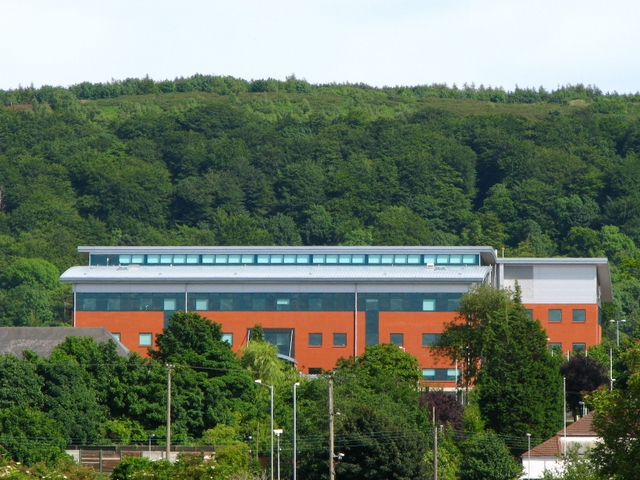
 MI5 Headquarters in Holywood, North of Ireland/ Ross, CC BY-SA 2.0, via Wikimedia Commons
The revelation that key documents were withheld from an inquiry on MI5 and its spy in the IRA has cast further light on Britain’s crimes in Ireland, explains Chris Bambery
Freddie Scappaticci was a member of the IRA’s Internal Security Unit, responsible for dealing with suspected informers. In 2003, it was reported that Scappaticci had been working for British intelligence, their highest-ranking agent in the IRA, and was known by the codename ‘Stakeknife’. It was reported that Scappaticci was paid £80,000 a year.
A former IRA Volunteer, Anthony McIntyre said of his importance to the British: ‘Scappaticci would’ve debriefed people after operations when they went wrong, trying to find out – supposedly trying to find out – who may have compromised the operation.’ He was then able to know who was involved in all the operations so the IRA was effectively compromised because this was sort of the Clapham Junction of the IRA.
His handlers were from the Force Research Unit (FRU), a covert military-intelligence unit of the British Army’s Intelligence Corps, set up to recruit and run informers. An official British inquiry led by Sir John Stevens revealed collusion between the FRU and loyalist paramilitaries, by which their direct involvement in sectarian assassinations was simply passed over. The most high profile of these was the killing of solicitor Pat Finucane in 1989.
The Stevens Inquiry faced major obstruction from the FRU, MI5 and other security forces, including an arson attack on its offices in Belfast’s Castlereagh Barracks.
In May 2003, Scappaticci was named as Stakeknife, by British and Irish newspapers, as the person who had spied for Britain for more than twenty years. He always denied this but it was the truth.
The UK government launched Operation Kenova to investigate claims that the Royal Ulster Constabulary had failed to investigate up to eighteen murders, to protect Stakeknife’s identity from exposure. It has been alleged that Stakeknife’s intelligence handlers allowed up to forty people to be killed by the IRA’s Internal Security Unit to protect his cover. Scappaticci was arrested in connection with Operation Kenova in January 2018.
That same month, Scappaticci was arrested by police regarding offences including murder and abduction, and was released on bail, but in the end the Public Prosecution Service for Northern Ireland decided that there was insufficient evidence to put him on trial on charges of perjury.
Stephen Herron, the PPS director in the Belfast and Eastern Region, also ruled out prosecutions of former members of the security services who had been his handlers, as well as a former member of the PPS.
In August 2024, Iain Livingstone, former head of Operation Kenova, announced that MI5 had not disclosed all material it had on Stakeknife before Operation Kenova published its report earlier that year. Livingstone said that he and Jon Boutcher, the former head of Kenova, had previously stated that they believed they had been given access to all files that MI5 had in relation to Stakeknife. He wrote a letter expressing his concerns to Secretary of State for Northern Ireland Hilary Benn, former head of Operation Kenova Jon Boucher, the Director of Public Prosecutions for Northern Ireland and the head of MI5.
New admissions
MI5 then admitted it had ‘discovered’ documents which it had not made available to Operation Kenova. The new files reveal that MI5’s knowledge of Scappaticci went back to the late 1970s when he was first recruited by the FRU. Previously they had claimed they only became involved with Stakeknife in 2003 when it was tasked with rehousing him in England after he had been ‘outed’ and identified.
The new files cast a fresh light on Scappaticci’s prominent role within the IRA’s Internal Security Unit. Sinn Féin MP John Finucane, whose father had been assassinated by Loyalists, said it was ‘disgraceful and unsurprising’ that British security services had withheld information from the inquiry, adding: ‘The discovery that MI5 did not disclose vital information to the Kenova Inquiry may now further delay the publication of the full report into the investigation. This revelation will add to the trauma and the anguish of families of the victims, and I am calling on the investigation to process the new information as thoroughly and as quickly as possible.’
Baroness O’Loan, a member of Kenova’s steering committee, said MI5 had behaved ‘appallingly’. Jon Boutcher, now chief constable of the Police Service of Northern Ireland (PSNI), said it was: ‘Unacceptable that MI5 continue to provide material to the Operation Kenova Team so long after they undertook to have given full access to Kenova of all the material they held.
‘The fact that this information continues to be provided to the Operation Kenova Team after the Public Prosecution Service have directed on the files submitted to them will cause further upset to the families who had already waited many years to find out what happened to their loved ones.’
Scappaticci himself had died on 20 March 2023 in England and was never charged. Because he was still living under witness protection, little information about his death was publicly revealed, and it was only announced after his burial had taken place. It was later revealed that he had been known as ‘Frank Cowley’ and was living in Guildford when he died.
Gen Sir John Wilsey, the general officer commanding the British army in Northern Ireland between 1983 and 1990, once described Stakeknife as ‘the golden egg’ of military intelligence agents during the Troubles and said he had saved ‘hundreds and hundreds of lives’. He also killed at least eighteen IRA members in his role as its enforcer.
The last two decades of the Northern Ireland Troubles saw both sides move away from their earlier mode of operations. The British army ensured there was no repeat of such obvious examples of colonial repression such as internment without trial in August 1971 and the Bloody Sunday killing of fourteen unarmed civilians on a Derry civil-rights march in January 1972.
Instead, they concentrated more on sophisticated surveillance, including bugging IRA weapons when they uncovered arms caches, and on recruiting informers. When several high-profile trials of suspects named by these collapsed, they concentrated more on ensuring they rose to prominence in Republican and Loyalist ranks. This meant, as in the case of Scappaticci, overlooking their involvement in murder.
The IRA suffered because of this but, despite much damage, it did not halt their military campaign. IRA attacks continued with the aim of forcing the pace of secret negotiations towards a permanent ceasefire which were already underway. Underlying this was a recognition by both sides that they could not achieve military victory. Military and intelligence stalemate paved the way to today’s peace.
Before you go
The ongoing genocide in Gaza, Starmer’s austerity and the danger of a resurgent far right demonstrate the urgent need for socialist organisation and ideas. Counterfire has been central to the Palestine revolt and we are committed to building mass, united movements of resistance. Become a member today and join the fightback.

Chris Bambery
Chris Bambery is an author, political activist and commentator, and a supporter of Rise, the radical left wing coalition in Scotland. His books include A People's History of Scotland and The Second World War: A Marxist Analysis.