
Hamnet succeeds in imagining Shakespeare’s lost personal life writes Eilidh Stewart
Hamnet is a gut-wrenching historical fiction that attempts to untangle the mystery of William Shakespeare’s personal life, most of which has been lost to history.
Based on the best-selling book by Maggie O’Farrell, Hamnet centres on Agnes (commonly referred to as Anne) Hathaway, Shakespeare’s wife, and depicts the couple falling in love, the birth of their three children and their journey of loss, grief and heartbreak after the death of their son, Hamnet.
The movie, starring Jessie Buckley and Paul Mescal, begins with an explanation that the names Hamnet and Hamlet were used interchangeably at the time, foreshadowing the movie’s main premise: that the death of Shakespeare’s son inspired his famous tragedy. This may be true. Hamnet died in 1596 and Shakespeare is thought to have written Hamlet, a play that ends with the death of a son, in the first years of the seventeenth century.
Historically, many elements of Shakespeare’s life are unknown, particularly those to do with his family. While Agnes and their three children, Susanna, Judith and Hamnet, are all real, O’Farrell and director Zhao attempt to fill in the gaps, illustrating their fun-loving family dynamic, the impact of Shakespeare’s frequent residencies in London and the aftermath of a great loss.
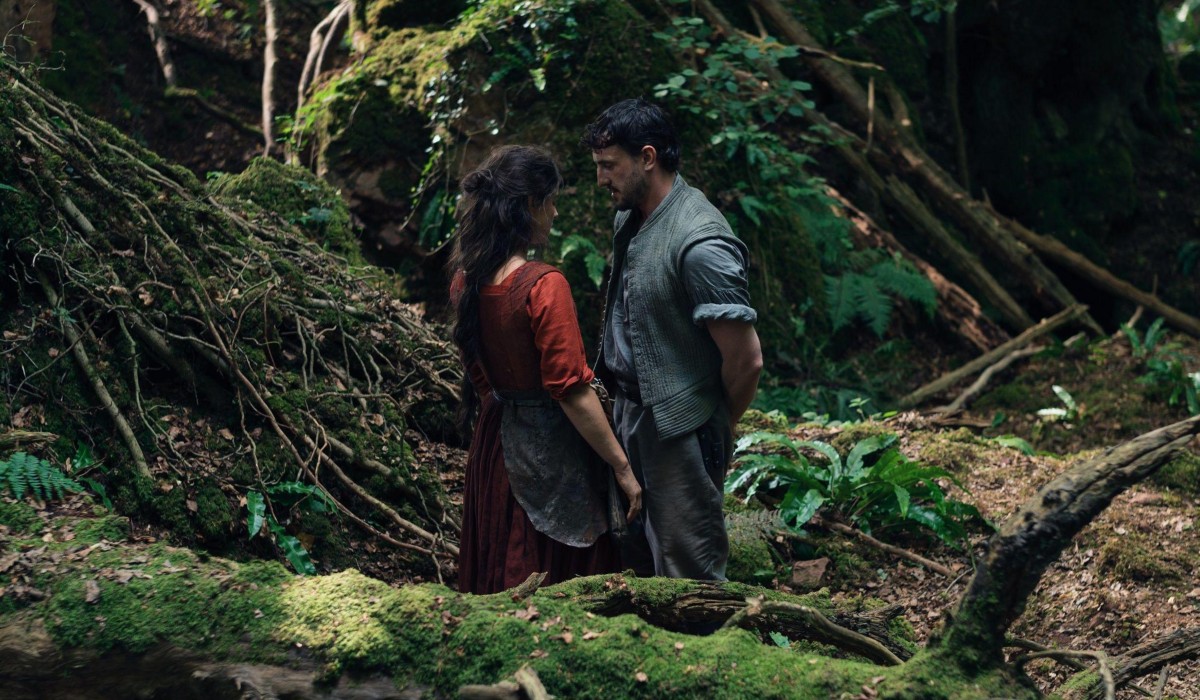
Agnes is portrayed to have a deep relationship with nature throughout the film, which although not explicitly spelled out, is likely a reference to the symbolic use of forests in many of Shakespeare’s works. Just as As You Like It’s Forest of Arden is depicted as a place to find love and freedom, so too are woodlands considered a place of sanctuary in Hamnet, first as the sight of Mescal and Buckley’s meeting, then as a site of play for their children.
However, the impending doom of Macbeth’s Birnam Wood is present in the film too. Hamnet finds himself stuck in an imaginary wooded area, a state between life and death, whilst on his death-bed. The movie is sprinkled with clever references to Shakespeare’s works such as this, which may be missed on the first watch, but demonstrate great attention to detail.
However, Hamnet does have its weak points. Despite the movie being painstakingly slow, the character development was rushed. For example, the leads fell in love in the first ten minutes! In saying that, the amount of sadness squeezed into the two hours was impressive. From traumatic childbirths, to the bubonic plague, to the very slow death of one child and near death of another, I wouldn’t recommend watching Hamnet if you need a relaxing break from the news.
This, however, is the film’s intention. It purposefully encapsulates the horrific realities of the time. The bubonic plague ran rampant throughout Shakespeare’s life, with at least five major outbreaks during his 52 years. Therefore, whether an accurate depiction of Shakespeare’s life or not, Buckley and Mescal’s raw acting captures the parental grief and heartbreak common at the time due to the high child-mortality rate.
The film ends on a (slightly) more uplifting note with Agnes going to see Hamlet and realising her husband has immortalised their son through the production. The idea that Hamnet lives
on appears to be a comfort to Agnes, who hadn’t forgiven Shakespeare for missing their son’s death. She reaches out and can feel her son again.
If you are a Shakespeare fan, I would recommend seeing Hamnet. It may not be historically accurate (who knows!) but it is well done and thought-provoking. However, if you’re not looking for a night of tears, it’s maybe best avoided.
