
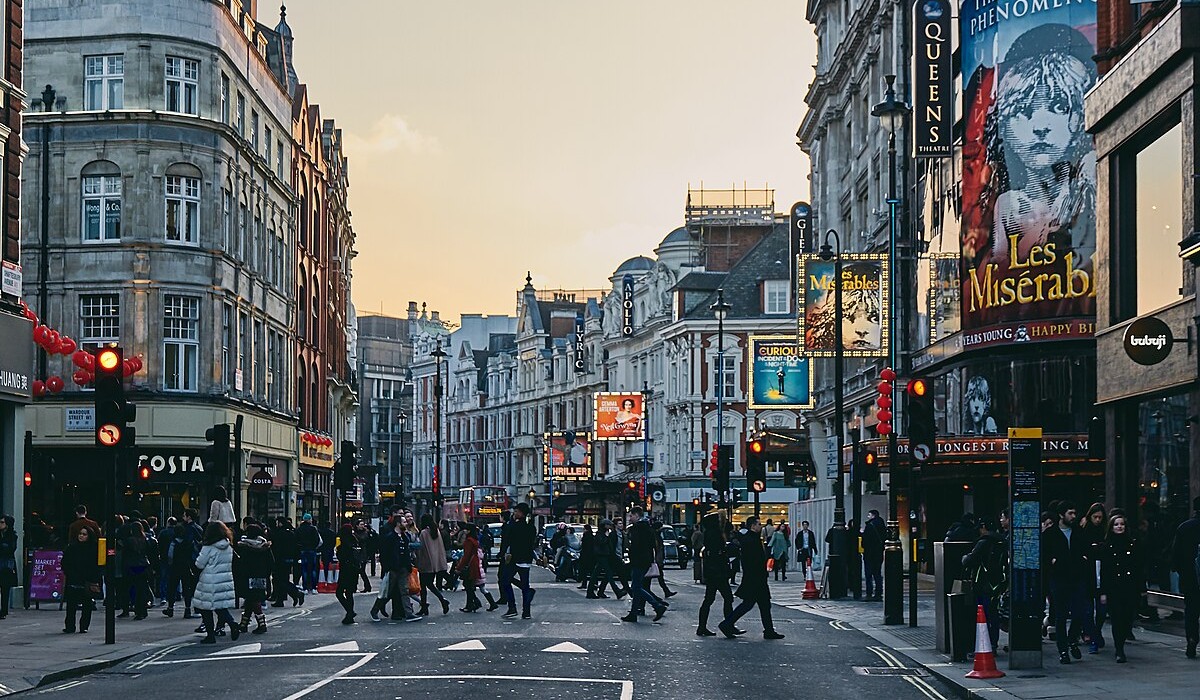
 The West End in London. Photo: Pedro Szekely / Wikimedia Commons / CC BY-SA 2.0
From the Fringe to London writers and actors are taking on the management imposed censorship over the genocide and sponsorship from complicit companies explains art critic Keith McKenna
In February 2024, the London theatre Chickenshed phoned me about my positive British Theatre Guide (BTG) review of their gentle play about a Palestinian woman. They had cancelled its two-week run and spent forty-five minutes trying to persuade me to take down the review so no one knew the play existed.
Sometimes resistance reversed such censorship. In March 2024, Manchester’s HOME arts venue cancelled the performance of Voices of Resilience, which centred on the diaries of a Palestinian. The BBC reported, “100 artists began removing their work from the gallery in protest at the decision”, forcing HOME to reinstate the event. It went on to be performed at London’s Barbican despite complaints from UK Lawyers for Israel that it broke the law.
Censorship was the subject of the eleven-play collection Cutting the Tightrope at London’s Arcola in 2024. To protect the 12 writers, they did not identify “who wrote which play”.
The freelance employment of theatre workers made them understandably nervous about being identified. At the Edinburgh festival theatre of 2024, there were just 5 shows focused on Palestine, with one of them at the Summerhall venue that was not advertised and allowed only one reviewer (me) to review it on condition that no actor’s name be revealed in my BTG review.
The folly of management’s cancellations was illustrated in September 2024 when Manchester’s Royal Exchange Theatre cancelled a Shakespeare play because it mentioned Palestine, losing them money and gaining publicity for Palestine.
However, as thousands marched in London and elsewhere, theatre workers were becoming more confident about making a stand, including walkouts in solidarity with Palestine.
By the 2025 Edinburgh festival, the number of Palestine-connected shows rose to 31 and included, in the International festival, Cutting the Tightrope, and numerous shows written and performed by Palestinians, such as Welcome to Gaza, written by children of Gaza. The government’s attempts to silence Palestine Action prompted it to be supported many times from the Edinburgh stage, including by Mark Thomas in his amusing show at the old Police Club of Edinburgh.
Particularly popular in 2025 was The Horse of Jenin by the Palestinian Alaa Shehada, which packed the Stratford East Theatre and sold out a two-month run at London’s Bush Theatre. At times moving, and with plenty of humour, it tells the story of Alaa’s life in Jenin and the importance to the community of the 12-foot metal statue of a horse that was internationally acclaimed and was stolen by the Israeli Defence Force in 2023 as part of their continued erasure of Palestinian culture. Alaa wondered if they asked the horse if it condemned Hamas.
None of the 39 West End theatres or the National Theatre has yet joined their employees to give witness to the historic horror taking place against Palestine. But that will change.
Before you go
The ongoing genocide in Gaza, Starmer’s austerity and the danger of a resurgent far right demonstrate the urgent need for socialist organisation and ideas. Counterfire has been central to the Palestine revolt and we are committed to building mass, united movements of resistance. Become a member today and join the fightback.
