
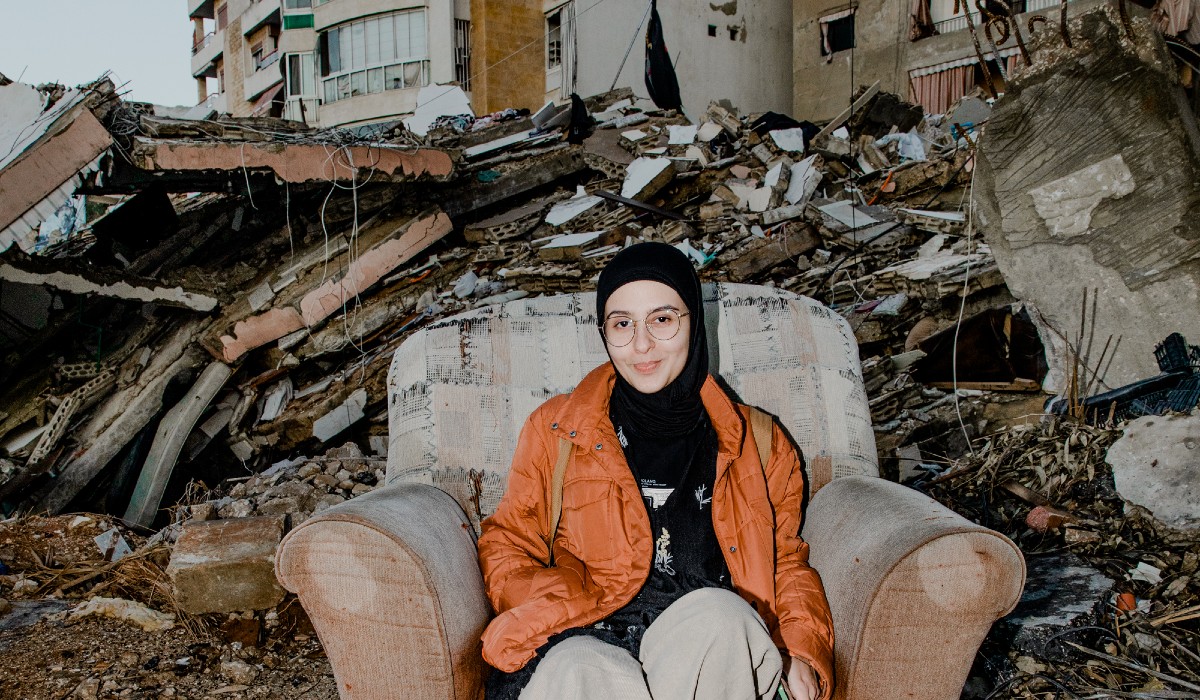
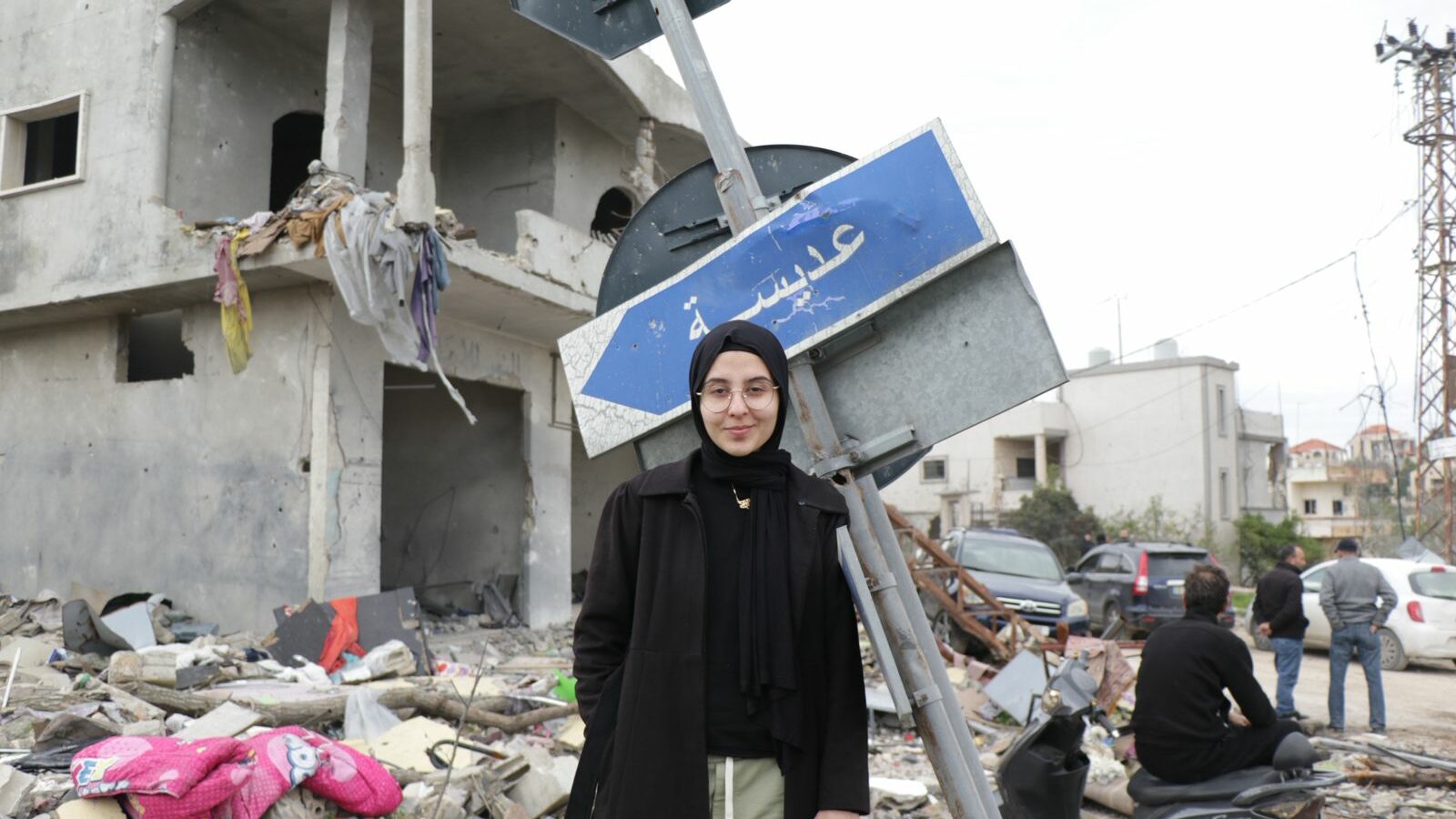
 Sara Rammal. Photo: Myriam Boulos (supplied)
As Israel threatens to re-escalate its attacks on Lebanon as the Hezbollah disarmament deadline passes, Sara Rammal, a 22-year-old artist from the very south of Lebanon sits down with Marija Carter in Beirut to talk about repeated displacement, finding strength in community rebuilding, and her childhood home being burned down by Israeli soldiers upon withdrawal
Lebanon has been entangled in conflict with Israel since 1948, when the Nakba forced hundreds of thousands of Palestinian refugees over its border. In addition to the altering of the nation’s delicate sectarian balance, Israel launched repeated incursions, including major invasions in 1978 and 1982. The latter, aimed at expelling the PLO, led to a prolonged Israeli occupation and the Sabra and Shatila massacres.
In response, Hezbollah emerged in the 1980s as a Shia resistance movement. It had largely achieved its primary objective of ousting the IDF from Lebanon by the turn of the millennia. Persisting tension culminated in the 2006 war – decimating Lebanese infrastructure, but failing to weaken Hezbollah’s entrenchment.
The border remained volatile: repeatedly pierced by airstrikes, assassinations, and surveillance flights. As Hezbollah aligned more closely with regional allies, Lebanon became increasingly vulnerable to conflict escalation.
I’m from a small village in South Lebanon, right on the border with occupied Palestine. The blue UN line that divides us from the land stolen in 1948 runs just a few fields away from where I grew up. Like so many others, my family’s life has always been marked by the border — by the wars and the ceasefires that never really meant peace. From our balcony, I could see the Israeli watchtowers, their drones flying over us, and the UN tanks sitting quietly while we were bombed.
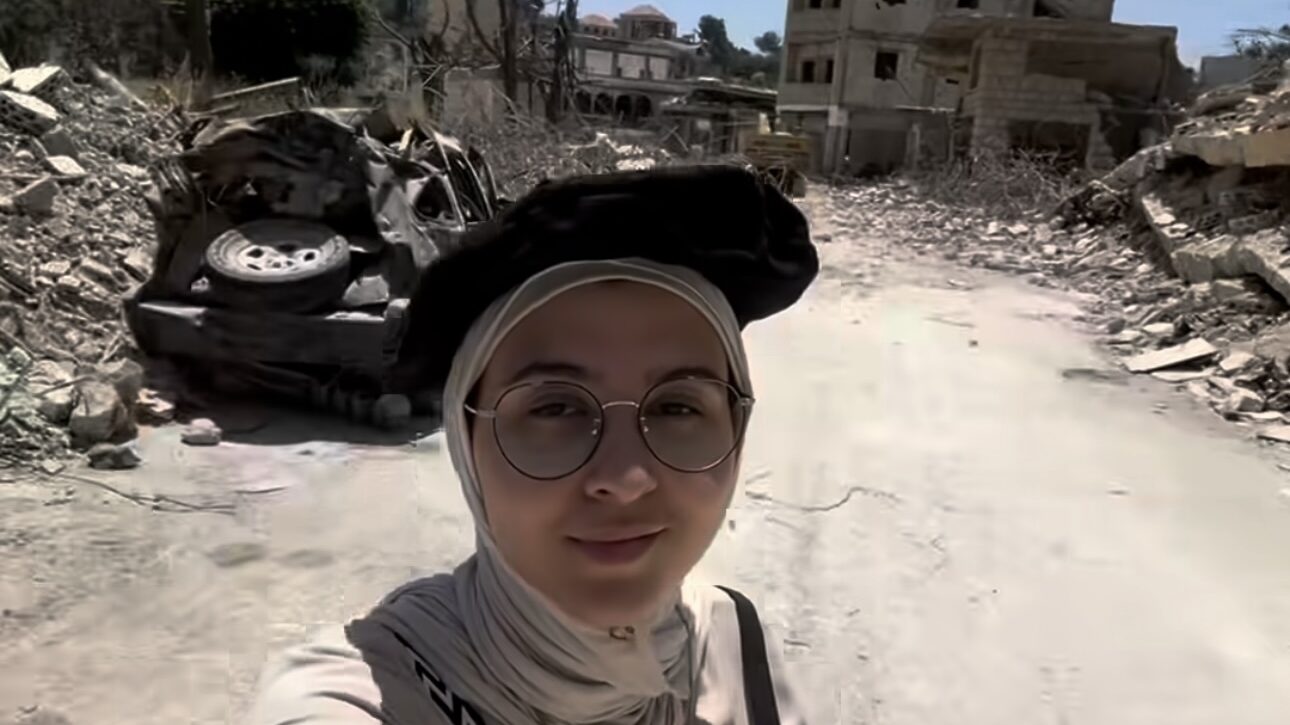
When the war started on 7 October 2023, I was still living in the South. That morning, the sky changed. We heard the distant echoes of bombs before the news even caught up. At first, you think – maybe it’s another escalation like before… loud, frightening, but not a total war. But it was different this time. It didn’t stop.
The roads were becoming unsafe and I needed to continue university. So I moved to Beirut. My parents stayed behind — like many others — and I couldn’t bear the idea of not seeing them, so I came as often as I could.
Following Israel’s commencement of genocidal bombing on Gaza on 7 October 2023, Hezbollah launched attacks on Israel from the south of Lebanon a day later. A hundred thousand people were displaced on either side of the border within weeks.
Every time I visited, I saw and heard everything. The bombs became a part of the background noise. I would sit and watch the Israeli side unleash destruction with advanced weapons, while on our side, local men — not soldiers, just villagers — stayed to defend their homes. Their families had evacuated to Beirut, but they stayed.
I remember seeing the fighters from my village all gathered in one house, eating together. I was living events I didn’t yet realise the historical importance of. That these days will shape the region.
On one side, there was a settler army with precision weapons, surveillance, and airpower. On the other, local men defending a place they knew stone by stone. That was the war, and most of the western media were still calling the latter the “terrorists”.
Unlike Israel, propped up by billions of dollars of foreign assistance, over 80% of the Lebanese population lives below the poverty line. The Lebanese Lira has lost over 98% of its value since 2019. Corruption, capital flight, and IMF-imposed austerity have gutted public services.
Lebanon has since been in a sustained state of institutional and infrastructural collapse. The country was without a president from October 2022 until January 2025, and its caretaker government remains effectively paralysed along sectarian lines.
The national power company, Électricité du Liban, supplies as little as 1–2 hours of electricity per day in many regions, where Hezbollah picks up the tab by providing solar panels and generators. The state’s once-strong medical system is near implosion point – a 2024 UN report found that nearly 50% of hospitals were operating at reduced capacity, and many emergency rooms lacked essential supplies.
When I settled in Beirut, I moved to the southern suburb of Dahiyeh. And living there changed everything.
It is a loving community that takes care of itself, because the government never did. The people are strong, generous, organised. There are youth groups, and women organising everything, from medical care to education. Security is provided by the community. They are people who have dignity and resilience. Even our firefighters are volunteers. When the state fails us, we take matters into our own hands. We lean on each other.
Law enforcement has all but disappeared in many areas, with local communities left to rely on sectarian networks for essential services. Lebanon today functions less as a centralised state than as a fragmented space held together by informal networks, international NGOs, and, increasingly, pure resilience.
Survival near the border was becoming more difficult, then impossible.
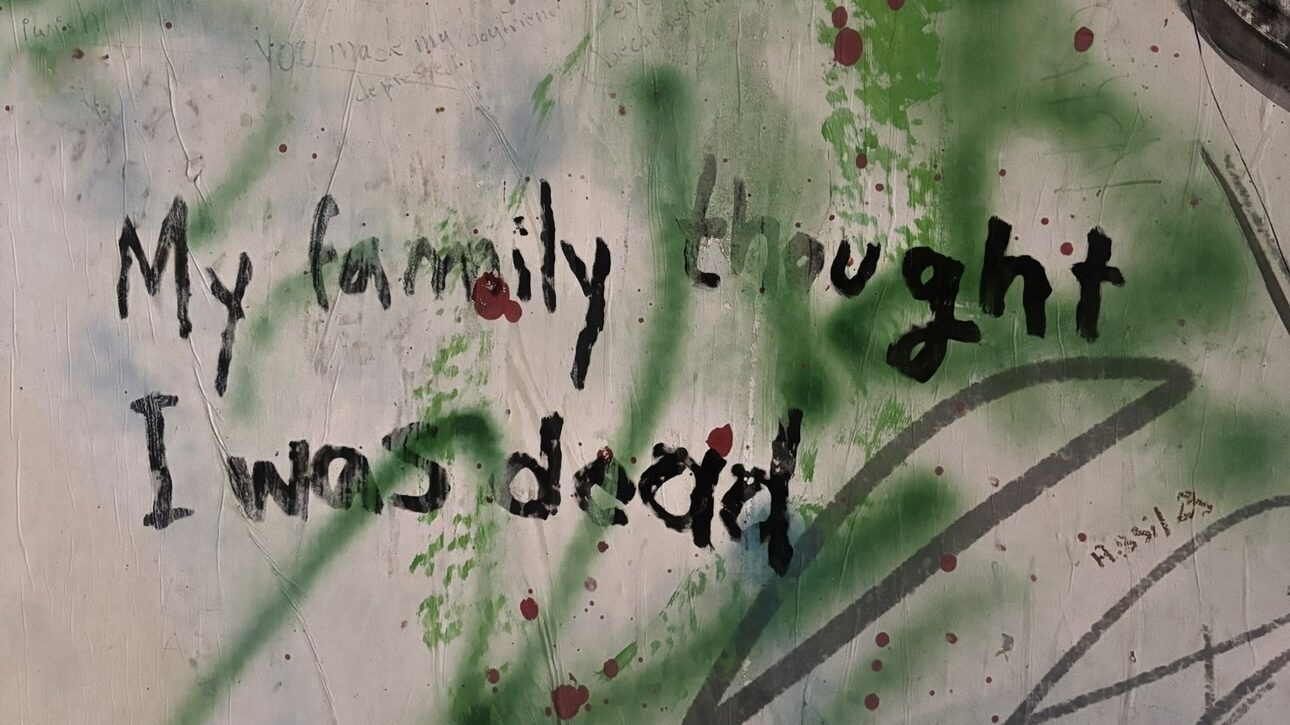
We packed quickly. Not with suitcases, but with whatever we could throw into bags — a few clothes, important papers, some photos. Everything else — furniture, books, my childhood drawings — we had to leave behind. When Israel started openly targeting civilians — not fighters, not military sites, but homes — my parents finally joined me in Beirut. It was no longer safe to stay in the land we knew. I lost the life I had known there. I didn’t get to say goodbye. We thought we will stay together in my student apartment in Dahiyeh for a week or two. It turned out to be 18 months.
On 17 and 18 September 2024, the Israeli intelligence detonated thousands of booby-trapped pagers and walkie-talkies across civilian areas, resulting in at least 37 deaths and over 3,000 often life-changing injuries.
The pager attacks were pure terror. As Hezbollah is a part of the Lebanese political administration, many civilians were in possession of these pagers to coordinate medicine deliveries to hospitals, transport, energy systems. It is a blatant lie that these devices were used by only combatants. On top of that, many bystanders were hurt, as people suffered injuries while driving, or in crowded public spaces.
And in a city as tightly packed as Beirut, the fear spread faster than the bombs. It turned our daily life into a minefield.
Under Article 7(2) of Amended Protocol II to the CCW Convention, to which Israel is a party, the use of traps disguised as ‘apparently harmless portable objects’ is prohibited. Furthermore, Article 7(3) of the same protocol forbids deploying devices in areas with high civilian concentrations, unless specific conditions (such as active ground combat) are met. These devices exploded inside food markets, during funerals, and in the hands of children and doctors.
That day I saw people running through the streets, holding injured children in their arms, bleeding, screaming. No one knew what was going on. I ran to the hospital where my brother worked. There were pieces of pagers scattered on the floor — the very devices that had exploded in people’s hands. I saw people with faces and limbs torn apart, it was something you’d think is out of a horror movie.
That day was when I truly accepted it: Israel was targeting all of us. We were not in the way… we were the targets.
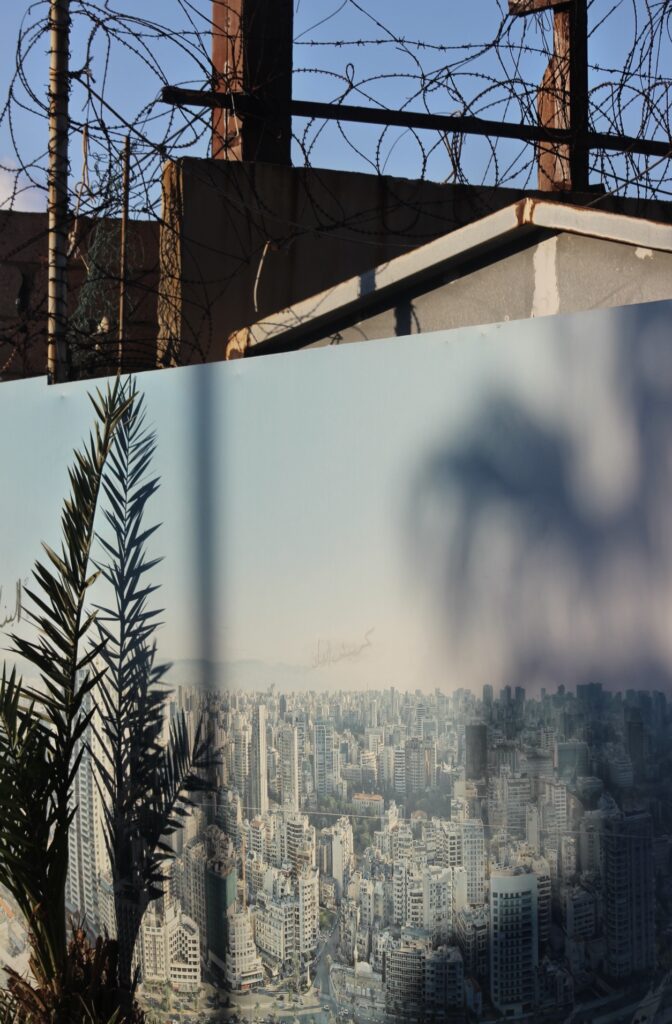
If you have never been to Beirut, its population density is hard to conceptualise. While London spans 1,572 kilometres square, Beirut is a mere 21. With 2.3 million inhabitants, it makes for one of the most densely populated places in the world. Combined with its incredibly steep terrain and an impressive vertical profile, defined by rapid urbanisation and land scarcity, Beirut is a vibrant capital like no other – and one of the most claustrophobic places imaginable when under attack.
Buildings climbing into the sky because there’s no room left to build outward, surrounded by the Mediterranean Sea and the tall peaks of Mount Lebanon. It’s claustrophobic even on a normal day. Add airstrikes and traps hidden under your feet, and you have a nightmare.
Following two cancelled flights and a landing in northern Nicosia that afternoon, I sat with one of my closest friends, Tasnime Akunjee, by the UN buffer zone on the Greek side of Cyprus when latest news hit: all commercial airlines suspended flights, except for the Lebanese national carrier, MEA. On the evening of 25 September 2024, I arrived in Beirut, and two bombs hit Dahiyeh on both sides of the Sea Highway on the route from the airport. The city had an ominous red glow, and was deadly quiet.
Beirut is no stranger to war. But this time, it felt different. It wasn’t just the south being pounded — it was the capital too. And the first target of Israel was the will of the people.
My family and I were packed in my student living room, in a suburb that nearly western media were referring to only as “Hezbollah stronghold.” Watching the news as the war thunder kept creeping towards us. That night, I stayed listening to the bombs falling around us until 2am, each explosion sounding closer than the last. I kept wondering: when will it be our turn? Will the morning come?
The whole of greater Beirut heard the explosions that ended the life of Hassan Nasrallah, the long-time Hezbollah leader. I was catching up with a friend in the Lebanese military compound by the Al-Omari Mosque. We were laughing about some silly story. We heard the jets – but you don’t stop laughing here over these.
No one flinched at first. You don’t flinch anymore in Beirut — not unless the ground shakes. And it did.
The bunker-buster bombs hit, and the world has changed. You could hear a pin drop in the usually deafening town.
The night of 27 September 2024 was the longest one of my life. The IDF spoofed the entire GPS system – and continued to do so every subsequent night. I have noticed this on frequent trips to the south of Cyprus, too. That is the extent of the interference Israel gets away with: Cyprus is an EU member state, and hosts military bases on British ‘sovereign land’ covering 3% of its territory. In Larnaca, this electronic warfare messes up your morning walk Strava data and makes ordering takeaway annoying. Here, the inability to orientate yourself in a capital under attack by a rogue terrorist state can be deadly. As far as our phones were concerned, the whole of Beirut was at the Queen Alia International Airport in Jordan.
But we were here, under fire. That night changed everyone. I was in Dahiyeh when the bunker-buster bombs that killed Sayyid Hassan Nasrallah dropped. The building shook as if it hit right beside us. The terror Israel put in people’s hearts that day was unimaginable.
As I headed towards Dahiyeh with all street lights off, the Hamid Frangieh Avenue was flooded in both directions with people heading in only one – out.
In some surreal sense, it reminded me of our London protests. Except instead of placards, people were carrying their children and cats. I saw multiple women who threw any towel, a T-shirt or a bath mat over their hair as they stormed out of their homes with a 15-minute notice ahead of all their worldly possessions reduced to rubble. The whole of Dahiyeh, a home to over 800,000 people, was in the dark and under an ominous cloud of dust.
I was texting my friends constantly. Marija kept telling me to leave. I didn’t want to. I didn’t know how. Eventually, I sent my live location to prove I was actually leaving.
We left Dahiyeh around 2am. The roads were all marked as dangerous, but we had no choice. As we drove to the mountains, we watched the sky light up from the bombs. We kept hearing them. Even when we arrived in the mountains, the noise didn’t stop. We escaped to the mountains only to realise there is no place in our country that can be called safe.
I joined a group distributing water at the intersection by the Islamic Martyr’s Cemetery. The local shops were handing it out to us for free. The sky was so covered by smoke and flashes that it seemed like a giant camera lens. Every few moments, another bomb hit. In the signature sound distortion landscape of Beirut, and with its famous omnipresent high rises, you could not tell if it hit a kilometre from here or right behind that building over there.
People kept flooding out of Dahiyeh in waves of thousands. I spent the whole night ignoring everyone frantically texting me from the West, instead equally frantically texting everyone in Beirut. Nobody in the city slept a second. Nobody knew where it hits next. It was a trip. It felt like the end of the world.
The streets were filled with smoke, and the air smelled of gunpowder for miles.
No one slept that night. We just texted each other to check: are you alive?
Are you alive?
Are you alive?
The army was patrolling the entire northern half of the city, while Hezbollah evacuated the civilians from the south. Every night there were more dead, hospitals were running low on blood, and the streets were completely filled with refugees. I’ve been in conflict zones before, but this was different. It was impossible to remember that there’s another world out there.
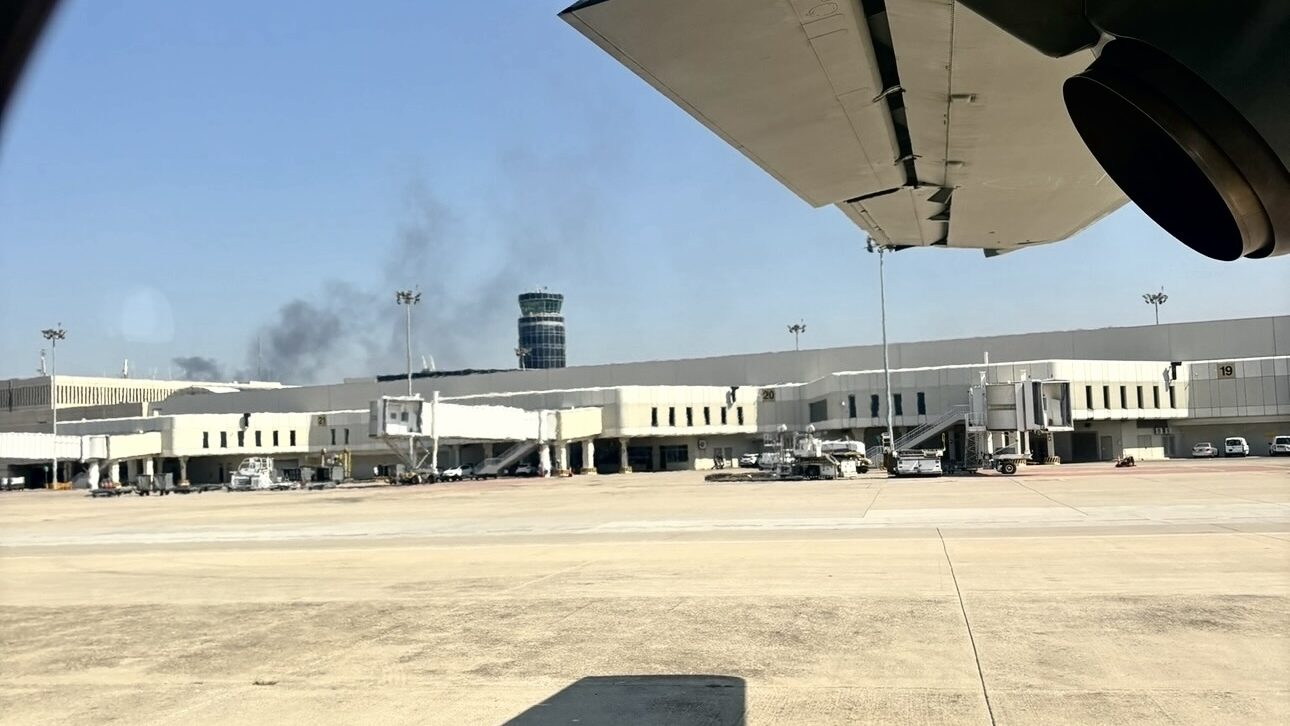
Ten days in, 1.2 million of the Lebanese population were displaced. If the same proportion, 11 million Britons, were on the move within such a short period of time as a foreign nation bombs south London, the UK for all its might would implode. Lebanon was on death row.
For the first few days, I didn’t want to talk. I didn’t want to work. I felt like everything was collapsing and nothing I can do could possibly help. Even high up in the mountains, you could hear them bomb our city. Every night’s sky was lit with explosions. Every night was the same: listening, waiting, praying. But then I realised I had to move. I had to do something.
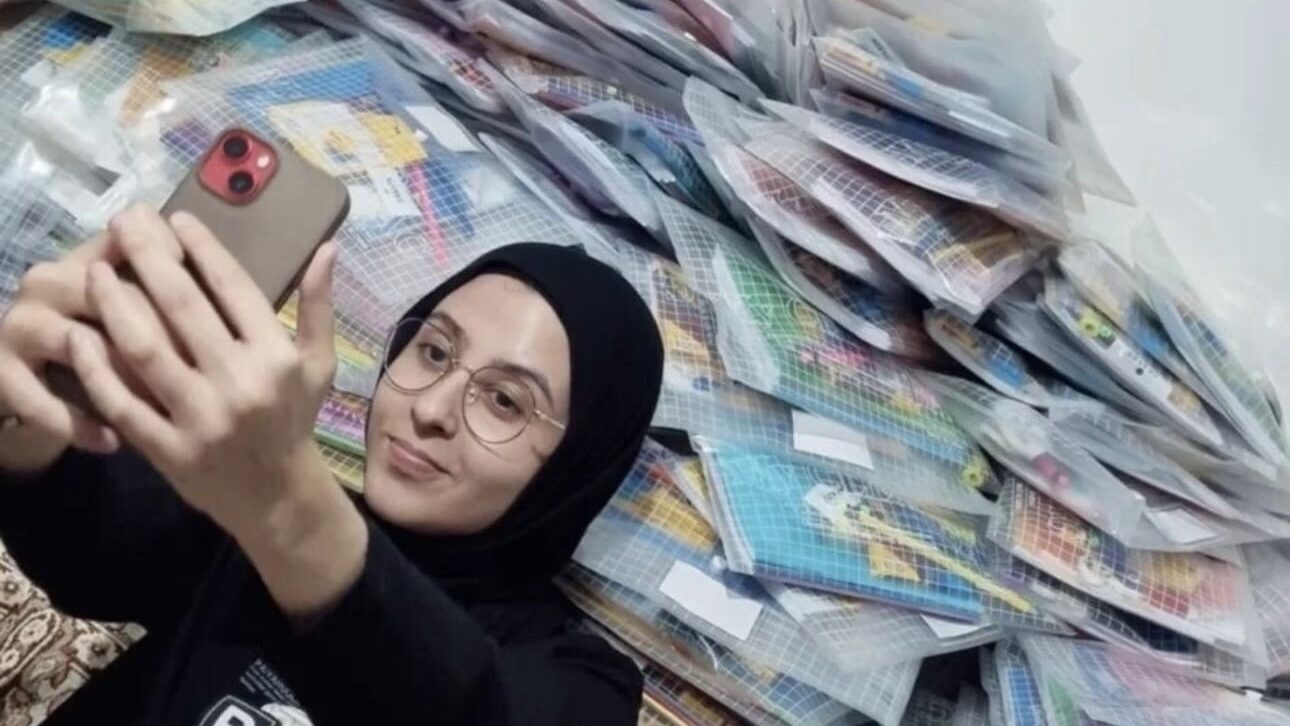
I started using Instagram again — this time not to document destruction, but to raise donations. Winter was coming, and people had been displaced with a notice of a few minutes, with nothing — no jackets, no shoes, no blankets. At the same time, schools had moved online, and families didn’t have notebooks or pens. Together with Marija, we started collecting money, and we had to get around the Lebanese banks because the inflation was getting even worse. We started distributing winter clothing, school supplies, hygiene kits — anything we could manage. It still didn’t feel like enough. But it was something.
Hezbollah soon sealed off the entire Dahiyeh. Without their escort, people could only get out. Soon, half a million homes stood empty. Driving through the area at night, you only saw destruction. Men sorting through the rubble looking for survivors. Keir Starmer urging all British citizens to get on those damn evacuation flights, while still supplying the bombs. The Kola intersection and Badaro in central Beirut were hit. The whole coast of the city was flooded with homeless refugees, many displaced multiple times.
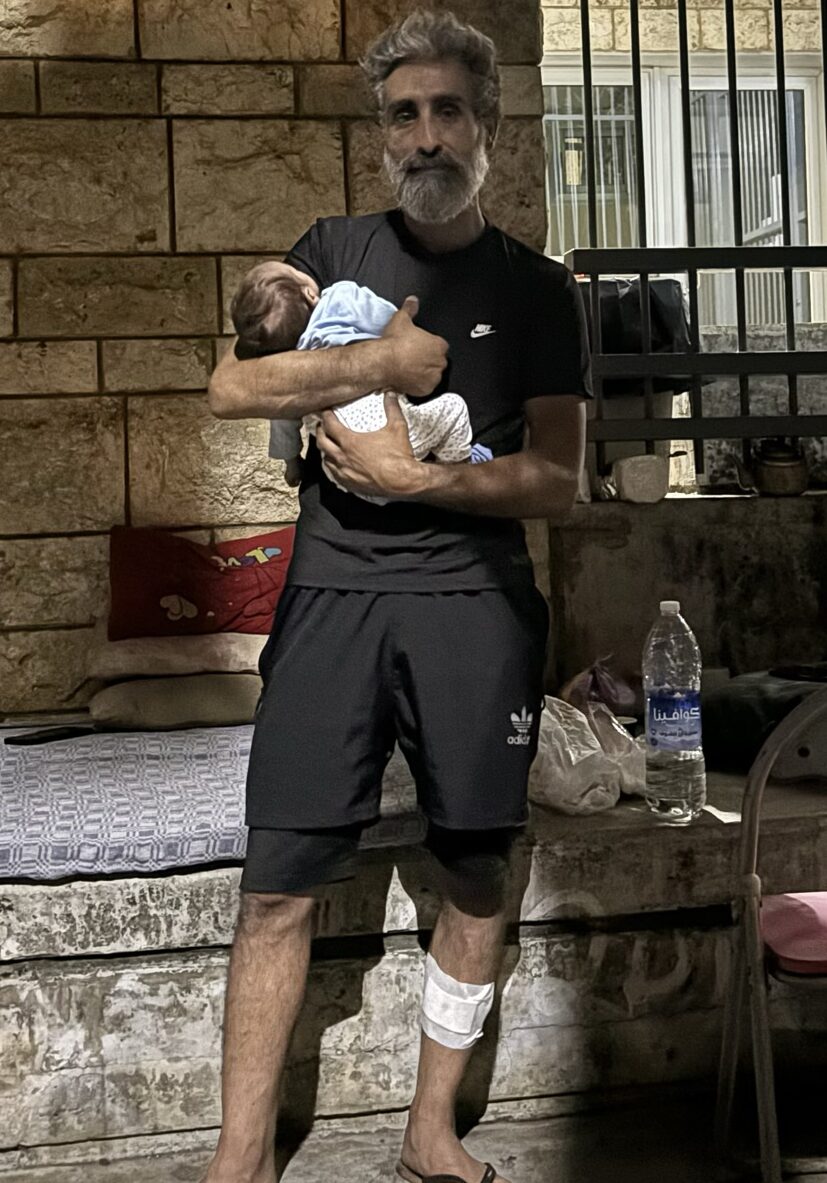
Later, I learned that Israel commenced a ground offensive in Lebanon a day earlier through a message from a friend. It was impossible to monitor what is happening. The Lebanese military abandoned posts. United Nations Interim Force in Lebanon refused Israeli demands to do the same, and got fired upon. Hezbollah pushed the IDF back.
I remember getting a text from my friend from Stop the War, asking for a little update video to promote the next national march – which reminded me that London exists. Truthfully, being able to show people here that we are not our government and the bombs and jets are not supplied in our name was the only thing that kept the westerners present sane. The hundreds of thousands who gathered in London to mark the one-year anniversary of the start of the Gaza genocide and to show firm opposition to the aggression in Lebanon were why we could even look the people here in the eyes, while our taxes pay for their pain. Showing up matters. I believe in that now more than ever.
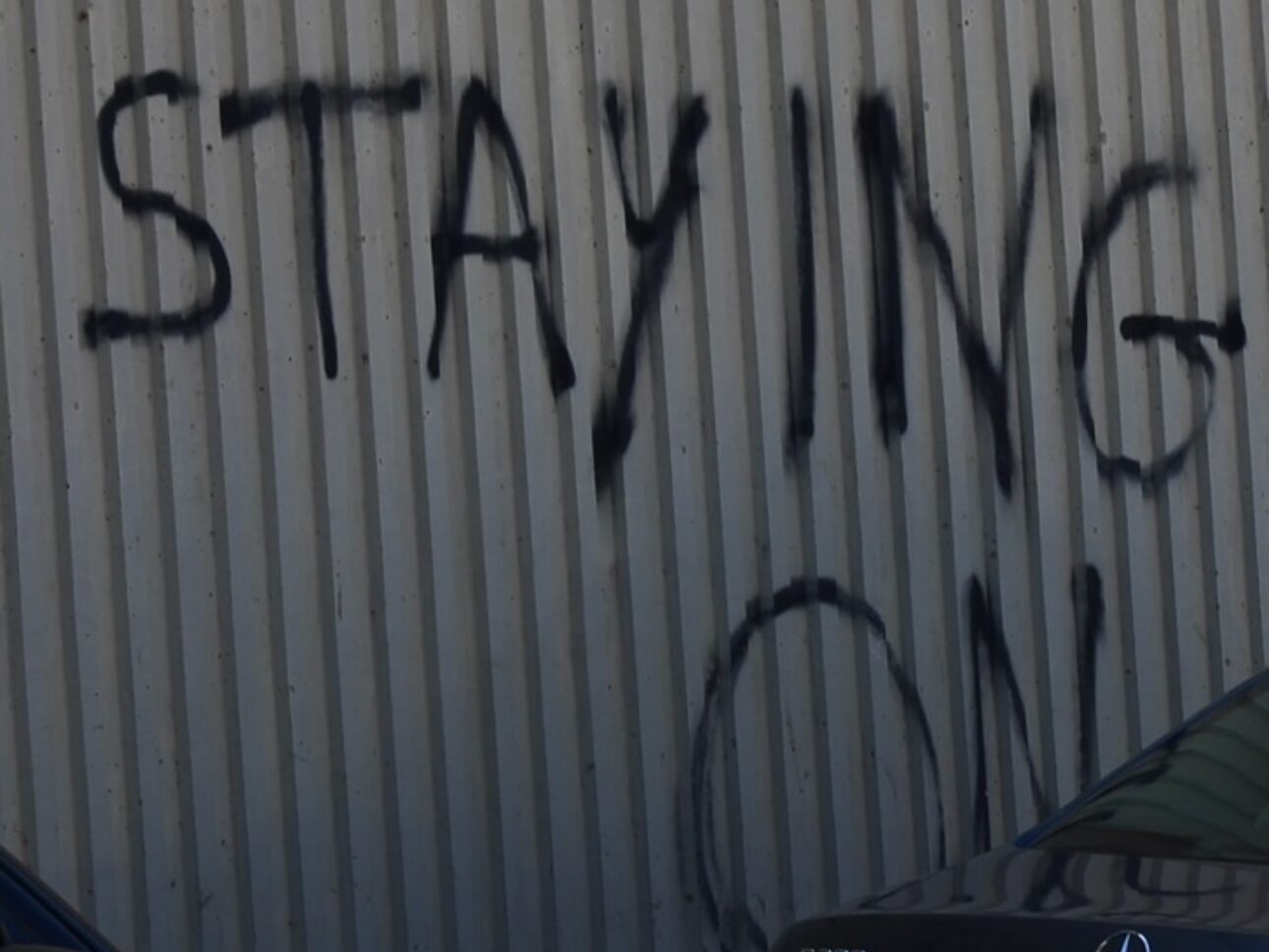
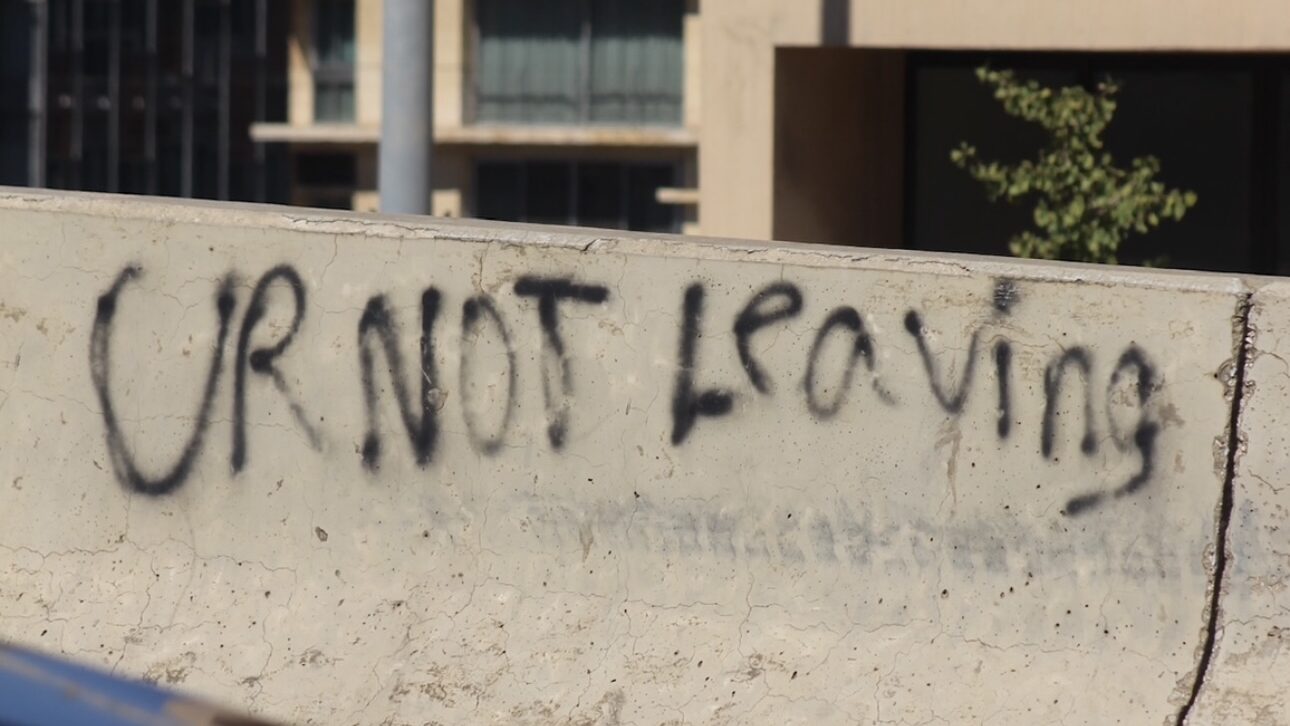
We distributed aid to families gathered in Martyr’s Square. I went home each evening with the embassy blowing up my phone with evacuation flights, past walls filling up with graffiti:
‘10,452 km2, not a meter less.’
‘We have been here for 7,000 years’
‘They took so much from us that they took our fear too’
‘The invaders have better watches, but the natives have time’
‘Power to the resistance’
‘The coloniser is much more scared of us than we will ever be of their jets’
‘You cannot defeat those who know death is not the end’
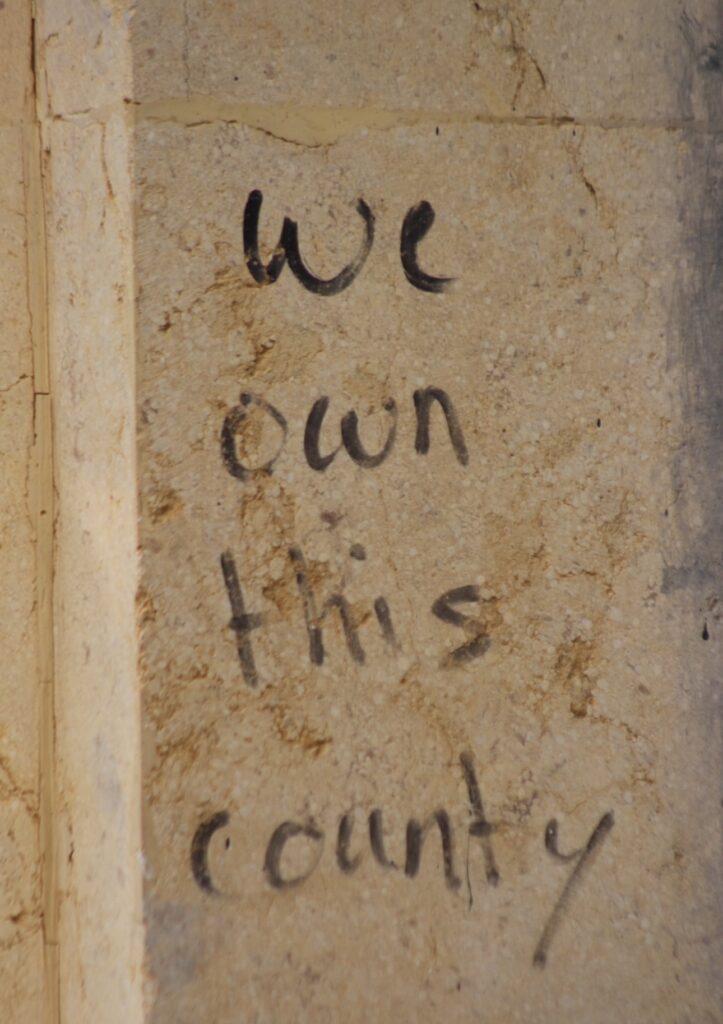
Panic is contagious, but so is courage. I walked into a corner shop at Damascus Road at 3 am and the elderly shop keeper noted that ‘Israel is going to kill everyone in this city soon.’ It sounded rather believable at that point, to be honest. He did not appear too impressed by my argument that should that be the case, why is he spending his last moments calmly reading and chain smoking in his little shop. ‘It’s what I’ve always done. We’re used to it. I won’t let them change me.’
Walking back to Hamra by the sea, displaced men gathered around fire to smoke shisha and joke. The adults talked quietly while the children slept on the pavements on what little cushion they had. My favourite reading spot in the world, the Bay Rock Cafe, stayed open, serving the scattered press and NGO workers as if the city wasn’t on fire. MEA never suspended flights. Delivering aid, we got ‘Alhamdulillah’s when asking people how are they doing. All the fighter jets and cluster bombs of the trillion dollar death cult on their southern border could not break them.
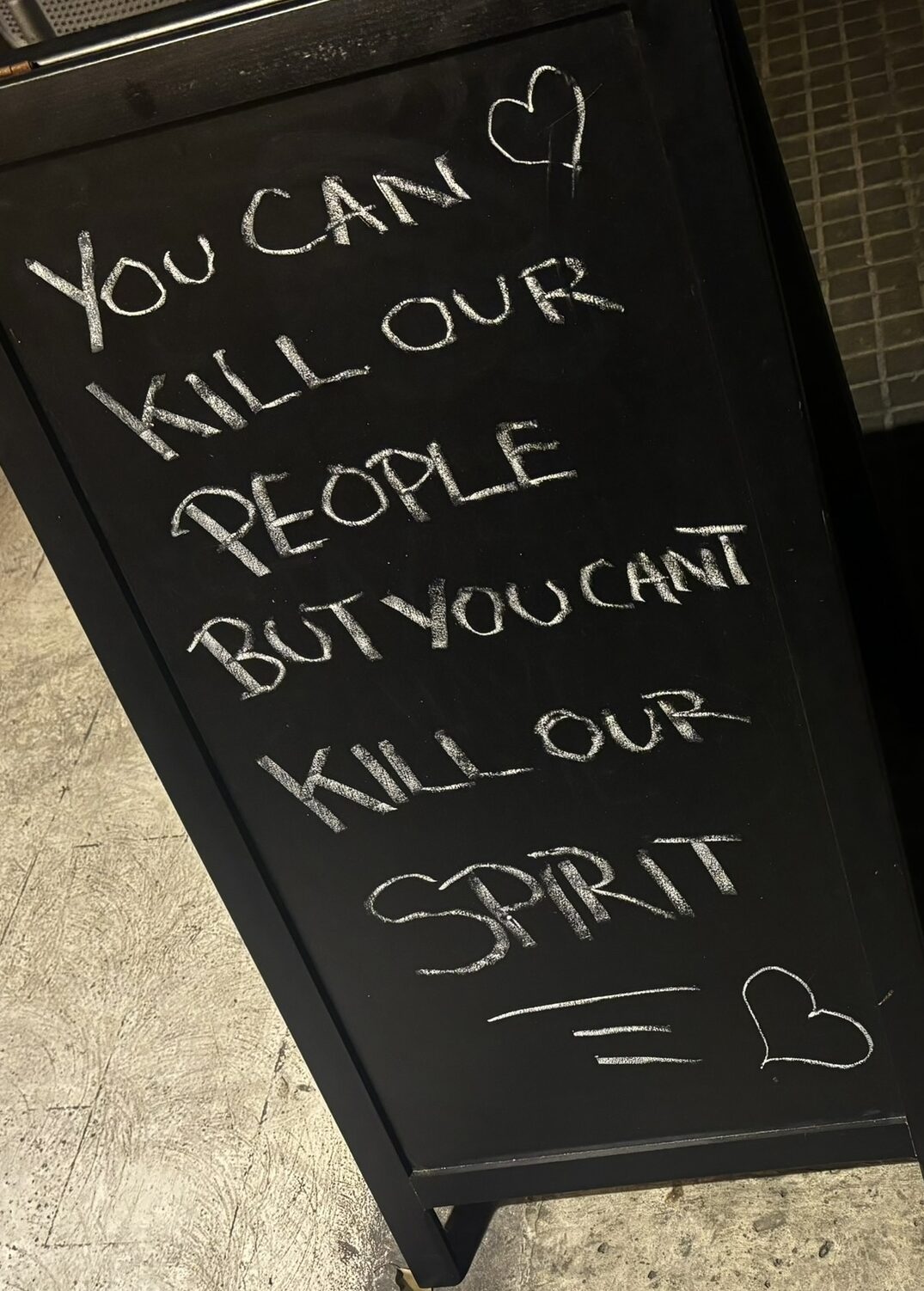
Then came the ceasefire.
I was living with my whole extended family in one house. We were all gathered around the TV when they announced it — the ceasefire would begin at 4:00 a.m. We didn’t sleep. At 6:00am, we were already on the road back to Dahiyeh.
The smell of bombs and smoke was still everywhere. Israel was bombing to the last minute. People were handing out face masks to protect against the dust and smoke. Others had tied furniture to the tops of their cars. Kids waved flags. People chanted. It was in a way a kind of victory. We were back home because our men didn’t allow the ground invasion to continue. They fought until their last breath.
We got back to my student flat, and things started going back to normal. In the following days, I had joined a group of designers and architects helping to rebuild the city. I have a bachelors in interior design — I wanted to use that to help my country somehow. We went from house to house, doing what we could. In a couple of months, most families had returned. Some homes were gone completely, but others could be restored.
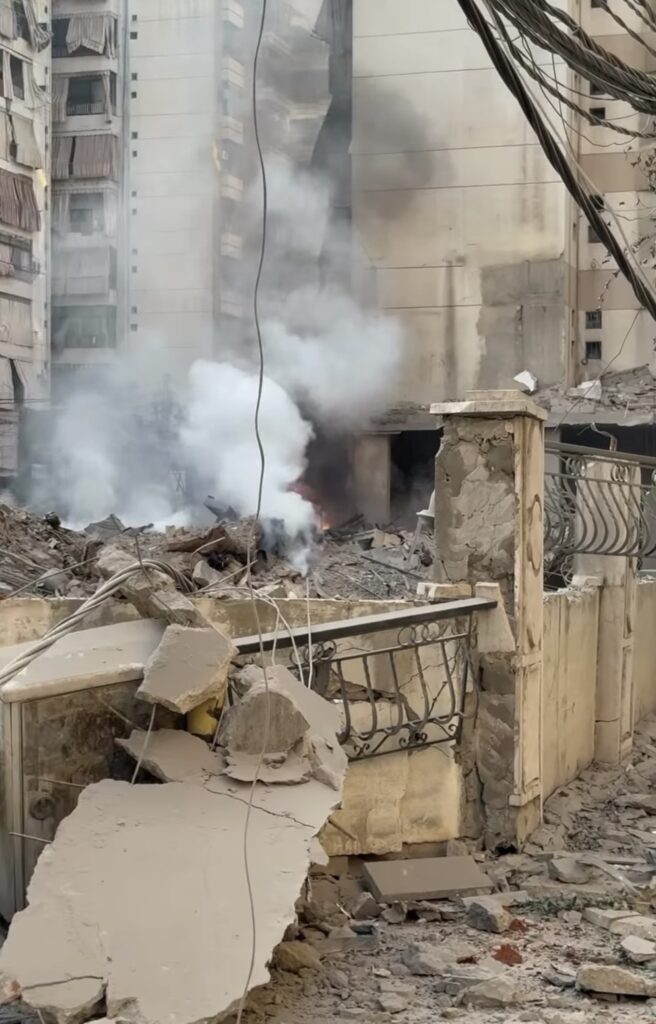
Upon withdrawal, the Israeli army adopted the scorched earth approach. As always – no mercy, no witnesses.
When the ceasefire came into effect, it wasn’t the end. Israel demanded 60 more days to withdraw from the South. We waited, hoping something of ours would survive. But days before the withdrawal period ended, Israeli soldiers burned our homes down. They burned my house — the house where I had stored every memory: my drawings, photo albums, childhood toys. Everything was gone.
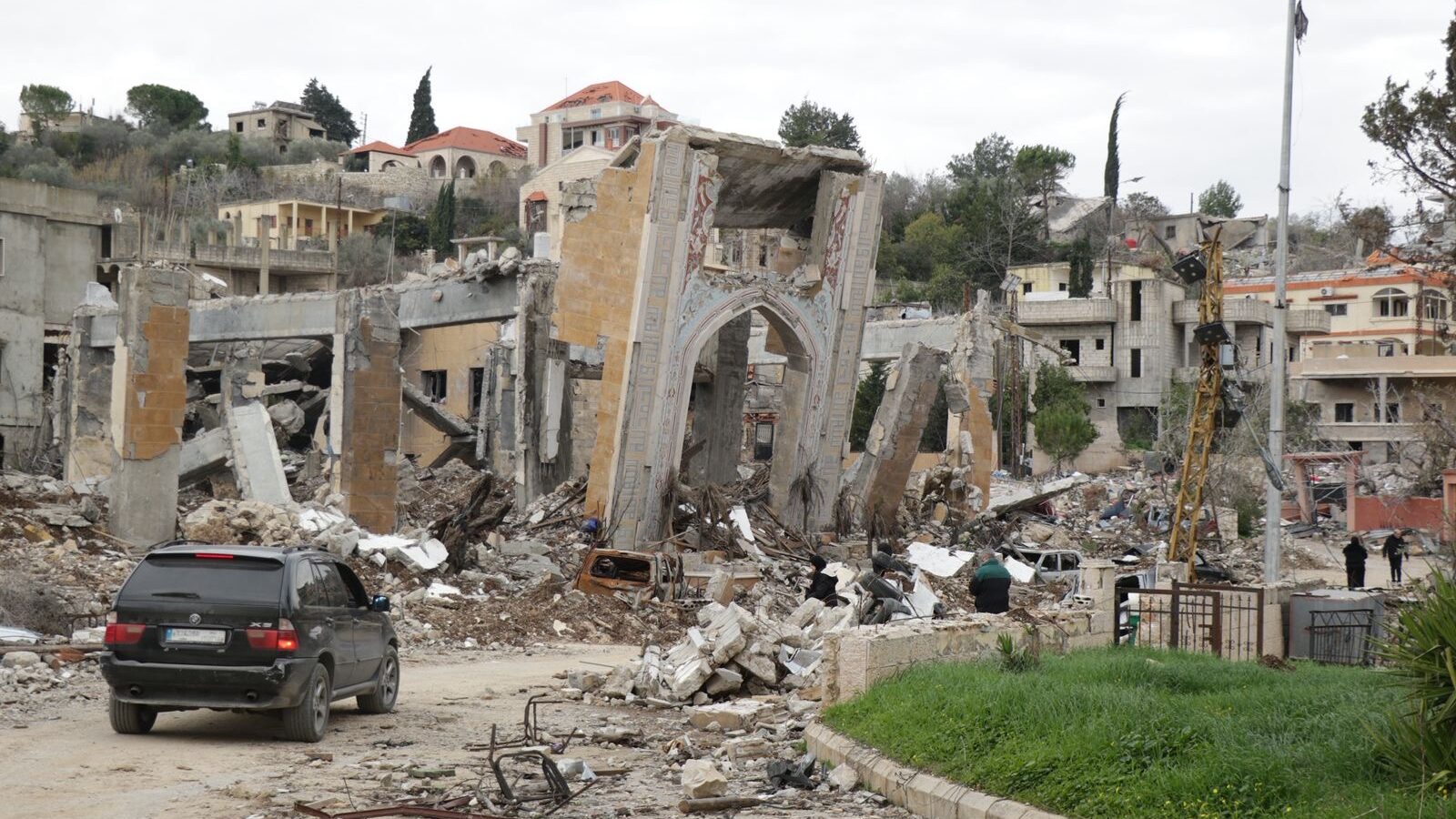
But we flooded back. Even with Israeli tanks still in place, people marched to our villages. My village, right on the border, was 95% destroyed. Homes, shops and mosques bombed, burned, turned to dust.
We stood on the road, looking at the Merkava tanks that barred our way. They shot at us — warning shots, but real enough. Some people were killed that day. But we didn’t stop trying. We came back with nothing but our bodies, and the memory of home.
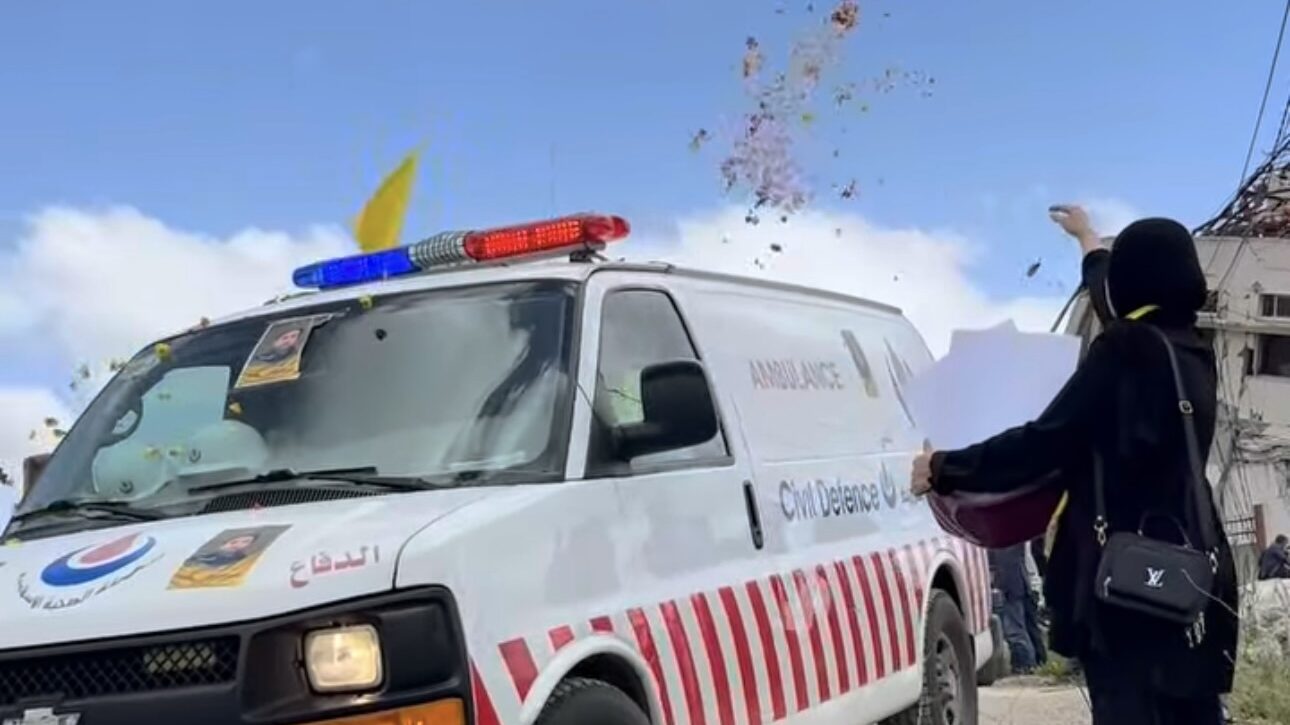
Even though Israeli soldiers were still in some villages, we didn’t care. My village wasn’t free yet. Israeli soldiers opened fire on us again. We waited. We tried again. Day by day, we’d go to the entrance of our village. Until they finally left.
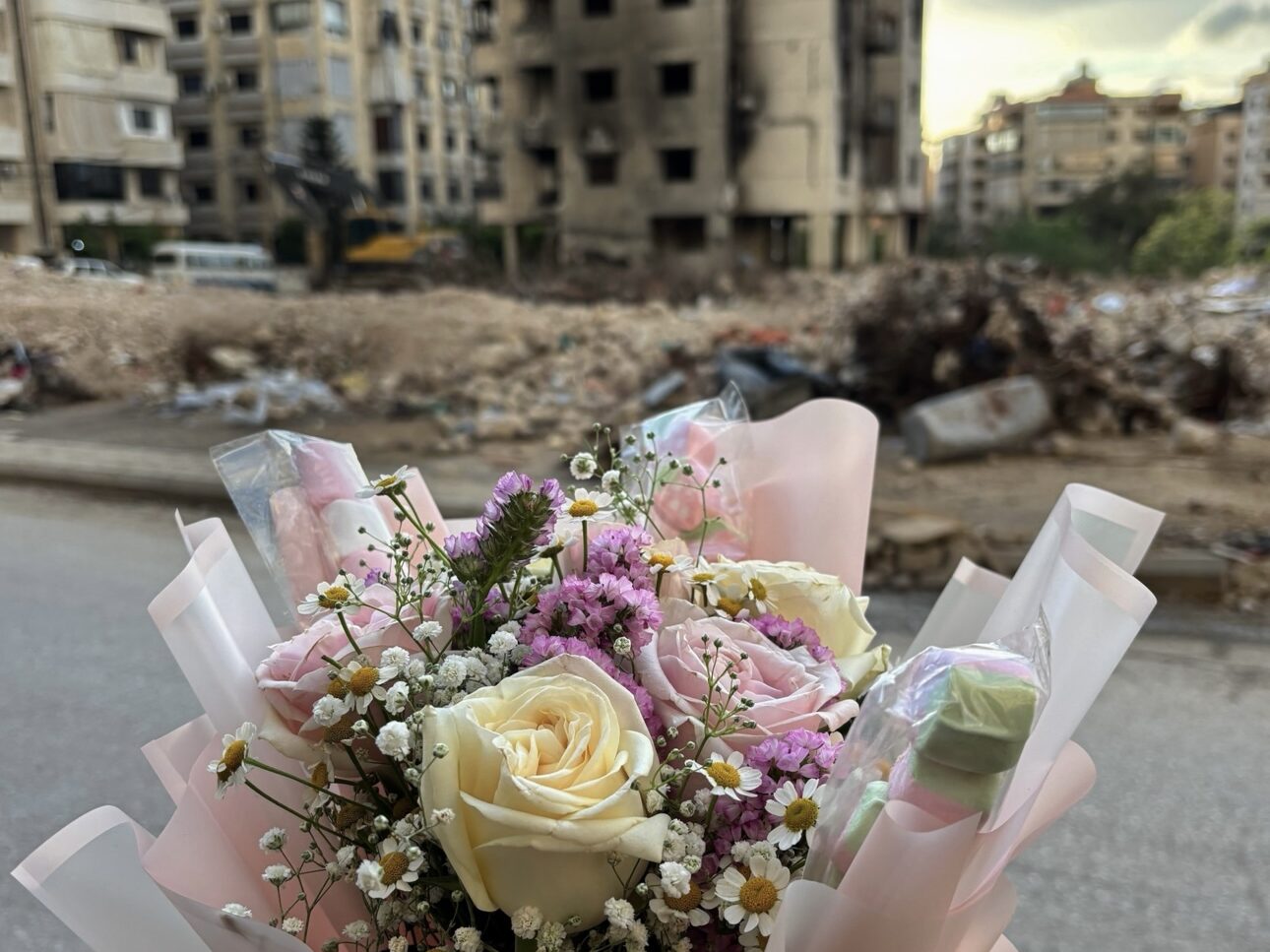
They really burned everything: the drawings I made as a child, our photo albums, the gifts, our clothes, the books I loved. My childhood room. Our memories. All of it. Just a few days before they were supposed to leave, they destroyed what was left rather than allow us any peace after a year and a half of displacement. That’s what occupation is — it’s not just about taking our land. It’s about erasing us.
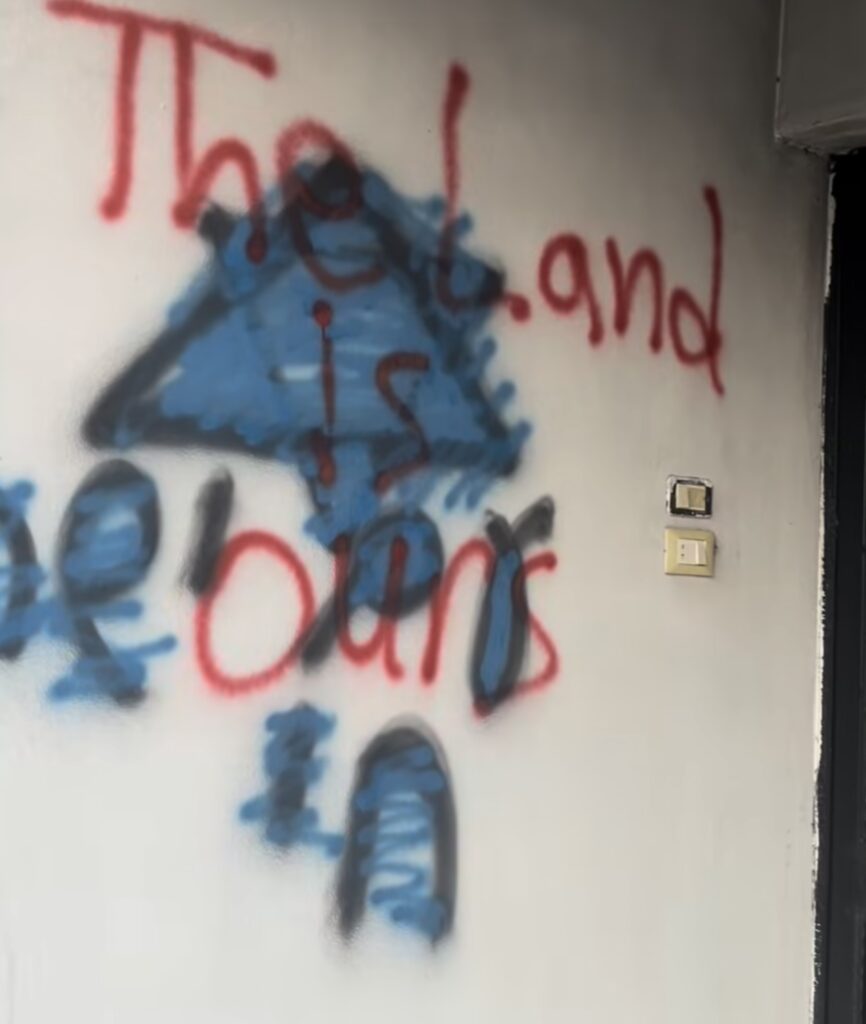
And about writing their story on top of ours, like they did with Indigenous peoples across the world — like they did in America, Australia, Africa.
Each visit since the war, one sees the city is building itself back up literally in front of your eyes. They’ve done it before.
In late October, we were walking the streets of Dahiyeh together again. Strolling past the Bahman hospital where Sara’s brother worked when the pagers hit, later targeted itself, a lazy Israeli drone buzzed in the sky. Since the ceasefire, Israel has continued to bomb the south of Lebanon on a daily basis, and in November targeted Dahiyeh in another assassination attack.
We grabbed a coffee in Harek Hreik, by a building collapsed like a house of cards. It was not even hit itself. The sheer power of the 2000-pound bombs dropped on the other side of the street, demolishing an entire residential quarter, tore its foundations and reduced its 14 floors to rubble – a chilling metaphor for the still unfinished Lebanese chapter of Israel’s slaughter of Gaza.
And I am sick of talking about our rights to live. When the evil Israel represents fully reaches the rest of the world, don’t act surprised.
This all started in the West, and Britain especially has a historical responsibility to fix it. I saw hundreds of thousands raise their voices for us. History is watching and silence is not an option.
Before you go
The ongoing genocide in Gaza, Starmer’s austerity and the danger of a resurgent far right demonstrate the urgent need for socialist organisation and ideas. Counterfire has been central to the Palestine revolt and we are committed to building mass, united movements of resistance. Become a member today and join the fightback.
