
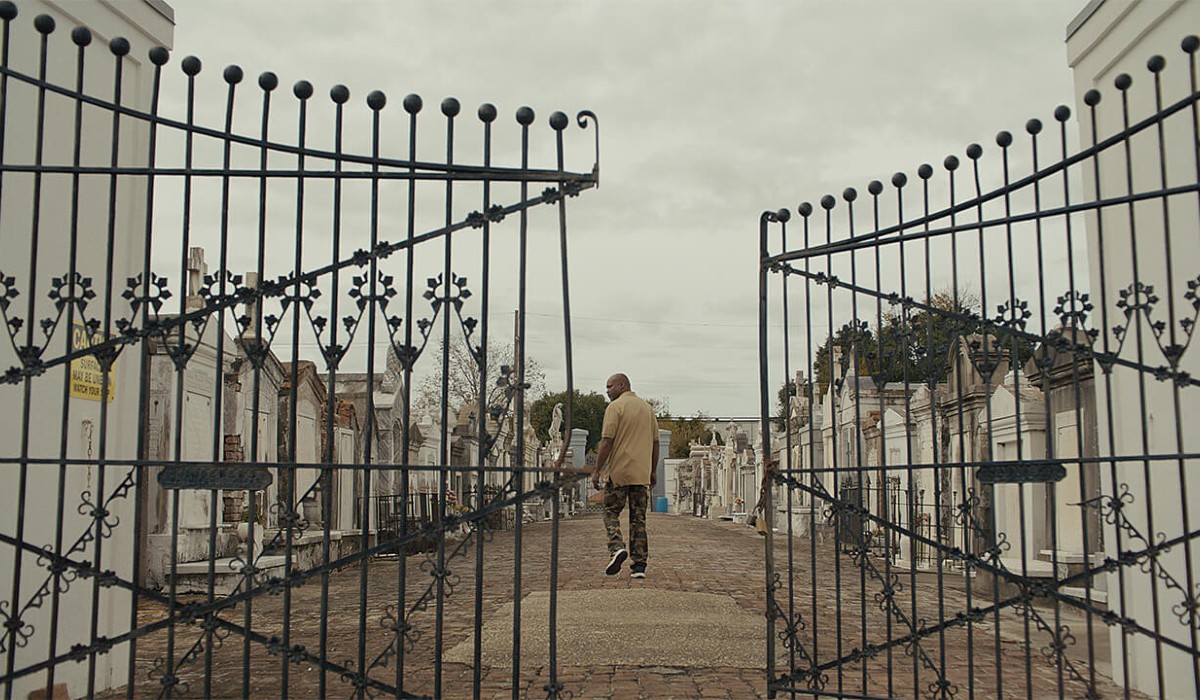
A documentary on the 2005 Katrina disaster in New Orleans exposes how capitalism will treat people when climate crisis hits, explains Ayesha Ramgoolam
Katrina: come hell and high water, is a 2025 Netflix documentary directed by Geeta Gandbhir, Samantha Knowles and Spike Lee. Twenty years since Hurricane Katrina hit, this documentary portrays the horrors, the failures and the aftermath of the storm. It is an incredibly insightful watch that details just how much the system can mean life or death, even in the heart of the empire itself. This is a necessary and chilling reminder in a time of increasingly frequent natural disasters, wealth inequality and growing racial tensions.
The directors each do an excellent job at highlighting the systemic inequities within the US, alongside institutional racism and class disparities. Throughout the series, the directors took each episode down a different route, focusing on the storm itself, the aftermath of the levees breaking, and the difficulties a predominantly black and low-income neighbourhood faced when attempting to rebuild their community. It is a story of how the effects of the storm are still impacting upon people’s lives twenty years later, their housing, education, culture and the life of New Orleans.
The failures of the system began before the storm even happened are detailed: the delay of mandatory evacuations, neglect of the ninth ward, planning deficits, weak emergency protocols, and lack of leadership. It’s no surprise that the lower ninth ward was predominately black; ‘you can’t be in America and race not play a factor’.
It remains an accurate analysis that race and class both play a fundamental role in the laws and policies that govern a country built on the genocide of an indigenous population and the slavery of black people. White, middle-class people were some of the first to evacuate, were able to leave with their cars and buy up hotel rooms whereas working-class black people who had no means of transport and no money for hotels, were simply told to seek safety in churches, or cram into the super dome.
The documentary unsparingly describes the failures at every level, both local and federal. There was little to no preparation to protect people and those who suffered the most were the black, the poor, the disabled, the elderly, and the sick. This is a clear indicator of a system that does not work for the majority of its people.
The variety of footage used effectively enhanced the message of the documentary; all the interviews, news clips, photos, videos, and personal vlogs made the events of the storm and its aftermath strongly vivid. You could almost feel the intensity of the situation with some of the footage of the storm. The news clips shown highlight yet again the racism that’s embedded in the US. The media focusing on looting and crime in a time of state failure and neglect is just another example of how the ruling-class criminalises being poor and dehumanises black people. The media played an important role in deflecting responsibility from the government back on to the victims, and the fact that troops were ordered to shoot to kill in response to looting is an excellent example of how the institutions we have are there to preserve capital, not life. Yet, despite the horrific reality of the situation, the directors created a beautiful representation of New Orleans culture and community through its music, people, streets, traditions, festivals and art.
Race, class and climate crisis
The personal accounts of people’s experiences emphasise how deep rooted racism is in the US, how heavily it weighs on young black people: how it affects their childhood, their education, their communities, their experiences, their life chances, and their chance of surviving a natural disaster. In one of the wealthiest countries in the world, black people weren’t given what they needed to survive, all while the US spends billions to fund wars in the Middle East.
However, while I agree race is a fundamental factor, the documentary neglects the importance of class and the role it plays; it wasn’t just black people, it was poor black people, in one of the richest countries in the world, who were left to die with little to no aid, support, or resources. The authorities knew the dangers faced by New Orleans but they didn’t care enough to prepare. The difficulties around rebuilding, the gentrification of the neighbourhoods, the forced displacement that pushed entire black communities out of New Orleans. This all comes back to class.
The documentary serves as a powerful reminder that as climate crisis accelerates, which we’re witnessing right now with the recent floods in Pakistan and wildfires across the world, the effects of climate change will come for us all. Natural disasters won’t discriminate but the systems we have in place when these disasters come knocking on our door will, and they will impact upon the most vulnerable in society. It won’t be our material possessions and capitalism that save us, it will be our communities, infrastructure, systems, emergency planning, protocols, and investment in resources and public services that will save us. Redistribution of wealth will save us. Solidarity will save us. We have to fight for our future now, because the planet won’t wait till we’re prepared, natural disasters are already happening globally, the question is when will it be us and will we be prepared?
Katrina: come hell and high water is an important watch for us all, to remind us that it can be any of us, that we shouldn’t wait till it reaches our doorstep to care but we should have empathy for all those suffering, that we should actively do what we can to help, to be a voice and an advocate for the oppressed and vulnerable. We need to recognise that only solidarity will challenge a system that continuously puts profit over people.
Before you go
The ongoing genocide in Gaza, Starmer’s austerity and the danger of a resurgent far right demonstrate the urgent need for socialist organisation and ideas. Counterfire has been central to the Palestine revolt and we are committed to building mass, united movements of resistance. Become a member today and join the fightback.
