
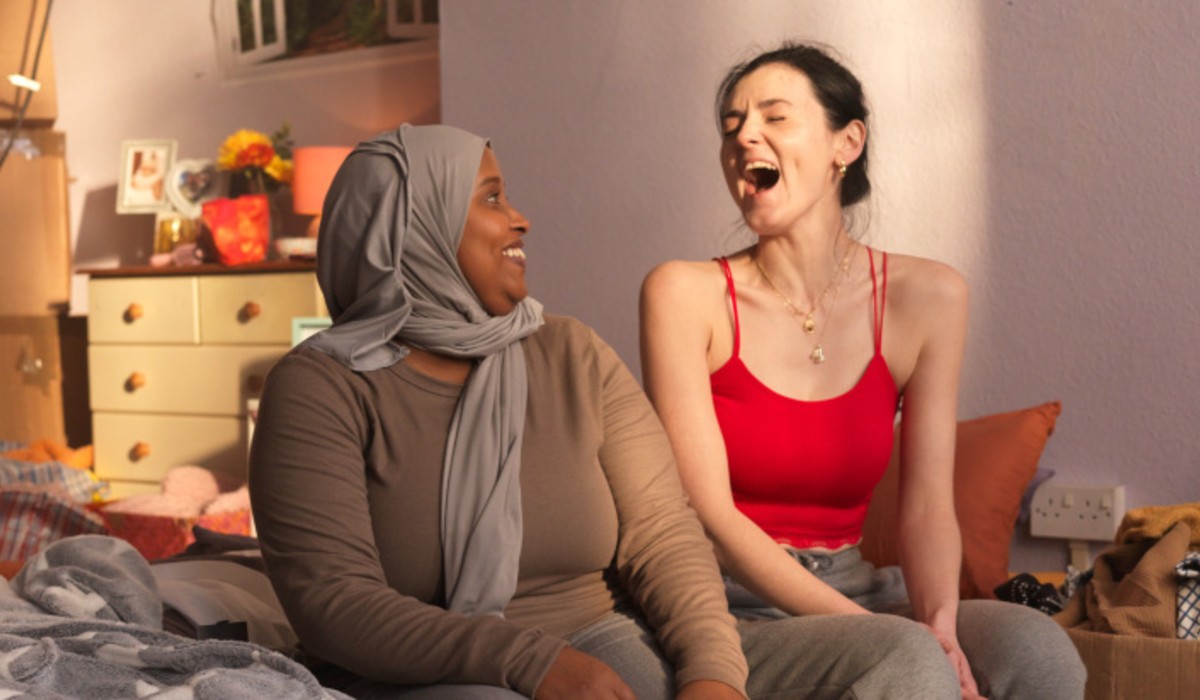
 Scene from Lollipop
Lollipop provides a glimpse of the inadequacy of our care system but also the overwhelming kindness of people, finds Lucy Nichols
After Molly (Posy Sterling) is released from prison, the first thing she wants to do is take her two children home to live with her. Unfortunately, she is met with the bureaucracy of our broken care system.
The film primarily deals with this, and the lack of support given to women after they come out of prison, particularly working-class women. In her attempts to win back custody of her children, Molly comes up against this cruel, inefficient bureaucracy. She must fight every step of the way: for visitation rights, for housing, for work. She is not infallible. It is totally heartbreaking to watch Molly make very human mistakes, met not with support, but more punishment from the state.
The art of Lollipop is how it explores themes of friendship, motherhood, abuse and poverty through this plotline. Crucially, the cast is entirely female: only women and children have any lines in the film. This means that her support network as well as the social workers, foster carers, lawyers, judges and police that Molly comes up against are all women.
Men are present in the film: they are abusers, policemen without lines, or absent fathers. Though Molly experiences the state only through women, it is clear that she is only in the position she is in because the men in her life have let her down.
The women in her life, on the other hand, ground Molly. This is particularly the case for Amina (Idil Ahmed), who is a rare example of a Muslim woman being allowed to be her own person in film, particularly a hijabi Muslim woman who practices and is informed by her faith. This alone is refreshing. It a welcome embrace of London’s diversity, especially given the growth in Islamophobia and attacks on Muslim women.
Amina is also fighting for herself and her daughter, up against the same bureaucracy as Molly. There is also Molly’s mum, Sylvie (TerriAnn Cousins). Lollipop explores their difficult relationship. Sylvie is not a monster, and the film is beautifully nuanced in dealing with her interpretation of motherhood.
We also have Amina’s daughter, Maya (Aliyah Abdi) and Molly’s daughter, Ava (Tegan-Mia Stanley Rhoads). They are about nine and eleven, respectively. Instead of skipping over them, the film allows them their own agency, refusing to overlook how children experience the care system. Their kindness also shines, proving the maturity that children often display in difficult situations like these.
Part of the success of Lollipop comes from the attention to detail found in the characters. It slowly becomes obvious that the film was created by someone who has been in a similar situation to Molly, experienced some of the same hardships as the women in the film and who has grown up working-class in London.
Given this, the film should be pessimistic, angry and dark. But it isn’t. It is a wonderful testament to the overwhelming kindness of other people, and of the loving solidarity between women. It does not come to the naive conclusion that love, and friendship can cure all evils. Instead, Lollipop acknowledges that life is incredibly difficult, but can also be incredibly beautiful if we help one another and stand together against the cruelty of the state.
After watching this powerful film (and crying throughout) it becomes ever more obvious how broken our system is, and how strong is the need to fight back.
From this month’s Counterfire freesheet
Before you go
The ongoing genocide in Gaza, Starmer’s austerity and the danger of a resurgent far right demonstrate the urgent need for socialist organisation and ideas. Counterfire has been central to the Palestine revolt and we are committed to building mass, united movements of resistance. Become a member today and join the fightback.
