
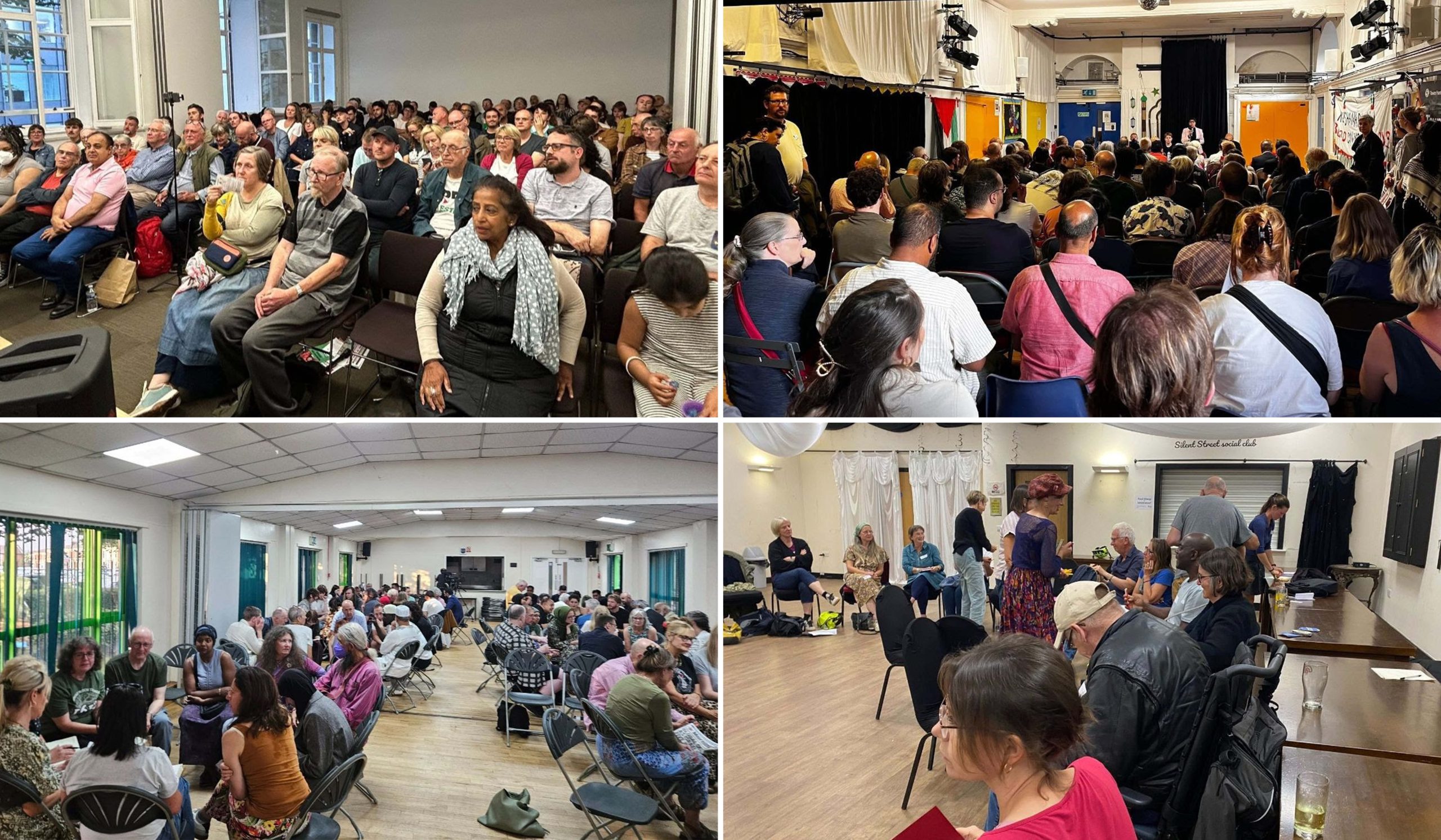
 Photo: Counterfire
Open meetings for the new party organised by Counterfire and others on the left have attracted enthusiasm beyond existing networks of activists, reports Chris Nineham
A series of mass meetings around the country has confirmed huge enthusiasm for a new party of the left. Meetings for Your Party supporters to discuss the kind of party we need in Preston, Ipswich, Manchester, Croydon and East London in the last ten days have attracted big numbers and generated intense discussion. The meetings, initiated by socialists, some from Counterfire, on an open basis, were addressed by various independent councillors, candidates and activists before extensive discussion from the floor.
They attracted very political people but reached well beyond the active, organised left. The organisers of the Preston meeting said that although there are regularly very big political meetings the city, they didn’t recognise at least half of the 120-strong audience. An organiser of the Croydon meeting also told me that the audience of 130 was made up of an impressive number of ordinary, local people as well as the existing left.
At all the meetings, a sense of relief and excitement was reported that the new initiative had finally been announced. A whole range of issues were raised. One of the organisers of the Ipswich meeting said that speakers from the floor stressed the need for inclusivity and for reaching out into local communities because many people still didn’t know about the new party. People present agreed to do stalls in different areas to start strengthening the party’s base.
In Manchester too, there was discussion about the left being absent from lots of working-class communities. One of the hosts said there was a strong sense that activists and representatives from the new party needed not just to reach out but to organise collective campaigns to win improvements for working people to raise the profile and reputation of the organisation.
In Croydon, there was a very good response to demands for complete opposition to austerity and solidarity with Gaza. There was also a strong feeling that policy should be made by members not by what one speaker called ‘liberal opinion formers’. Calls for unions to disaffiliate from Labour also went down well.
In the Preston meeting, people broke into groups after some discussion to come up with policy priorities for the new party. Among the most favoured policies were ‘a wealth tax on the fabulously wealthy to raise funds to deal with inequality and poverty and broken services’, ‘public ownership of transport, utilities and services’, ‘Welfare not Warfare, prioritising welfare services over military spending and overseas wars’ and ‘addressing the housing crisis’. A whole range of other polices from tackling the climate crisis, investing in education and fighting all forms of inequality, oppression and injustice were also popular.
The importance of democracy and grassroots control was a theme at all the meetings. As one speaker from the floor at the 150-strong East London meeting said, one member one vote would be the best way to ensure there is real debate and discussion, but also unity once decisions had been taken. Some people at the meeting pointed out that no electoral pacts with other groups should be made without full discussion at a national conference.
A sense of urgency, even at times frustration, about getting organised was reported from the meetings, partly because of next years’ council elections, but also because of the need for a strong left response to the threat from the right.
Another recurring theme was the need to be radical and not become a ‘Labour Party Mark 2’. A strong feeling was reported from all the meetings that people are crying out for change, and that the party had to mount a real challenge to the status quo, not just talk about change as Labour does.
Finally, to make sure this happens and to push back against the inevitable resistance there will be from the establishment, lots of people spoke about the importance of being rooted in all communities and of being tightly connected to the mass movements over Palestine, austerity and racism, as well as to the trade unions. At the East London meeting, the point was made more than once that Corbynism had been sabotaged by the establishment and that these kind of links were necessary to stop this happening again.
What was common to all the reports was that people are being inspired by the idea of different kind of party, committed to radical change, campaigning alongside ordinary people and amplifying the extra-parliamentary movements.
Similar Meetings are coming up in Haringey, Bristol, Birmingham and Newcastle and many other places. Do contact Counterfire if you want help or advice.
Before you go
The ongoing genocide in Gaza, Starmer’s austerity and the danger of a resurgent far right demonstrate the urgent need for socialist organisation and ideas. Counterfire has been central to the Palestine revolt and we are committed to building mass, united movements of resistance. Become a member today and join the fightback.

Chris Nineham
Chris Nineham is a founder member of Stop the War and Counterfire, speaking regularly around the country on behalf of both. He is author of The People Versus Tony Blair and Capitalism and Class Consciousness: the ideas of Georg Lukacs.