
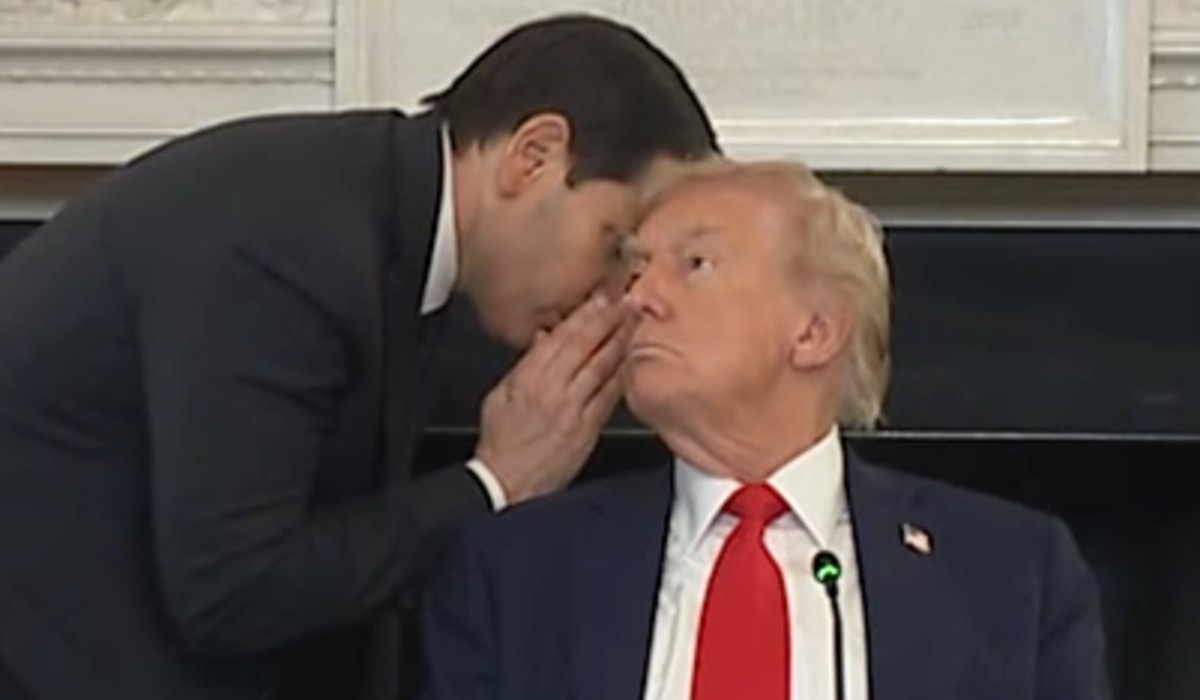
 Secretary of State Marco Rubio briefing President Donald Trump that Israel and Hamas have signed off on a peace deal; October 8, 2025 / Wikimedia Commons / Public Domain
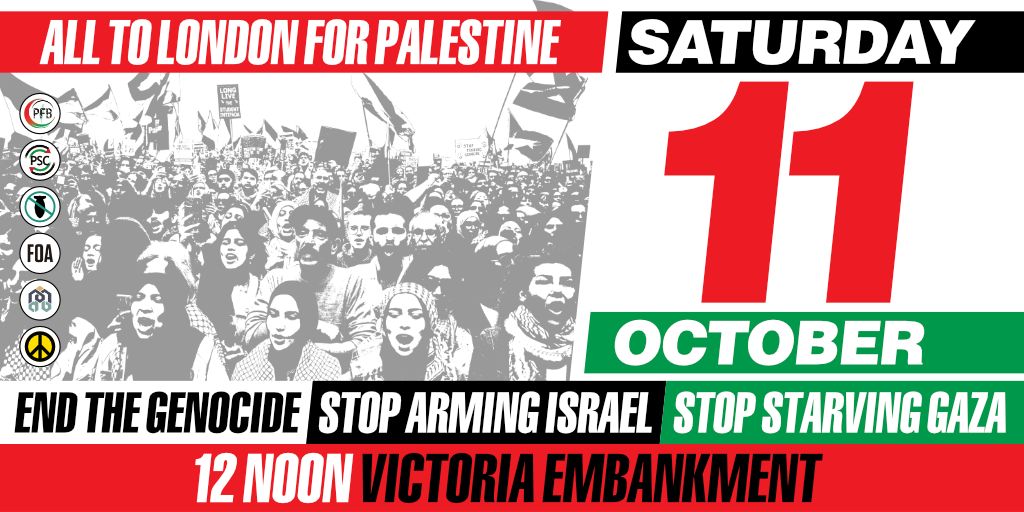
On Saturday, 11 October, the thirty-second national demonstration for Palestine will take place, marking two years since the beginning of a genocide that has devastated Gaza and its people. In this short span, over 67,000 Palestinians have been killed, including more than 20,000 children. Entire families have been wiped out, hospitals and clinics destroyed, and starvation and disease have become daily realities amid the ruins.
Therefore, the new ceasefire in Gaza, announced late on Wednesday, is welcome news to us who have been marching for months for one. However, the ceasefire should be viewed with caution; in January a ceasefire was agreed; there were hundreds of violations of the ceasefire, most notably the weeks of forced starvation followed by a surprise large-scale assault beginning on 18 March.The assault on Gaza has been so relentless and public that it has been called the “world’s first live-streamed genocide,” as tens of thousands of pictures and videos have flooded the internet documenting the horror.We must remember that this machinery of destruction has not operated in isolation. Governments such as the United States, Germany, and Britain have supplied Israel with the weapons and ammunition that fuel this genocide. Without this steady stream of arms, Israeli officials themselves have admitted, their campaign would have ended within months. This is not a distant tragedy—it is one in which our governments are complicit.This is why on 11 October, hundreds of thousands of people will take to the streets of Central London, demanding an arms ban, sanctions, and pressure on Israel to cease its operations in Gaza. The answer must be a mass display of solidarity, sending a clear signal that we will not stand by while genocide continues.This action is even more urgent as Starmer’s government attacks our right to protest. Using the tragic attack on a synagogue in Manchester, ministers are attempting to restrict or even ban our protests outright; a new wave of attempts to silence solidarity with the Palestinians. In November 2023, then-Home Secretary Suella Braverman tried to stop us from marching on 11 November. We defied the government, and hundreds of thousands joined the streets; the following Monday, Braverman was forced to resign.Our movement works. Persistent protests by the British public have achieved victories that once seemed impossible: in September 2024, the government imposed a partial arms ban, ministers of the Israeli government were sanctioned in June this year, and last month the UK formally recognised the State of Palestine.These examples have also shown us that the establishment’s support for the Israeli state is in crisis amid polls that suggest large majorities of support for the Palestinians in almost every category. In July an article in The Economist remarked “Starmerites thought they had defeated the politics of Palestine. It may defeat them.” Such shows the strength of our movement and the need to mobilise in large numbers to apply more pressure.11 October must be a hammer blow to the state, a bold reminder that we are not going away: that we will continue to demand justice for the Palestinian people and resist the government’s clampdown on our right to demonstrate.
Before you go
The ongoing genocide in Gaza, Starmer’s austerity and the danger of a resurgent far right demonstrate the urgent need for socialist organisation and ideas. Counterfire has been central to the Palestine revolt and we are committed to building mass, united movements of resistance. Become a member today and join the fightback.
