
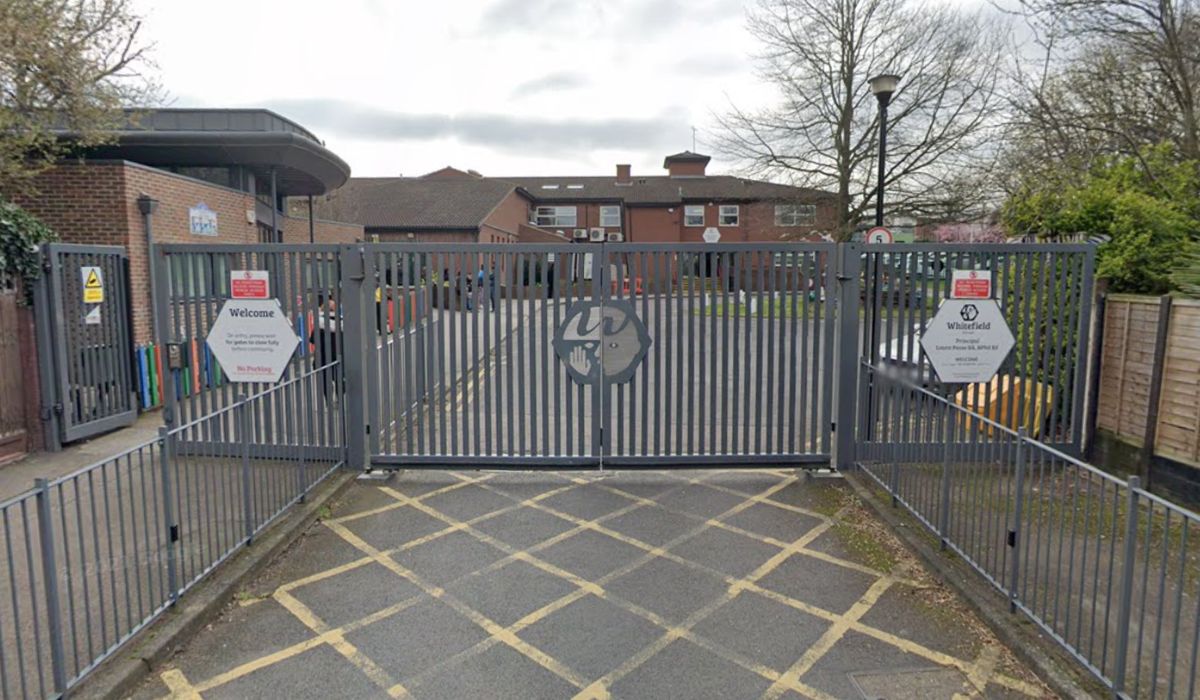
 Whitefield School. Source: Google maps
Staff at Leytonstone School are the latest Waltham Forest school to take industrial action in defence of deteriorating terms and conditions, finds Carole Vincent
Waltham Forest NEU members from several schools in the borough took industrial action last year, and some issues remain unresolved. The reasons were varied but often based on increasing workloads, bullying, ‘union busting’ tactics and disputes over pay rates.
Schools such as Whitefield special needs school in Walthamstow, which was embroiled in very serious allegations concerning pupil safeguarding, made national headlines and still has unresolved issues. Several strike days in January forced management to negotiate, and most issues were resolved.
However, Belmont Park, another special needs school in Leyton, also had to take action to make the bosses sit down around the table to resolve issues from last year. As a result, a number of these have seen progress on pay grades, no bursar and standards of pupil care.
A primary school, Hillyfield Primary Academy in Walthamstow, joined the throng of NEU members in disputes with management style and expectations, causing unrest amongst teachers who are working with higher class numbers and greater workloads. This dispute was partially settled, and members went into negotiation with management, which suspended the first wave of strikes.
Other schools on strike were Connaught School for Girls, where a very strong NEU membership has, for a few years, been battling the management style, expectations of greater workloads and reducing staff through victimisation and deleting vital Teaching Assistant posts. The year commenced with strike dates, which were suspended as talks resumed to settle the dispute.
Leytonstone School has just concluded eight days of industrial action where NEU members have been battling against the management style and great expectations of a relatively new head teacher wanting to make his mark, and not in a positive way. Instead of working with staff to negotiate terms and conditions within the union policies, he is seemingly ignoring them.
Some widespread issues have been partially resolved following strikes last year and earlier this year. Despite this, there have been more issues this term, and I spoke to an NEU rep who told me ‘An outstanding issue is after-school clubs and interventions. Historically run by teachers using professional judgement and agency. This year, it’s been established as mandatory, and the decision has been made without consultation with the union.
We are taking industrial action to get this mandatory part removed and to regain agency. The judgements we make for our students and the possibility to manage our workload in a more independent manner. This imposition being made is not in our contracts.
Regarding other issues, we have made progress so far since our recent industrial action in 2025 and even early 2026. We have come to an agreement with the Head, who’s been in post less than a year, regarding the cover policy and used a model policy agreed with the NEU
This is good because the use of rallying and forcing of cover has been historically a source of disputes in the school, so going forward, these issues can be put to rest.’
Negotiations continue with management, and there has been ongoing support from parents who have come to the picket lines to show solidarity. If the negotiations falter, the strike mandate remains live and there will a further eight days of strike action in March.
The fight to defend working conditions and standards for pupil care is not confined to Waltham Forest. The last year has seen an increasing level of disputes across the education sector, and these disputes are likely to continue for the foreseeable future as schools are forced into shareholder-owned academies or state schools faced with curtailed budgets from the local council.
The NEU is launching an indicative ballot on 28 February. It asks:
- Do you reject the proposal of an unfunded 6.5 per cent increase over three years for teacher pay?
- Are you prepared to take industrial action to win sufficient funding to secure an above-inflation pay increase, reduce workload and defend existing directed time provisions, including the 1,265 hours limit?
Before you go
The ongoing genocide in Gaza, Starmer’s austerity and the danger of a resurgent far right demonstrate the urgent need for socialist organisation and ideas. Counterfire has been central to the Palestine revolt and we are committed to building mass, united movements of resistance. Become a member today and join the fightback.
