
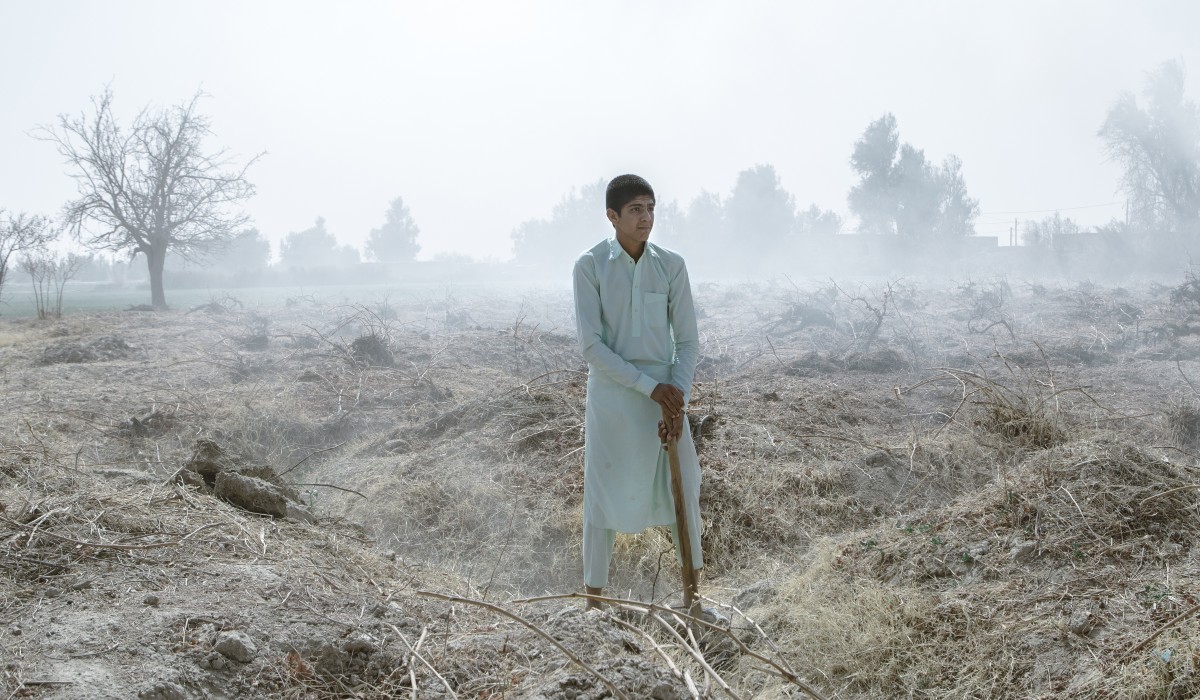
 A boy standing in former wetlands that have dried. Photo: Solmaz Daryani / Wikimedia Commons / CC BY-SA 4.0
It is not just climate change, but the privatised systems through which water is accessed that is denying water to billions of people in the world, reports John Clarke
In 2013, the CEO of Nestle, Peter Brabeck, created a storm of controversy when he declared that water should not be considered a human right. As the European Public Service Union has explained, he based this position on the notion that water should be considered a foodstuff with a market value and he argued that the very idea of a right to water had been generated by ‘extremist’ NGOs.
Though Brabeck was subsequently forced to retract his comments partially, they weren’t the product of quirky thinking on his part but accurately reflected the realities of how access to safe water supplies is restricted and regulated by global capitalism. If water is, indeed, a human right, then that right is being denied to vast and growing numbers of people all across the planet.
Global drought
The link between the process of global heating and the proliferation of drought conditions is obvious and well-established and it is playing out in country after country. According to Al Jazeera. ‘Iran is now grappling with its sixth consecutive year of drought, while heatwaves pushed temperatures above 50 degrees Celsius (122 degrees Fahrenheit) during the summer.’
Under such conditions, it is hardly surprising that the ‘past water year, ending in late September 2025, was one of the driest on record, with the current year shaping up to be worse, with Iran receiving only 2.3mm (0.09 inches) of precipitation by early November, down by 81 percent compared with the historical average of the same period.’
Disastrously, a ‘whopping 19 dams – up from nine three weeks ago – are on the verge of drying out, filled to less than 5 percent capacity. Dozens of others are not faring much better, according to data from the Water Resources Management Company.’
The severity of the drought in Iran is unleashing a social crisis of enormous proportions. ‘If there is no rain by next month, water will have to be rationed in Tehran; in fact, the city of 10 million may even have to be evacuated, President Masoud Pezeshkian said in a speech on Friday.’
The climate-induced horror that is unfolding in Iran is only part of a global process that continues to worsen. In July, the UN News commented on a new report that examines ‘the global impacts of droughts from 2023 to 2025.’ The report’s co-author, Dr. Mark Svoboda, noted that this ‘is not a dry spell. This is a slow-moving global catastrophe, the worst I’ve ever seen. This report underscores the need for systematic monitoring of how drought affects lives, livelihoods, and the health of the ecosystems that we all depend on.’
The report finds that ‘as 90 million people face acute hunger across Eastern and Southern Africa, some areas in the region have been experiencing the worst drought ever recorded.’ Horribly, some ‘43,000 people in Somalia died in 2022 alone due to drought-linked hunger. The crisis continued through 2025, with a quarter of the population facing crisis-level food insecurity at the beginning of the year.’
In Zambia, ‘the Zambezi River plummeted to 20 per cent of its long-term average, and the country’s largest hydroelectric plant, the Kariba Dam, fell to 7 per cent generation capacity, causing electricity blackouts of up to 21 hours a day. This has led to the shuttering of hospitals, bakeries, and factories, further compounding the devastation.’
In addition, the report cites a series of environmental, social and economic impacts outside of Africa. For example, in ‘the Amazon Basin, record-low river levels in 2023 and 2024 led to mass deaths of fish and endangered dolphins, disrupted drinking water supplies and created transport challenges for hundreds of thousands. Ongoing deforestation and fires also threaten to shift the Amazon from a carbon sink to a carbon source.’
As with most impacts of climate change, drought conditions have a particularly dreadful effect on populations in the Global South but wealthy countries are by no means spared. The ‘Drought Prospects for Spring 2026’ report notes that ‘unless we have sustained rainfall this winter, England could face widespread drought in 2026. All sectors, including water, agriculture, energy, and environmental sectors need to act now to ensure we are ready for continued drought.’
Meanwhile, the Canadian Climate Institute finds a link between the spread of drought conditions and the intensification of the devastating wildfires that are raging across the country each year. It notes that droughts ‘fuel wildfires by drying out vegetation and soils, creating highly flammable conditions … Once fires start, low moisture allows them to spread quickly and burn more intensely, increasing the risk to communities, ecosystems, and critical infrastructure.’
Lack of clean water
The dreadful impact of climate-induced drought is, however, only part of the picture when it comes to water scarcity. For vast and growing numbers of people, the basic right to access safe drinking water is being denied by global capitalism. Global Society World News has considered the dimensions of the water crisis and the picture it paints is alarming in the extreme.
The article finds that according ‘to the United Nations, approximately 2.2 billion people currently lack access to safely managed drinking water, and by 2050, over half of the global population could live in areas experiencing severe water stress. The World Resources Institute (WRI) identifies 17 countries, home to a quarter of the world’s population, as facing “extremely high” water stress, where irrigated agriculture, industries, and municipalities consume more water than is naturally replenished.’
Tellingly and accurately, the article points out that the ‘threat of water scarcity looms large, but it is not insurmountable. Through concerted efforts to manage resources sustainably, invest in innovative technologies, and foster global cooperation, the world can safeguard its freshwater supplies.’ However, while Global Society World News is ready to assert ‘that access to clean water is not just a resource issue but a fundamental human right,’ the above-mentioned view of the Nestle CEO, even when it is not openly stated, holds sway in practice.
Though water resources are certainly being threatened by climate change, great numbers of people face a situation where available water supplies are simply not accessible for them. Water Canada finds that ‘…in 15 major cities in the global south, almost half of all households lack access to piped utility water, affecting more than 50 million people. Access is lowest in the cities of sub-Saharan Africa, where only 22 per cent of households receive piped water.’
Even where there is some supply of clean water, it is often severely limited. For example, in ‘the city of Karachi in Pakistan, the city’s population of 15 million people received an average piped water supply of only three days a week, for less than three hours.’
The inadequacy of the supply, moreover, is greatly compounded by the failure to provide water as a public resource. Diana Mitlin, professor of global urbanism at The Global Development Institute at The University of Manchester points out that decades ‘of increasing the private sector’s role in water provision has not adequately improved access, especially for the urban under-served.’
It is commonly asserted that ‘water is life’ and, in the opening decades of the twenty-first century, billions of people across the world are experiencing a lack of access to this most basic necessity or else face the threat of losing it.
The intensifying climate crisis and the droughts that this ushers in are having a devastating impact. At the same time, the reckless depletion of water resources by agribusiness and other profit-hungry operations, like AI centres, poses a major threat. Even when supplies of clean water are available, inadequate and often privatised supply systems often fail to respond to the needs of impoverished communities.
This failure to preserve and distribute water to populations across the planet is not only monstrously unjust and massively destructive. It is also an indictment of a social and economic system that, despite its vast productive and technological power, is generating a situation where the majority of humanity will lack access to a vital prerequisite for survival.
Water cannot be a commodity or a resource to be squandered in the interests of profit making and it must, indeed, be treated as a human right. The growing water crisis is a direct result of capitalism’s inability to create a sustainable relationship with the natural world and to preserve the basis for human life itself. The commodification and depletion of water resources make a resounding case for the need for socialism.
Before you go
The ongoing genocide in Gaza, Starmer’s austerity and the danger of a resurgent far right demonstrate the urgent need for socialist organisation and ideas. Counterfire has been central to the Palestine revolt and we are committed to building mass, united movements of resistance. Become a member today and join the fightback.

John Clarke
John Clarke became an organiser with the Ontario Coalition Against Poverty when it was formed in 1990 and has been involved in mobilising poor communities under attack ever since.