
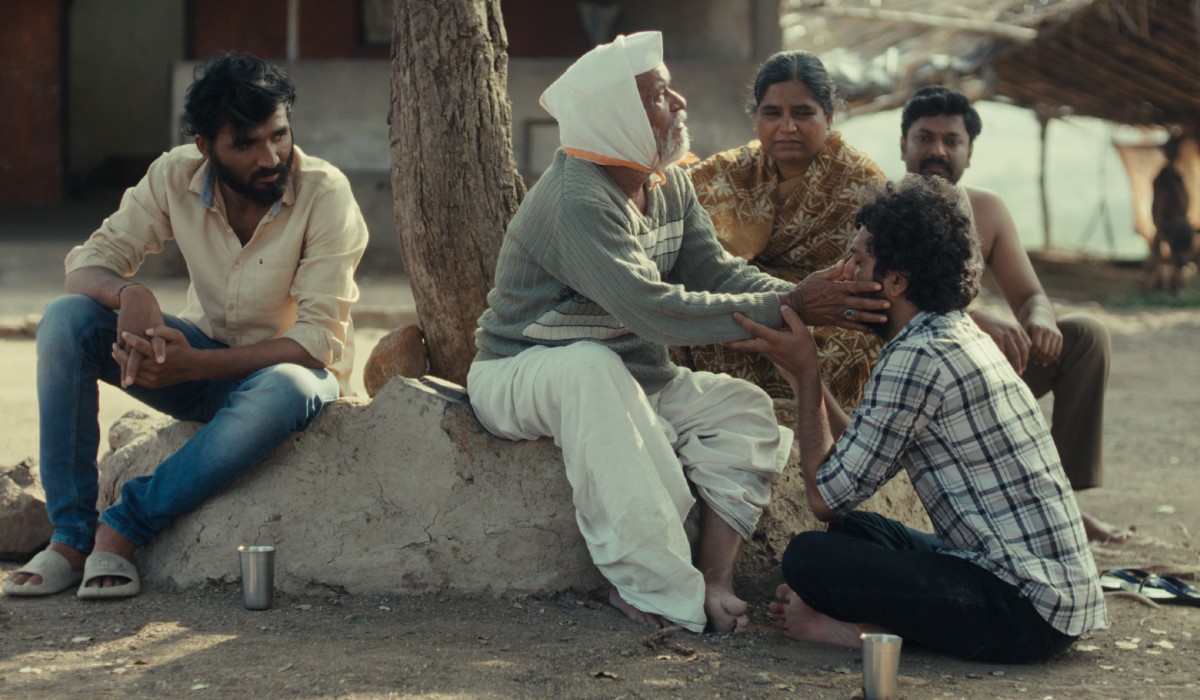
 Scene from Cactus Pears
With his directorial debut feature, Rohan Kanawade’s “Cactus Pears” is a touching queer romance with a tender embrace. Exploring themes of family, class and changing attitudes in rural India, Peter Morgan reviews a film where subtle messages reveal happiness and understanding
You may have to seek out this tender and candid queer romance by Mumbai film-maker Rohan Kanawade, but it’s worth finding as this delicate and understated love story took home the World Cinema Grand Jury Prize at the Sundance Film Festival earlier this year and has been highly praised in the gay and mainstream press. It reveals much about changing attitudes to gay sexuality in rural Indian society. The filmmaker Kanawade has produced a work that asks us to consider how love can be born from loss and this Marathi language film has warm moments of male affection in a search for belonging. Even more, because it reveals semi-forbidden or unacknowledged love in an era where the oppressive importance of family and status weave in with class and modernity.
Anand (Bhushaan Manoj) is a 30-year-old Mumbai call-centre worker, and the film opens with him having to return to his remote home village where his family tearfully gather in a hospital waiting room. Anand’s father has died, and the news has sent a melancholic ripple through the village. Anand is sitting with his mother, Suman (Jayshri Jagtap), in the hospital waiting room and the tears slowly but surely come – her husband is dead – and Anand doesn’t quite know what to do.
At first, he tries to get out of the customary 10-day mourning period, claiming that he’ll stay for the first two days and then come back for the tenth. It’s only his mother’s protests that eventually prevent his return from Mumbai. He writes a text message to explain this to a “friend” named Chetan from Mumbai who is clearly someone he is close to, yet he deletes it. Anand hasn’t been to his home village in years and, as a closeted gay man, he is stressed about the prying that awaits him. Sure enough, family members first object to an unmarried man performing the funerary rites, then advise him to get married at the earliest opportunity. They place restrictions on what he can do, eat and wear over the next ten days of rituals.
It is during this period, among the rolling hills and verdant landscape, that Anand reunites with an old childhood crush friend of his, Balya (Suraaj Suman) a goatherder who leads a closeted existence himself and there is tension between their desires and culture.
The fact that Anand isn’t married is a big subject for discussion within his family. His mother, Suman, has explained away his bachelorhood concocting a story that Anand was so heartbroken by the infidelity of a potential spouse that he now can’t bring himself to meet someone else. That story is false as Anand is gay, and what makes his father’s passing particularly hard to him is that he had accepted his son’s homosexuality. Yet Anand’s mother urges her son to keep this a secret and she keeps the truth away from their family. Anand’s extended relatives buy this subterfuge mostly because he lives in Mumbai, and they consider the city strange enough to explain away whatever questions they might have. It is one of the many benefits that the filmmaker leaves ample room for the possibility of individual understanding and acceptance.
The only hitch in Anand’s presentation of being single is the allure of his former flame, Bayla, and shortly after his arrival the pair begin seeing each other again, sharing furtive glances and long motorcycle rides across the vast plains.
‘Cactus Pears’ is shot by cinematographer Vikas Urs with impressionistic use of light and static wide shots, occasionally relieved by sensual close-ups. The actors are largely drawn from local theatre troupes, and the gestures of everyday labour, whether milking cows, cooking or making ropes, attest to the filmmaker, Rohan Kanawade’s keen observation and desire for authenticity.
Bayla, like other closeted men in the village, ponders what it might be like to leave. Yet over the next few days he develops an intimacy with Anand as they meet up, trying to rekindle their desires and know each other again. As their hangouts increase, the distance between them shrinks until they are swimming and sharing intimate moments in the hot sun. These two lost souls find something being together, and thanks to subtle performances by Manoj and Suman, their intimacy is measured simply by their closer physical proximity.
In interviews, the filmmaker has said this rural sojourn was inspired by his own experience of performing his father’s final rites in 2016. Anand’s relationship to his father is indeed the film’s core, yet his romance with Balya is the fruit of fantasy. ‘Cactus Pears’ brings together the facts of memoir with the restorative power of fiction. It radically expands the experiences that queer people have been permitted on Indian screens.
The cactus pears of the film’s title was the deliverance of the gift of the de-thorned fruit that Bayla left for Anand one morning where the red fleshy heart mirrored their simmering romance, a thematically relevant aphrodisiac. This is a bright luminous work, with grace and delicacy – liberal at its heart where understanding and acceptance is a strong and dominant theme. In cinemas now – listings here
Before you go
The ongoing genocide in Gaza, Starmer’s austerity and the danger of a resurgent far right demonstrate the urgent need for socialist organisation and ideas. Counterfire has been central to the Palestine revolt and we are committed to building mass, united movements of resistance. Become a member today and join the fightback.
