
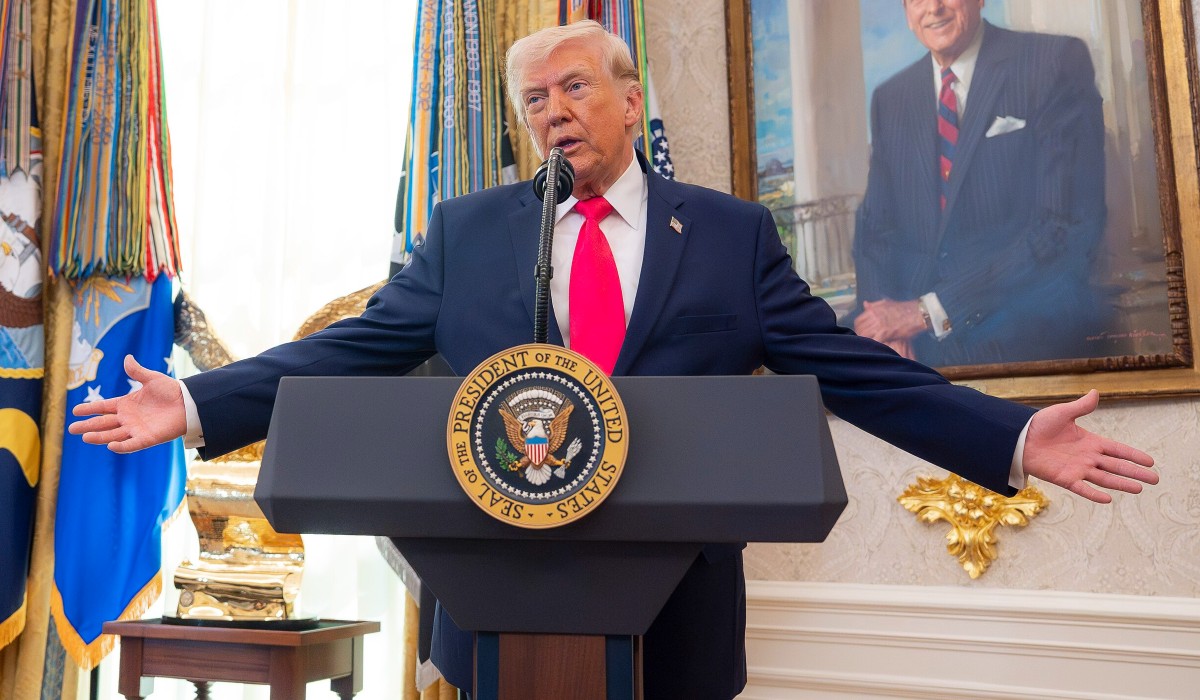
 Donald Trump. Photo: Public Domain
Trump’s threat of mass murder is on hold as the US is forced to the negotiating table, writes Chris Bambery
Trump warned Iran that a ‘whole civilisation will die’ if it did not agree to immediately reopen the Strait of Hormuz. It followed a post in which he said ‘open the f*****’ strait, you crazy bastards’.
A few hours later Trump dramatically reversed course saying the US was ‘far along’ along the road to an enduring Middle East peace
That was then followed by the announcement of a two week ceasefire with negotiations due to begin between the two states in Pakistan on Friday.
Tehran said it would permit ‘safe passage’ through the strait for the duration of the ceasefire in ‘coordination with Iran’s armed forces’. Iran’s security council said it had submitted a 10-point plan to the US via Pakistan, but insisted that did not mean the war was over.
Trump has said the plan is an acceptable basis for negotiations.
The plan includes Iranian-Omani control of the Straits of Hormuz, with each tanker passing through having to pay $2 million, an end to sanctions and removal of all American forces from the region.
The fact talks will be around their plan is a considerable success for Iran.
Humiliation
Iran retains control of the Straits, retains its stockpile of enriched uranium and its arsenal of missiles and drones. All of that flies in the face of the US repeated demands during the war. Having started the war demanding regime change Trump now finds himself having to negotiate with that very regime.
What is clear is that Trump’s threat to destroy Iranian civilisation had played badly on already shaky markets and with a number of Republican members of Congress and the Senate plus with virtually every state on the planet.
‘A big day for World Peace! Iran wants it to happen, they’ve had enough! Likewise, so has everyone else!,’ Trump wrote on Truth Social after the ceasefire announcement.
In fact, around the world this will be seen as a humiliation for the US. It has failed in every one of the war goals it announced. In an asymmetrical war Iran’s missiles and drones made a mockery of the huge build up of US naval and then military forces in the region. In the opening salvoes Iran took out much of the sophisticated US radar installations supposed to track just that.
This threatens to alter the whole make up of the region’s political map. Saudi Arabia and the Gulf states, agreed half a century ago, to use the dollar for all oil transactions – crucial to the stability of the US currency – in return for American protection.
Over the last two months that protection was largely absent. Will they want to stick with their alliance with the US?
In Israel Benjamin Netanyahu is defying Trump by refusing to call off his war on Lebanon. But despite huge civilian losses caused by Israeli air strikes that war is not going well with Hezbollah putting up stiff resistance and hitting Israel regularly with its missiles.
On a wider level China will be looking at how the US threatened to use force to open the Straits of Hormuz but backed away because it was not achievable. They will note too that the US naval armada never entered the Gulf because of the threat of missile and drone attack, with the US aircraft carrier, the USS Abraham Lincoln, operating off Diego Garcia. Another note will be made that the US had to withdraw missile defences and troops from South Korea to buttress their forces operating against Iran.
All of that will give Beijing more confidence if war was to break out over Taiwan. In contrast US regional allies will be much more nervous. The Taiwanese opposition leader is in Beijing just now discussing peace terms.
Before you go
The ongoing genocide in Gaza, Starmer’s austerity and the danger of a resurgent far right demonstrate the urgent need for socialist organisation and ideas. Counterfire has been central to the Palestine revolt and we are committed to building mass, united movements of resistance. Become a member today and join the fightback.

Chris Bambery
Chris Bambery is an author, political activist and commentator, and a supporter of Rise, the radical left wing coalition in Scotland. His books include A People's History of Scotland and The Second World War: A Marxist Analysis.