
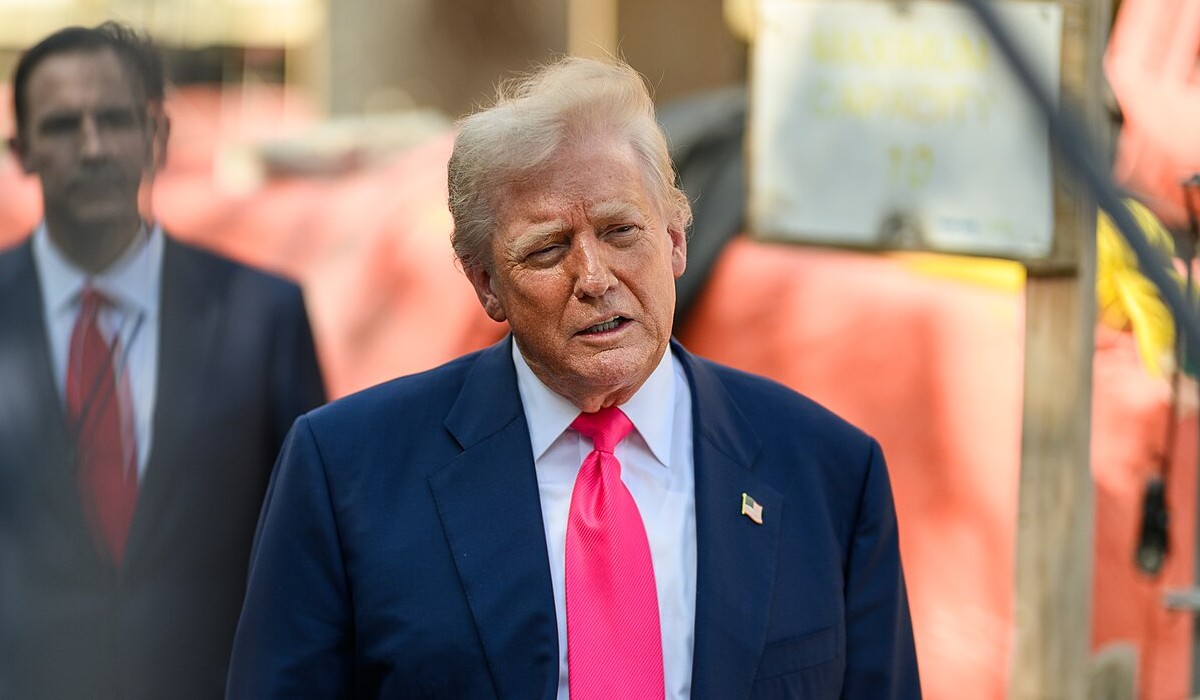
 Donald Trump. Photo: Public Domain
Central-bank independence is much prized by the capitalist class, so the Trump administration may find its authoritarian drive has overreached in threatening this, argues John Clarke
The Trump administration is challenging one of the strategic priorities of the neoliberal period, that of establishing and maintaining an ‘independent’ role for the central banks in directing monetary policy and setting interest rates. Trump has been at odds with the US Federal Reserve for some time now but things have come to a head with the news that Fed’s Chair, Jerome Powell, is being threatened with criminal charges by the Department of Justice.
According to Common Dreams, Powell issued a statement on 11 January in which he announced that ‘the Justice Department … served the Federal Reserve on Friday with grand jury subpoenas related to the central bank chair’s congressional testimony on Fed office building renovations.’
Powell declared that the ‘threat of criminal charges is a consequence of the Federal Reserve setting interest rates based on our best assessment of what will serve the public, rather than following the preferences of the president. This is about whether the Fed will be able to continue to set interest rates based on evidence and economic conditions—or whether instead monetary policy will be directed by political pressure or intimidation.’
Trump’s hostility to Powell has been expressed in characteristically stark terms. When the Fed failed to lower interest rates as aggressively as he hoped, the president described Powell as ‘a moron’ and ‘truly one of my worst appointments.’ The accumulating tensions between the administration and the Fed came to a head after the administration escalated its use of tariff measures against a wide range of countries. Powell has publicly stated that: ‘It’s really tariffs that are causing the most of the inflation overshoot.’
Powell’s term as Fed Chair will end in May of this year but he is supposed to hold a place on the governing board of the central bank until 2028. The timing of the legal attack is clearly designed to obtain compliance from other Fed officials by making an example of Powell.
Presidential powers
Trump’s escalating confrontation with the Fed has two key elements to it. On the one hand, it is part of a wider effort to increase presidential power and generate an ever more authoritarian regime. At same time, however, with this particular fight, Trump is challenging one of the key measures that was associated with the neoliberal decades. The supposedly independent central bank emerged during this period in order to ensure that harsh interest-rate policies could be imposed without the risk of interference from squeamish elected governments.
A concerted drive to extend presidential powers has been a key element of the political agenda of the second Trump administration from the outset. Every effort has been made to challenge the division of powers that have been carved out within the US system of government. From a decidedly liberal viewpoint, Protect Democracy explained last October that: ‘Our Constitution relies on the judicial branch to serve as a check against unlawful abuses of executive power. Threats to defy the courts or efforts to bully judges jeopardize the foundational checks and balances that protect our rights, our economy, our communities, and our safety.’
By that time, Trump had already ‘employed various tactics to avoid complying with some of the dozens of orders courts have issued limiting its authority.’ Protect Democracy warned that the ‘administration is in fact pushing boundaries and eroding constitutional checks one “slice of the salami” at a time.’
Republican control of the House of Representatives and the Senate have meant that Trump has faced very little interference from the elected bodies that could restrict his drive to increase presidential powers but he is clearly very worried that impending midterm elections to these bodies could change this situation.
Axios reports that Trump told an audience of House Republicans on 6 January that: ‘You’ve got to win the midterms. Because if we don’t win the midterms, it’s just going to be, I mean, they’ll find a reason to impeach me.’ With polls consistently registering how unpopular Trump is, it is certainly extremely likely that he will face such an electoral reverse. Though the Democrats have a remarkable capacity for retreat and compromise, the near impunity with which Trump has been able to conduct himself is likely to be curtailed.
Within the Trump administration and those close to it, however, the feeling that time is starting to run out can lead to even more audacious and reckless conduct. The infamous former Trump advisor, Steve Bannon, recently told a conservative audience that: ‘I will tell you right now, as God is my witness, if we lose the midterms, if we lose 2028, some in this room are going to prison – myself included. They’re not gonna stop.’
Trump’s immigration enforcers and other federal forces are bringing repression and terror to US cities. He and his cohorts are seeking to criminalise dissent and protest, presenting even their mainstream Democratic opponents as part of an ‘enemy within’. There can be no doubt that the authoritarian agenda of this administration constitutes an enormous and rapidly escalating threat to basic democratic freedoms.
War with the Fed
Generally speaking, Trump’s attempt to centralise power in the hands of the president and to undermine the well-established division of powers within the US state is an issue that working-class organisations and popular movements should take very seriously and doggedly resist. Without any illusions in the limited protections offered by bourgeois democracy, the authoritarian threat that Trump represents must be challenged at every turn.
Having said this, Trump’s attack on the Fed and the independent decision-making powers of the central banks is a very different case. We need to assess this development as a dispute among our enemies that has nothing to do with the preservation of working-class rights and democratic freedoms.
A 13 January article in Politico poses the question of just why Powell has chosen to respond so aggressively to this particular attack from Trump. After all, he had been very reluctant to escalate the simmering confrontation up until this point. The article explains that part ‘of the reason why he’s emboldened to do this is evident in what came next. Gold soared and the dollar fell, both indications of rising worries about Fed independence, and GOP lawmakers started to speak up in his defense.’
Suggesting that Trump’s threat to central-bank independence is taking him out onto very thin ice, Politico argues that if ‘markets really did think the Fed was going to make policy based on the whims of the president rather than considered judgments about what’s best for the economy, it would likely be a financial bloodbath.’ So, ‘for now, Fed independence seems alive and well.’
Trump’ authoritarian course, while it is meeting opposition within the US establishment, does reflect an impatience with the forms of democracy that its most reckless and reactionary elements are expressing. As such, this administration has some room to manoeuvre and it enjoys significant support in high places.
When it comes to the Fed, however, Trump’s attempt to assert his will and interfere with its decision-making powers are a step too far. Central banks have become a very important class-war weapon since the 1970s. The monetary policy they oversee is used to increase or limit economic activity, to adjust unemployment levels and to limit the capacity of workers and their unions to make wage gains. The notion that these ruthless institutions might have to do the bidding of unpredictable politicians is not something the most powerful capitalist interests are prepared to countenance.
Trump’s dispute with the Fed may well prove to have been an ill-chosen course of action. He can defy court orders, threaten his political opponents and undermine constitutional rights but, with his attack on central-bank independence, he is getting a bit above himself. The central bank is one state institution that even the most authoritarian president will have to learn to treat with respect.
Before you go
The ongoing genocide in Gaza, Starmer’s austerity and the danger of a resurgent far right demonstrate the urgent need for socialist organisation and ideas. Counterfire has been central to the Palestine revolt and we are committed to building mass, united movements of resistance. Become a member today and join the fightback.

John Clarke
John Clarke became an organiser with the Ontario Coalition Against Poverty when it was formed in 1990 and has been involved in mobilising poor communities under attack ever since.