
Emerald Fennell’s Wuthering Heights is a weak adaptation that retains nothing of the original novel’s haunting bleakness, writes Terina Hine
If Emerald Fennell’s big-budget Wuthering Heights wins an award it should be for the worst-ever screen adaptation of Emily Brontë’s haunting gothic novel. Quite the feat given there have been around 35 film and TV versions to date.
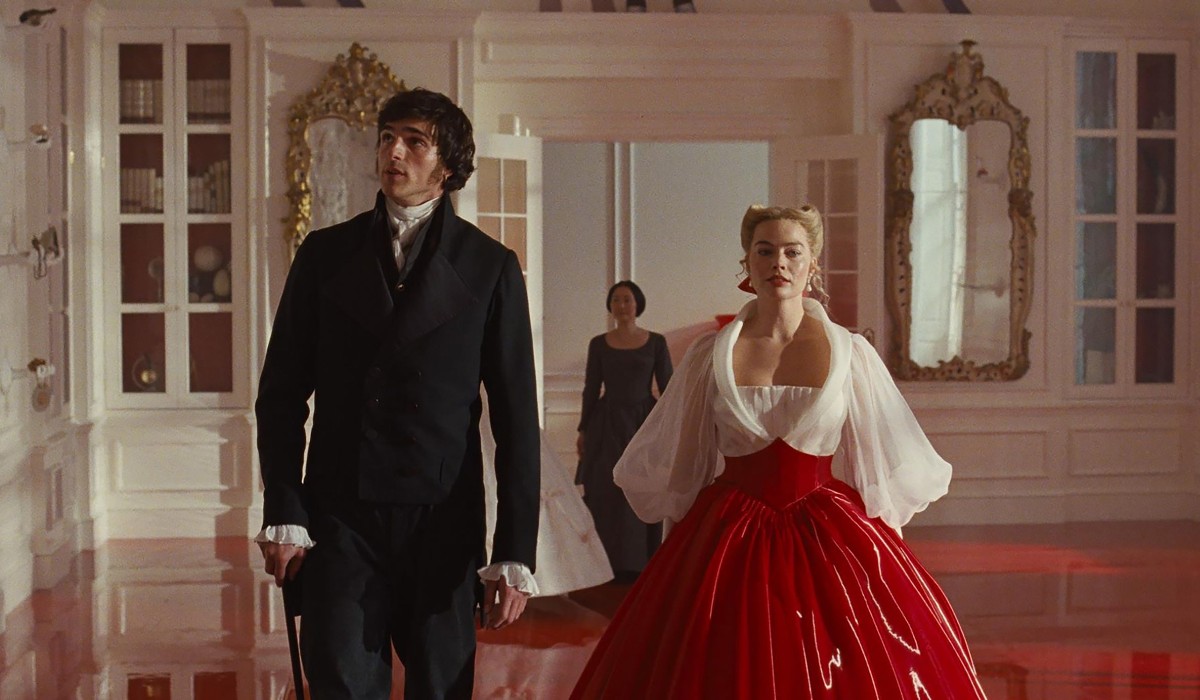
The depth of its awfulness only makes sense once you understand that it’s based on Fennell’s emotional response to her initial reading of the novel aged 14. Its cartoonish characters, ridiculous costumes, floundering attempts at surrealism, and the depiction of Wuthering Heights itself as some sort of cross between Dracula’s castle and the fortress of Mordor could not possibly have come from a more mature mind. Even the much-discussed eroticism feels teenage and crude.
I have no problems with a film being only loosely based on the book for which it was named. It’s fine to focus on just part of a story – in this case the first section of the novel, the film ends with the death of Cathy (played by Margot Robbie). It’s fine to merge characters, in fact the merging of Earnshaw (Cathy’s father) and Hindley (her brother) into one worked well. The conflicted character of a drunk but loving father, played by Martin Clunes, was probably the best and most believable performance of the film. What is at issue is that Fennell’s movie is silly, boring and retains nothing of the novel’s bleakness, nor its brutal and haunting nature.
Brontë’s characters live beyond the grave, not just as ghosts on the moors but through the next generation. In this adaptation there are no ghosts, nor a next generation. The characters we have are cardboard cutouts with complexity and emotional depth replaced with ludicrous costumes, cheap thrills and gaudy sets. The class component of Brontë’s story gets reduced to its most basic and the racial undertones are lost entirely. There is no mystery as to Heathcliff’s (Jacob Elordiorigins) origins or ethnicity, and his depraved vengeful nature is severely muted.
The film bears such a loose resemblance to Brontë’s Wuthering Heights it’s hard to believe Fennell has reread the book since her teenage years. In her hands the story is less a gothic romance and more a childish, comic-strip fantasy.
Bad films are one thing, but to introduce an entire generation to Brontë’s brilliant novel with this nonsense is a travesty. The only redeeming feature in the whole sorry affair is the score by Charlie XCX. Mesmerising and discordant, it alone reflects the novel’s mood, with a darkness that should have been swirling across the moors into Cathy and Heathcliff’s blood. Unfortunately for the film-goer this mood remains confined to the music. Perhaps if Fennell had followed the example of Kate Bush and condensed her movie into a three-minute music video, she may have been more successful.
My advice: don’t waste either your money or time for what may prove to be the longest 2 hours and 16 minutes of your life.
Before you go
The ongoing genocide in Gaza, Starmer’s austerity and the danger of a resurgent far right demonstrate the urgent need for socialist organisation and ideas. Counterfire has been central to the Palestine revolt and we are committed to building mass, united movements of resistance. Become a member today and join the fightback.
